
4 Treatment Options for Relapsed Blood Cancer in India

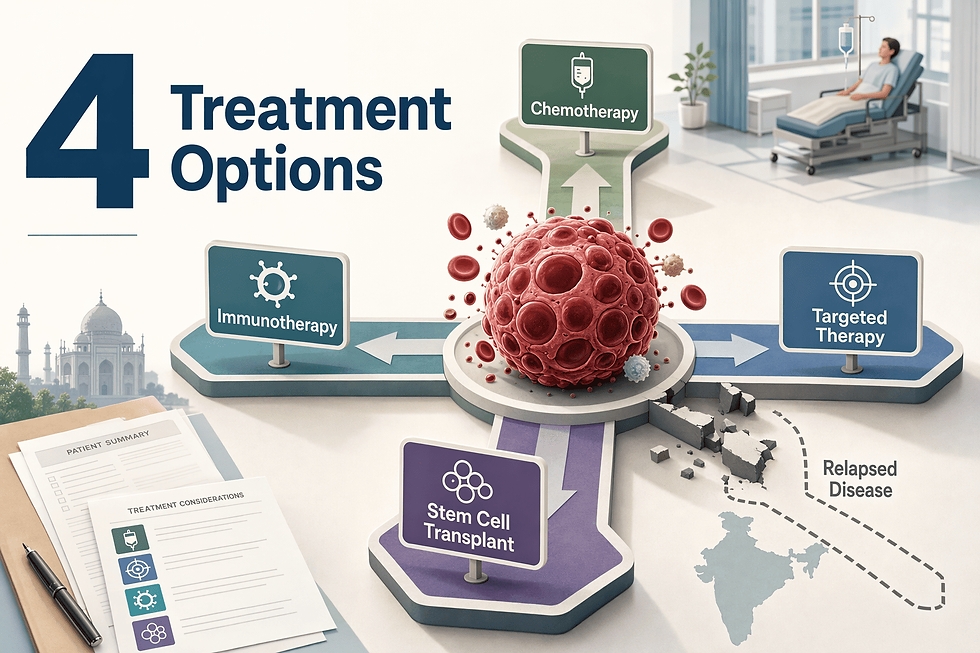
When blood cancer returns after remission, Indian patients face complex decisions about salvage chemotherapy, CAR-T cell therapy, stem cell transplant, and targeted therapies, each with distinct eligibility criteria and coverage pathways.
Key Takeaways
Relapsed blood cancer is confirmed when disease returns after complete remission (MRD <0.01%) or progresses within six months; refractory disease never achieved remission
CAR-T cell therapy requires at least two prior treatment lines for lymphoma/leukemia and is available at specialized centers with 4-8 week manufacturing timelines
Stem cell transplant sequencing now competes with CAR-T, autologous suits chemo-sensitive relapse, allogeneic offers graft-versus-cancer effect for high-risk disease
Targeted therapies like BTK inhibitors for CLL and proteasome inhibitors for myeloma provide chemotherapy-free relapse treatment options
Ayushman Bharat PMJAY covers CAR-T and transplant up to ₹5 lakh annually; multidisciplinary tumor boards coordinate pathway selection at metro centers
Relapsed blood cancer is confirmed when measurable disease returns after a documented complete remission (typically undetectable minimal residual disease below 0.01%), or when disease progresses within six months of the last treatment despite initial response, classified clinically as refractory disease. In India, restaging protocols integrate PET-CT, bone marrow biopsy, and flow cytometry within 5–14 days to stratify salvage treatment intensity, though delays beyond two weeks can compromise CAR-T therapy sequencing decisions.
Relapse Vs. Refractory: the Clinical Distinction
Relapse occurs when cancer returns after achieving complete remission, defined as undetectable disease on bone marrow biopsy and flow cytometry (MRD <0.01%). Refractory disease means the cancer never achieved remission or progressed within six months of completing the last line of therapy. For B-cell acute lymphoblastic leukemia (B-ALL), the Indian expert consensus panel stratifies relapse timing into early relapse (recurrence <36 months from initial diagnosis) and late relapse (≥36 months), because early relapse carries significantly worse prognosis and narrows salvage options. Refractory cases, by definition, bypass remission entirely and require immediate escalation to investigational or transplant-based pathways.
Blood Cancer Subtype Relapse Patterns
Each blood cancer subtype follows distinct relapse markers and restaging protocols:
Acute Lymphoblastic Leukemia (ALL): Relapse definitions hinge on the <36-month vs. ≥36-month timing threshold; early relapse mandates cytogenetic and molecular re-profiling (e.g., BCR-ABL1, KMT2A rearrangements) to reclassify risk before salvage chemotherapy or CAR-T evaluation.
Acute Myeloid Leukemia (AML): Relapse is confirmed by ≥5% blasts on bone marrow aspirate or reappearance of the original cytogenetic abnormality (e.g., FLT3-ITD, NPM1 mutation); risk reclassification drives whether salvage chemotherapy or immediate allogeneic transplant is pursued.
Lymphoma: PET-CT restaging using the Deauville 5-point scale distinguishes metabolic relapse (Deauville 4–5) from residual scar tissue; biopsy confirmation is required before escalating to salvage regimens or stem cell mobilization.
Multiple Myeloma: Relapse is defined by rising M-protein (≥25% increase from nadir), new lytic bone lesions on skeletal survey, or ≥10% clonal plasma cells on marrow biopsy—biochemical relapse without symptoms may trigger observation rather than immediate treatment.
Chronic Lymphocytic Leukemia (CLL) / Chronic Myeloid Leukemia (CML): Molecular relapse markers (e.g., BCR-ABL1 transcript rise in CML, del(17p) emergence in CLL) detected by quantitative PCR often precede clinical relapse by months, enabling preemptive therapy adjustments.
India-Specific Restaging Protocols and Turnaround Benchmarks
Indian tertiary centers follow standardized restaging workflows integrating PET-CT, bone marrow biopsy, and six-color flow cytometry, with turnaround times typically ranging 5–14 days from sample collection to final report. Metro centers like Rajiv Gandhi Cancer Institute, Tata Memorial Hospital, and Apollo Hospitals maintain NABL-accredited labs for molecular diagnostics (FISH, NGS panels), enabling MRD quantification at 10⁻⁴ sensitivity. Dr.Bharat Patodiya in Hyderabad offers NABH-accredited CAR-T evaluation protocols, coordinating restaging logistics for patients referred from tier-2 cities. However, delays beyond 14 days, common in non-metro catchment areas due to courier logistics or repeat-sampling requirements, can compromise CAR-T versus salvage chemotherapy sequencing, as CAR-T manufacturing slots require confirmed MRD status within narrow eligibility windows.
Once relapse is confirmed through restaging protocols, the clinical team must execute four coordinated actions to minimize delays and preserve treatment options.
Critical First Steps When Blood Cancer Relapses in India
When blood cancer relapses, the pathway from suspicion to treatment start hinges on four coordinated clinical actions. These steps determine eligibility for advanced therapies, including CAR-T cell therapy, and must proceed rapidly because India's healthcare logistics introduce delays that can compromise timing.
Immediate Restaging Workflow: From Suspicion to Confirmation
Relapse suspicion arises from symptom recurrence (fatigue, bleeding, fever) or rising disease biomarkers during surveillance. Your care team initiates a four-part restaging sequence within 5 to 14 days, though delays beyond two weeks can narrow treatment windows and affect outcomes.
PET-CT scheduling, Identifies metabolically active disease sites; average turnaround in metro centers is 3 to 5 days, longer in tier-2 cities.
Bone marrow biopsy, Confirms marrow involvement and blast percentage; results typically available within 4 to 7 days when flow cytometry and immunohistochemistry are ordered concurrently.
Flow cytometry panel, Characterizes immunophenotype (CD19, CD20, CD33 expression) key for CAR-T eligibility; processing adds 2 to 3 days to biopsy turnaround.
Cytogenetic and molecular testing, Detects high-risk mutations (TP53, BCR-ABL1) and minimal residual disease; results require 7 to 10 days and guide multidisciplinary tumor board decisions.
Patients should request simultaneous test orders at the initial biopsy appointment to avoid sequential delays that push total restaging beyond two weeks.
Multidisciplinary Tumor Board Referral Pathways
Once relapse is confirmed, multidisciplinary tumor boards review cases to select salvage chemotherapy, stem cell transplant, or CAR-T pathways. The ASCO 2026 guideline recommends MDT referral for patients with early relapse (<18 months from first remission), high-risk cytogenetics, or prior transplant failure.
Geographic differences affect MDT capacity. Hyderabad centers like Dr.Bharat Patodiya offer thorough CAR-T evaluation protocols and can coordinate 48-hour tumor board reviews, while Delhi, Mumbai, and Bangalore centers with on-site CAR-T manufacturing (Tata Memorial, AIIMS, Apollo) integrate manufacturing feasibility directly into MDT decisions. Tier-2 cities often refer complex cases to metro boards, adding 1 to 2 weeks to the pathway.
Car-T Eligibility Pre-Screening Checklist
Not every relapsed patient qualifies for CAR-T cell therapy. Hospitals use biomarker thresholds and prior-line criteria to stratify patients before leukapheresis. The decision algorithm balances CAR-T against allogeneic stem cell transplant and considers manufacturing timelines, toxicity risk (cytokine release syndrome severity varies by patient and disease characteristics ), and donor availability.
Pre-screening criteria include:
CD19 expression, Target antigen must be present on ≥80% of blasts for CART19 products targeting CD19.
Prior-line count, CAR-T approval in India typically requires ≥2 prior treatment lines for ALL, ≥1 line for lymphoma relapses.
Remission duration, Early relapse (<12 months) or transplant-refractory disease favors CAR-T over repeat transplant.
Performance status, ECOG 0 to 2 preferred; feasibility of leukapheresis and timeline of manufacture (3 to 4 weeks for NexCAR19) factor into urgent-case decisions.
Patients should ask their oncologist whether restaging results meet these thresholds before treatment decisions finalize. CAR-T costs ₹30 to 40 lakh in India, so financial counseling and insurance pre-authorization begin in parallel with medical eligibility screening.
For patients whose disease remains chemotherapy-sensitive, salvage regimens serve as the frontline relapse intervention before escalating to cellular therapies.
Salvage Chemotherapy for Relapsed Blood Cancer
When standard frontline therapy fails, salvage chemotherapy aims to induce remission and prepare patients for consolidative approaches like transplant or CAR-T. Regimen selection depends on blood cancer subtype, relapse timing, and cytogenetic risk. This section details salvage protocols by disease type and clarifies when chemotherapy alone is insufficient.
Lymphoma Salvage Regimens: R-Ice and R-Dhap
Relapsed diffuse large B-cell lymphoma (DLBCL) and follicular lymphoma typically respond to R-ICE (rituximab, ifosfamide, carboplatin, etoposide) or R-DHAP (rituximab, dexamethasone, cytarabine, cisplatin). R-ICE is often preferred when prior exposure to platinum agents was limited; R-DHAP offers stronger cytarabine dosing for patients who relapsed after anthracycline-based therapy. Both regimens achieve overall response rates in the majority of relapsed DLBCL cases, with complete remission rates varying by interval since first remission. Patients achieving at least partial response typically proceed to autologous stem-cell transplant; those with refractory disease or very early relapse (less than six months) may bypass salvage chemotherapy entirely in favor of CAR-T cell therapy evaluation.
AML and ALL Salvage Chemotherapy Options
For acute myeloid leukemia, FLAG-Ida (fludarabine, cytarabine, granulocyte colony-stimulating factor, idarubicin) is a common salvage backbone. Cytogenetic and molecular risk factors, such as FLT3-ITD, TP53 mutations, or complex karyotype, guide dosing intensity and the decision to add targeted agents. Relapsed B-cell acute lymphoblastic leukemia salvage regimens incorporate high-dose cytarabine and anthracycline combinations, often with asparaginase in younger patients. Cytogenetic reclassification at relapse (e.g., Philadelphia chromosome status, KMT2A rearrangements) determines whether dose escalation, tyrosine kinase inhibitors, or enrollment in blinatumomab protocols is warranted. Standard-risk cytogenetics favor chemotherapy bridging to transplant; high-risk molecular features trigger immediate alternative pathway discussions.
When Salvage Chemotherapy Alone Is Insufficient
Refractory relapse, defined as no response to salvage or relapse within six months of salvage completion, signals the need for escalation beyond chemotherapy. Patients in this category are evaluated for CAR-T cell therapy, allogeneic transplant, or investigational trial enrollment. Dr. Bharat Patodiya provides thorough CAR-T cell therapy evaluation to determine eligibility for advanced immunotherapy when salvage chemotherapy fails to achieve bridging remission. The decision matrix integrates performance status, comorbidities, donor availability, and disease kinetics to prioritize the most appropriate consolidative approach.
When salvage chemotherapy alone is insufficient, CAR-T cell therapy has emerged as a transformative option, though strict eligibility gates and manufacturing capacity constrain access.
Car-T Cell Therapy Eligibility and Evaluation Process
CAR-T cell therapy has transformed treatment for relapsed blood cancers in India, but access depends on precise eligibility criteria and manufacturing capacity constraints. Understanding which patients qualify, and how the evaluation-to-infusion pathway works, helps families navigate this specialized option alongside transplant and targeted therapies.
CD19 and BCMA Target Eligibility by Blood Cancer Subtype
CAR-T cell therapies in India target specific proteins on cancer cells. CD19-directed CAR-T (NexCAR19 and Qartemi) treats relapsed B-cell acute lymphoblastic leukemia (B-ALL), diffuse large B-cell lymphoma (DLBCL), and follicular lymphoma after two or more prior treatment lines. BCMA-targeted CAR-T addresses multiple myeloma that has progressed despite proteasome inhibitors, immunomodulatory drugs, and anti-CD38 antibodies. Biomarker confirmation, CD19 expression on leukemia or lymphoma cells, or BCMA expression level on myeloma cells, must be documented through immunohistochemistry or flow cytometry before referral. India's approval of NexCAR19 followed trials in 64 patients with advanced lymphoma or leukemia, demonstrating 83.3% complete or partial response in phase II studies. However, patients with extramedullary disease, active central nervous system involvement, or prior allogeneic transplant within six months may not qualify, as manufacturing centers apply strict inclusion protocols.
Prior-Line Count and Organ Function Criteria
Standard CAR-T eligibility requires at least two prior lines of systemic therapy for lymphoma and leukemia; myeloma protocols often mandate three lines including anti-CD38 exposure. Performance status thresholds, typically ECOG 0-2, ensure patients can tolerate the conditioning chemotherapy and potential cytokine release syndrome. Adequate cardiac function (left ventricular ejection fraction ≥40%), renal clearance (creatinine <2.0 mg/dL), hepatic function (bilirubin <2× upper limit), and absence of active infections are verified through baseline labs, echocardiography, and infectious disease screening. Bridging therapy, low-dose chemotherapy or radiation to control disease while T-cells are manufactured, may span 3-5 weeks; patients whose cancer progresses rapidly during this window may lose eligibility. Centers also assess pulmonary function and oxygen saturation, as cytokine release syndrome can precipitate respiratory compromise requiring ICU-level supportive care.
Car-T Manufacturing Capacity and Approval Workflow in India
CAR-T approval depends on manufacturing center capacity and whether the patient meets strict inclusion criteria; not every referred case proceeds to infusion. After initial evaluation, multidisciplinary tumor boards review imaging, pathology, prior treatment summaries, and current symptom assessments to determine candidacy. T-cell collection (leukapheresis) occurs at the treatment center, then cells ship to a centralized manufacturing facility for engineering, a 3-4 week process. Manufacturing failures, patient deterioration during bridging, or discovery of exclusion criteria (such as uncontrolled autoimmune disease) can halt the pathway. India's specialized centers, Tata Memorial Centre, Apollo Cancer Centres, Rajiv Gandhi Cancer Institute and Research Centre, and evaluation hubs like Dr.Bharat Patodiya, coordinate logistics, but capacity remains limited. Cost ranges from ₹30-50 lakhs domestically versus ₹3-4 crores internationally, yet insurance coverage and patient assistance programs vary by institution. Families should confirm manufacturing timelines, backup treatment plans if CAR-T becomes unavailable, and post-infusion monitoring protocols (typically 28 days inpatient for cytokine release and neurotoxicity surveillance) during the evaluation consultation.
Car-T Center Comparison: Availability and Evaluation Protocols in India
Center | Supported Blood Cancer Subtypes | CAR-T Availability | Accreditations | Estimated Cost Range |
Apollo Cancer Centres | B-ALL, DLBCL, multiple myeloma | CD19 and BCMA CAR-T available | JCI, NABH | ₹35-55 lakhs |
Tata Memorial Centre | B-ALL, DLBCL, follicular lymphoma, myeloma | NexCAR19 and BCMA CAR-T trials and approved therapy | Government tertiary center; CAR-T manufacturing hub | ₹30-45 lakhs (subsidized for eligible patients) |
Rajiv Gandhi Cancer Institute and Research Centre | Lymphoma, leukemia, myeloma | Dedicated haemato-oncology and CAR-T programme | NABH, NABL | ₹40-50 lakhs |
Pi Cancer Care, Hyderabad | Leukemia, lymphoma, myeloma | Thorough CAR-T evaluation protocols; limited availability at specialized centers | NABH-accredited | ₹30-50 lakhs (domestic estimate) |
This comparison shows that while multiple centers offer CAR-T evaluation and access, availability remains constrained by manufacturing capacity, and not every referred patient will proceed to infusion. Dr. Bharat Patodiya provides thorough CAR-T evaluation with NABH-accredited protocols, connecting patients with treatment centers across India for those who qualify. For families navigating relapsed blood cancer, understanding these eligibility gates and the evaluation funnel, biomarker confirmation, prior-line count, organ function thresholds, and manufacturing timelines, clarifies which patients are candidates and what to expect during the 4-8 week pathway from referral to potential infusion. Contact specialized centers early to confirm current capacity and insurance coverage before committing to the evaluation process.
Stem cell transplant remains a cornerstone consolidation strategy, but sequencing decisions now weigh CAR-T eligibility and donor availability in parallel.
Stem Cell Transplant as a Relapse Treatment Option
Stem cell transplant remains a cornerstone therapy for relapsed blood cancer, but the decision between autologous (using the patient's own stem cells) and allogeneic (using a donor's cells) transplant depends on disease biology, donor availability, and how the cancer responded to salvage chemotherapy. Recent evidence also clarifies when transplant should follow CAR-T cell therapy rather than serve as the first salvage option.
Autologous Vs. Allogeneic Transplant Decision Factors
Autologous transplant is appropriate when relapsed disease responds well to chemotherapy (chemo-sensitive relapse) and the patient has no high-risk genetic markers. This approach carries lower transplant-related mortality because it avoids graft-versus-host disease, but it offers no immunologic graft-versus-leukemia effect. Allogeneic transplant becomes the preferred option when relapse occurs early (within 12 months of initial remission), high-risk cytogenetics are present, or the patient has a matched donor available. A systematic review of 12 clinical trials found that allogeneic transplant offers durable remission in these scenarios but is associated with a significantly increased risk of adverse effects. The decision framework follows this logic: chemo-sensitive relapse without high-risk features → autologous; early relapse or adverse cytogenetics plus donor availability → allogeneic; refractory disease or transplant-ineligible fitness → CAR-T evaluation or clinical trial.
Stem Cell Transplant After Car-T: Emerging Sequencing Data
Older treatment paradigms positioned transplant as the definitive option for any relapsed blood cancer, but CAR-T cell therapy has rewritten sequencing logic. A landmark NCI trial in children, adolescents, and young adults with relapsed or refractory B-cell acute lymphoblastic leukemia demonstrated that CAR-T therapy followed by stem cell transplant achieved median overall survival of 70.2 months, compared to 10.5 months for CAR-T alone after close to five years of follow-up. As a result, stem cell transplants are now recommended following CAR-T cell therapy in high-risk cases. The strategy uses CAR-T to achieve remission, then consolidates with transplant to prevent relapse, reversing the historical sequence where transplant was attempted first and CAR-T reserved for post-transplant failures.
Transplant Candidacy Checklist for Relapsed Patients
Medical fitness criteria include adequate organ function (cardiac ejection fraction ≥45%, creatinine clearance ≥50 mL/min, bilirubin and transaminases <2× upper normal limit), performance status ECOG 0-2, and absence of active infection. Disease-status requirements mandate measurable remission depth, typically complete remission with minimal residual disease (MRD) negativity, confirmed by flow cytometry or molecular testing. Patients who remain MRD-positive after salvage chemotherapy carry higher post-transplant relapse risk and may benefit from CAR-T consolidation before proceeding to transplant, though international data suggest this sequencing remains investigational in India where transplant center access varies by metro region.
Beyond chemotherapy and cellular therapies, molecular-targeted drugs and immunotherapies offer precision approaches tailored to specific blood cancer subtypes.
Targeted Therapy and Immunotherapy for Specific Relapses
When blood cancers relapse after initial treatment, targeted therapies and immunotherapies offer precise, often less toxic alternatives to conventional chemotherapy. This section details the key targeted agents for chronic lymphocytic leukemia (CLL), multiple myeloma, and Hodgkin lymphoma, explaining when each therapy becomes the preferred option and how treatment sequencing decisions are made.
BTK Inhibitors for Relapsed CLL and Mantle Cell Lymphoma
Bruton's tyrosine kinase (BTK) inhibitors block a critical enzyme in B-cell signaling, disrupting malignant cell survival and proliferation. Three BTK inhibitors are approved and available in India: ibrutinib (the first-in-class agent), acalabrutinib (a second-generation inhibitor with improved selectivity), and zanubrutinib (another second-generation agent with reduced cardiovascular side effects). For relapsed CLL, BTK inhibitors have become the first-line relapse treatment, often initiated immediately upon progression without prior salvage chemoimmunotherapy, because they deliver durable remissions in patients with high-risk genetic features such as del(17p) or TP53 mutations. In mantle cell lymphoma, BTK inhibitors are typically reserved for salvage after failure of rituximab-based chemoimmunotherapy regimens. Treatment selection among the three agents depends on individual cardiovascular risk, drug interaction profiles, and prior therapy toxicity patterns.
Proteasome Inhibitors, Imids, and Monoclonal Antibodies for Myeloma
Multiple myeloma treatment at relapse relies on three major drug classes: proteasome inhibitors (bortezomib, carfilzomib), immunomodulatory drugs or IMiDs (lenalidomide, pomalidomide), and anti-CD38 monoclonal antibodies (daratumumab, isatuximab). Current ASCO guidelines recommend triplet regimens, combining one drug from each class, for early relapse after initial therapy, because triplets extend progression-free survival compared to sequential doublet strategies. Bortezomib disrupts the cellular protein degradation machinery, triggering cancer cell death; carfilzomib is a second-generation proteasome inhibitor with improved efficacy but higher cardiovascular risk. Lenalidomide and pomalidomide modulate immune responses and inhibit myeloma cell proliferation; pomalidomide is particularly effective in lenalidomide-refractory disease. Daratumumab and isatuximab are CD38-targeting antibodies that directly kill myeloma cells and enhance immune recognition. India-available targeted therapies for myeloma now include all three classes at specialist centers. Dr.Bharat Patodiya's treatment protocols incorporate immunotherapy, targeted therapy, CAR-T cell therapy, and precision radiation techniques, ensuring personalized sequencing decisions based on individual tumor profiling and prior treatment history.
Checkpoint Inhibitors and Novel Immunotherapies
PD-1 checkpoint inhibitors, nivolumab and pembrolizumab, have transformed relapsed Hodgkin lymphoma care by blocking the programmed death-1 receptor, allowing T-cells to recognize and destroy cancer cells. These agents are typically introduced after failure of autologous stem cell transplant or in patients ineligible for transplant, delivering durable remissions in 60-70% of cases. Beyond Hodgkin lymphoma, emerging bispecific antibodies for B-cell malignancies offer CAR-T alternatives by simultaneously engaging T-cells and tumor cells without the need for ex-vivo cell manufacturing. These novel immunotherapies are becoming available at select Indian centers, expanding relapse options for patients who cannot access or fail CAR-T therapy.
Navigating relapsed blood cancer requires coordination across specialists, financial counselors, and government scheme administrators, multidisciplinary tumor boards simplify this complexity.
How to Access Multidisciplinary Care and Second Opinions
Multidisciplinary Tumor Board Referral Workflow
Multidisciplinary tumor boards bring together medical oncologists, surgical specialists, radiation experts, pathologists, and support staff to review complex relapsed cases and recommend treatment strategies. To request MDT review, upload diagnostic imaging (PET-CT, MRI), pathology reports (including immunohistochemistry and flow cytometry results), prior treatment summaries, and current symptom assessments to the specialty center's portal or referral coordinator. Dr.Bharat Patodiya provides 48-hour tumor board review when patients submit these documents, streamlining access to multidisciplinary expertise. Weekly tumor board meetings evaluate treatment history, disease biology, and patient performance status to identify eligible therapies, chemotherapy, targeted agents, CAR-T cell therapy, or stem cell transplant, tailored to relapse patterns.
Government Scheme Coverage: Ayushman Bharat Pmjay for Relapsed Care
Ayushman Bharat Pradhan Mantri Jan Arogya Yojana (PMJAY) covers advanced relapsed-care therapies, including CAR-T cell therapy and allogeneic stem cell transplant, under its ₹5 lakh annual family floater limit. Eligibility verification begins with presenting your PMJAY card (or Aadhaar and family details for instant e-card generation) at an empaneled hospital; beneficiary databases confirm coverage in real time. Pre-authorization for high-cost procedures requires the treating oncologist to submit a detailed case summary, tumor board recommendation, and cost estimate to the hospital's PMJAY desk, which forwards the packet to the State Health Agency (SHA) for approval, turnaround is typically 48-72 hours for urgent cases. However, [CAR-T therapy costs in India range from ₹30-40 lakh, far exceeding the ₹5 lakh PMJAY cap; most relapsed patients combine PMJAY coverage for diagnostic workup and supportive care with state-specific schemes (Chief Minister's Relief Funds, hospital charity programs) or personal fundraising to bridge the gap. Your care team coordinates pre-authorization submissions and advises on layering coverage sources to minimize out-of-pocket burden.
Securing Second Opinions at Specialized Centers
Prepare your second-opinion request by gathering original pathology slides (not just reports, reviewers often re-stain for molecular markers), all imaging studies on CD (DICOM format), a chronological treatment summary with drug names and response assessments, and a concise question list (e.g., "Am I eligible for CAR-T?", "What clinical trials match my subtype?"). India's leading CAR-T centers include Tata Memorial Hospital, Apollo Cancer Centres, Rajiv Gandhi Cancer Institute, and Narayana Health, many of which accept remote consultations via telemedicine portals, upload documents in advance, schedule a video consultation with a haemato-oncology specialist, and receive written recommendations within 5-7 days. Dr.Bharat Patodiya offers second-opinion coordination as part of its integrated palliative care and treatment navigation services, connecting patients with metro transplant and CAR-T hubs for expert review. A well-prepared second opinion can clarify trial eligibility, uncover treatment alternatives missed in initial evaluation, and validate your current care plan, ensuring every relapsed patient benefits from multidisciplinary expertise before escalating therapy decisions.
Choosing Your Relapse Treatment Path
CAR-T cell therapy suits relapsed patients with ≥2 prior treatment lines and adequate organ function who want a chemotherapy-free option; stem cell transplant suits those with chemo-sensitive relapse and available donors seeking definitive consolidation. Salvage chemotherapy delivers rapid cytoreduction for eligible relapsed patients but requires hospitalization and carries hematologic toxicity; targeted therapies like BTK inhibitors for CLL and proteasome inhibitors for myeloma offer outpatient oral regimens with different side-effect profiles. As India's homegrown CAR-T manufacturing scales and bispecific antibodies enter the treatment landscape, relapsed blood cancer care will shift toward earlier intervention with cellular and immunotherapies, reducing reliance on intensive chemotherapy and improving quality of life during extended remissions. Request a multidisciplinary tumor board evaluation at Dr.Bharat Patodiya to map your relapse type, treatment history, and CAR-T/transplant eligibility to Ayushman Bharat PMJAY coverage and personalized pathway options.
Frequently Asked Questions
Can I receive CAR-T cell therapy if I've already had a stem cell transplant?
Yes, CAR-T is increasingly used as salvage after transplant failure. Prior transplant does not disqualify CAR-T eligibility, though organ function and performance status remain critical evaluation criteria. Landmark NCI trials demonstrate that transplant-post-CAR-T sequencing improves outcomes in relapsed B-cell acute lymphoblastic leukemia.
Does Ayushman Bharat PMJAY cover CAR-T cell therapy for relapsed blood cancer?
Yes, for eligible families, PMJAY covers up to ₹5 lakh per family per year, including CAR-T at empaneled hospitals. Pre-authorization is required, coverage depends on treatment complexity (₹2-15 lakh range), and out-of-pocket costs may apply if total exceeds the annual cap.
How long does it take to get CAR-T cell therapy in India after relapse confirmation?
Typical timeline is 4-8 weeks from eligibility confirmation to infusion, including restaging (5-14 days), tumor board review, manufacturing slot allocation, and bridging therapy. Delays beyond two weeks in restaging can compromise sequencing decisions. Not every referred case proceeds to infusion due to strict inclusion criteria.
What is the difference between relapsed and refractory blood cancer?
Relapse occurs when disease returns after achieving complete remission (MRD <0.01%); refractory disease means cancer never achieved remission or progressed within six months of last treatment. Refractory cases often escalate directly to CAR-T or clinical trials, while relapsed cases may try salvage chemotherapy first.
Can BTK inhibitors like ibrutinib replace chemotherapy for relapsed CLL?
Yes, in many cases, BTK inhibitors are now first-line relapse treatment for CLL and mantle cell lymphoma, especially with high-risk mutations (del17p, TP53) or when patients are unfit for chemoimmunotherapy. Chemo-free targeted therapy sequences (BTK inhibitor → venetoclax) are standard, reserving salvage chemotherapy for targeted therapy failure.
Should I enroll in a clinical trial for relapsed blood cancer?
Clinical trials become the recommended next step when standard salvage options (chemotherapy, CAR-T, transplant) have failed or are unsuitable, when novel therapies (bispecific antibodies, next-gen CAR-T) are available in trial but not yet approved, or when high-risk features warrant cutting-edge treatments. Multidisciplinary tumor boards evaluate trial eligibility alongside standard pathways.
What are the long-term side effects of CAR-T cell therapy?
Acute risks (cytokine release syndrome, neurotoxicity) occur within 1-4 weeks; long-term risks include prolonged cytopenias, secondary infections from B-cell aplasia (for CD19 CAR-T), and emerging data on secondary cancers. Structured survivorship care post-CAR-T addresses these prolonged immunologic effects and monitors for late complications.


Comments