
Treatment Options for Stage 4 Pancreatic Cancer: Chemotherapy, Supportive Care, and Cost Planning in India (2026)
- Ganesh Akunoori
- May 27
- 10 min read

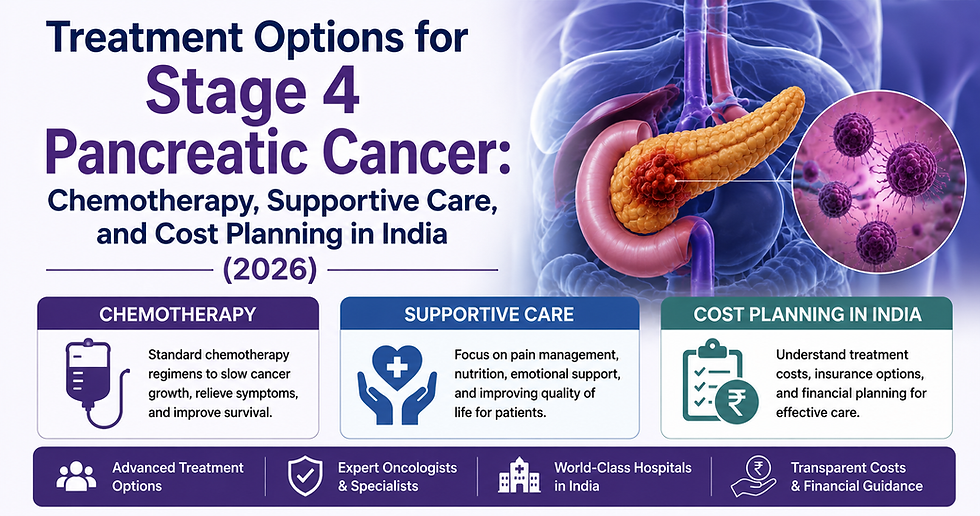
Stage 4 pancreatic cancer has spread to distant organs, eliminating surgical options and shifting treatment focus to systemic chemotherapy combined with pain management and supportive care[8].
This guide examines evidence-based chemotherapy regimens, integrated supportive care approaches, realistic survival expectations, and transparent India-specific cost breakdowns to help patients and families make informed treatment decisions.
Key Takeaways
Systemic chemotherapy, FOLFIRINOX or gemcitabine plus nab-paclitaxel, is the primary treatment for stage 4 pancreatic cancer because metastatic disease cannot be surgically removed.
Regimen choice depends on performance status: intensive combinations require better fitness, while gemcitabine-based therapy suits patients with higher symptom burden.
Early palliative care integration delivers measurable improvements in pain, depression, and anxiety while reducing emergency visits by 22%.
Treatment costs in India range from ₹2.5-8 lakhs in government facilities to ₹8-25 lakhs in private centers, with significant variation based on regimen complexity and supportive care needs.
Treatment goals focus on symptom control and quality of life extension rather than cure, with median survival ranging from 6.7 to 8.5 months depending on regimen.
Understanding Stage 4 Pancreatic Cancer: What Metastatic Disease Means for Treatment Options
Systemic chemotherapy combined with pain management is the primary treatment approach for stage 4 pancreatic cancer because the cancer has spread to distant organs and cannot be surgically removed[8]. Stage 4 means that the cancer has spread to other areas of the body[8], and treatment is usually chemotherapy[1]. The disease often spreads to the liver[1], lungs[1], and abdominal wall[1]. Most pancreatic cancers are diagnosed after they've already spread beyond the pancreas[2], making curative resection unavailable. Treatment goals focus on extending life, managing symptoms, and maintaining quality of life rather than eliminating the disease.
Why Stage 4 Disease Cannot Be Cured with Surgery
The cancer cannot be removed by surgery[1] at stage IV because metastatic spread has already occurred. Pancreatic cancer often spreads to the liver[1], lungs[1], bones[1], and faraway lymph nodes[1] once the disease reaches these distant organs, surgical resection of the primary tumor no longer offers curative benefit. Stage IV means the cancer metastasized, or spread[1], to another part of the body, and while the cancer originated in the pancreas, its presence in multiple organs requires systemic treatment that reaches all sites through the bloodstream rather than localized surgical intervention.
The Primary Role of Systemic Therapy
Stage IV patients usually get a treatment that travels through the bloodstream[1] to reach cancer cells in multiple locations throughout the body. Chemotherapy is the backbone of stage 4 care because it circulates systemically, addressing metastatic lesions in the liver, lungs, and other organs simultaneously. FOLFIRINOX and gemcitabine-based regimens are standard protocols that deliver cytotoxic agents to all disease sites, unlike surgery or radiation which target only localized areas. Pi Cancer Care offers chemotherapy packages starting at ₹2.5-8 lakhs including thorough supportive care, integrating systemic treatment with pain management and symptom control from initial diagnosis.
Shifting Treatment Goals: Symptom Control and Quality of Life
Treatment at stage IV aims to extend life, manage symptoms, and maintain function rather than eliminate cancer. Clinical trials may also give more choices[1], but the primary objective shifts from cure to palliation, controlling pain, preserving nutritional status, and preventing complications like bowel obstruction or biliary duct blockage. Realistic expectations frame the care plan: chemotherapy slows disease progression and supportive interventions address symptoms, allowing patients to maintain quality of life for as long as possible.
Once metastatic disease is confirmed, oncologists select chemotherapy regimens based on patient fitness, symptom burden, and treatment goals.
Primary Chemotherapy Regimens for Stage 4 Pancreatic Cancer
Chemotherapy is cancer treatment that uses drugs to kill cancer cells by preventing them from growing and dividing[3]. These drugs are systemic treatments, meaning that the drugs travel through the bloodstream and damage cancer cells throughout the body[3]. Two evidence-based regimens, FOLFIRINOX and gemcitabine plus nab-paclitaxel, form the standard first-line treatment landscape for metastatic pancreatic cancer.
FOLFIRINOX: Intensive Multi-Drug Combination
FOLFIRINOX combines three chemotherapy drugs, 5-FU/leucovorin, irinotecan, and oxaliplatin, into a single regimen. A Phase III clinical trial in 2010 demonstrated positive results, establishing FOLFIRINOX as a standard treatment option for patients with metastatic pancreatic cancer who have good performance status. The regimen requires tolerating a higher toxicity profile than single-agent therapy, making careful patient selection key. Candidates typically need a Karnofsky performance-status score of 70 or higher and adequate organ function to manage the intensified side-effect burden. Because FOLFIRINOX can also damage some healthy cells and cause side effects[3], oncology teams assess symptom burden and baseline functional capacity before initiating treatment.
Gemcitabine Plus Nab-Paclitaxel: The Alternative Standard
Gemzar (gemcitabine) was approved in 1996 for the treatment of unresectable pancreatic cancer[3]; ABRAXANE (albumin-bound paclitaxel) followed in September 2013[3] for use in combination with gemcitabine. A phase 3 study randomized 861 patients to receive nab-paclitaxel plus gemcitabine (431 patients) or gemcitabine alone (430)[4]. The combination regimen extended median overall survival to 8.5 months, compared with 6.7 months in the gemcitabine-only group[4]. The survival rate was 35% in the combination group versus 22% in the gemcitabine group at one year, and 9% versus 4% at two years[4].
This regimen is often preferred when a patient's performance status or symptom burden makes the four-drug FOLFIRINOX combination impractical. The most common adverse events of grade 3 or higher include neutropenia (38% in the combination group vs. 27% in gemcitabine alone), fatigue (17% vs. 7%), and neuropathy (17% vs. 1%)[4].
How Performance Status and Symptom Burden Guide Regimen Choice
Patient fitness, not age alone, drives regimen intensity. More intensive combinations like FOLFIRINOX require better performance status and lower baseline symptom load to manage toxicity. Academic reviews emphasize sequencing decisions based on patient condition: candidates for FOLFIRINOX typically have Karnofsky scores ≥70 and minimal comorbidities, while those with declining functional status or existing neuropathy may receive gemcitabine-based therapy first. Pain and symptom management become critical co-interventions when chemotherapy for pancreatic cancer is selected. At centers like Dr. Bharat Patodiya, integrated chemotherapy and pain management protocols work together from initial diagnosis through treatment completion, reducing fragmentation when systemic therapy intensifies symptom burden.
Chemotherapy addresses systemic disease, but symptom management and quality of life require parallel supportive care coordination from diagnosis onward.
Integrated Supportive Care: Managing Symptoms Alongside Treatment
Why Palliative Care Runs Parallel to Chemotherapy
Palliative care is specialized medical care for people with serious illness[5]. It focuses on providing relief from symptoms, pain, and stress, with the goal of improving quality of life for both patients and families[5]. Critically, palliative care is appropriate at any age and at any stage of illness[5], it can be delivered together with curative treatment[5], not reserved for end-of-life scenarios. This multidisciplinary approach involves doctors, nurses, social workers, and other specialists who work alongside oncologists to provide an extra layer of support during active chemotherapy[5]. The misconception that palliative care equals hospice care prevents many stage 4 pancreatic cancer patients from accessing symptom management when it would be most effective.
Measurable Improvements: Pain, Depression, Anxiety, and Emergency Visit Reduction
A structured study of advanced pancreatic cancer patients receiving early palliative care integration documented significant, quantifiable improvements across multiple quality-of-life measures[6]. Pain improved significantly (P<0.001)[6], depression improved significantly (P=0.006)[6], and anxiety improved significantly (P<0.001)[6]. Beyond subjective symptom relief, the intervention produced a 22% reduction in emergency visits[6] during treatment, a concrete indicator that proactive symptom management reduces crisis-driven healthcare utilization. These data demonstrate that palliative care is not a passive comfort measure; it is an active intervention that changes measurable clinical outcomes during chemotherapy, reducing the burden on both patients and emergency departments.
How to Verify Integrated Care at Your Cancer Center
The sources do not offer a reliable, center-by-center way to verify whether chemotherapy is integrated with pain management at a specific Indian hospital. In the absence of standardized accreditation for integrated palliative oncology, patients should ask qualitative verification questions during initial consultations: Are chemotherapy and pain management teams located under one roof? Do medical oncologists and palliative care specialists participate in joint treatment planning meetings? Is there a single care coordinator who tracks both chemotherapy schedules and symptom assessments? Integrated care means synchronized protocols, not referrals to separate departments after symptoms escalate. Request examples of how the facility coordinates chemotherapy dose adjustments in response to pain or functional status changes documented by the palliative team.
Understanding treatment costs upfront helps families plan for both initial chemotherapy packages and the inevitable adjustments as disease progresses or toxicity emerges.
Treatment Costs and Financial Planning in India
Chemotherapy Package Costs: Government vs Private Facilities
Stage 4 pancreatic cancer chemotherapy costs in India vary significantly by treatment setting and complexity. Government-affiliated tertiary care centers typically offer chemotherapy packages ranging from ₹2.5 to 8 lakhs for multi-cycle regimens, often subsidized through state health schemes. Private oncology hospitals and specialty centers charge ₹8 to 25 lakhs for comparable protocols, reflecting infrastructure investments, newer drug formulations, and integrated supportive care services. Actual costs depend on the chosen regimen (FOLFIRINOX vs gemcitabine-based), cycle count, complications requiring hospitalization, and supportive medications for symptom control.
Transparent Pricing Models with Thorough Supportive Care
Transparent cost disclosure remains inconsistent across Indian oncology centers. Many hospitals advertise treatment volumes, such as 250+ patients treated, but itemized pricing for stage 4 protocols is often disclosed only during in-person consultations. Select centers publish upfront package rates: chemotherapy bundles starting at ₹2.5-8 lakhs may include drug costs, infusion chair time, routine lab monitoring, and basic supportive medications, though advanced pain management interventions and second-line agents often incur additional charges. Patients should request written cost estimates covering the full anticipated treatment duration before committing to a facility.
Financial Planning When Treatment Extends Beyond Initial Cycles
Stage 4 pancreatic cancer management rarely concludes within the initial chemotherapy package; disease progression or toxicity necessitates regimen changes, supportive hospitalizations, and extended palliative interventions. Families should establish a rolling financial plan at diagnosis: request quarterly cost projections from the oncology team, explore state health insurance schemes (Ayushman Bharat covers up to ₹5 lakhs annually for eligible families), and register early with charitable medication access programs operated by pharmaceutical manufacturers and NGOs. Open dialogue with the billing department about payment schedules and interest-free EMI options prevents treatment interruptions during financially constrained periods.
Evidence-based survival data and quality of life outcomes provide the foundation for setting realistic treatment goals at stage 4.
Setting Realistic Expectations: Prognosis and Quality of Life Goals
Median Survival with Standard Chemotherapy
Evidence-based survival data for stage 4 pancreatic cancer sets the foundation for realistic planning. Clinical trials comparing chemotherapy regimens report median survival ranges of 6.7 to 8.5 months with standard protocols[4]. These timelines reflect real-world outcomes under ideal conditions, patients must understand that individual variation exists based on performance status, tumor biology, and treatment tolerance. Oncologists present these ranges not to discourage, but to anchor shared decision-making in evidence rather than anecdote.
Quality of Life as the Primary Treatment Goal
Treatment goals shift from cure to symptom control and quality of life improvement at stage 4. Success is measured by functional status, ability to perform daily activities, maintain independence, spend meaningful time with family, rather than tumor shrinkage alone. Chemotherapy regimens balance life extension against side effects; dose adjustments and treatment breaks prioritize preserving energy and dignity. Oncologists track pain scores, nutritional intake, and mobility alongside lab values, recognizing that the patient's lived experience defines treatment effectiveness when curative intent is not achievable.
Other Options Beyond Standard Chemotherapy: Molecular Testing and Clinical Trials
Molecular and genetic testing are highly recommended because they allow for additional treatment options when specific mutations are detected. Patients whose tumors harbor actionable alterations, BRCA mutations, NTRK fusions, microsatellite instability, may qualify for targeted therapies or immunotherapy regimens unavailable to the general stage 4 population. Clinical trials offer renewed hope when standard therapy options are limited, providing investigational agents that target the specific genetic driver of the cancer[7]. Oncologists maintain relationships with academic centers and trial networks to support referrals, though access varies by geography and trial eligibility criteria.
Comparing Standard Chemotherapy Regimens
Regimen | Median Overall Survival | 1-Year Survival | 2-Year Survival | Grade 3+ Neutropenia | Grade 3+ Neuropathy | Performance Status Required | Typical Patient Profile |
FOLFIRINOX | 11.1 months | 48.4% | Not reported | 45.7% | 9% | ECOG 0-1 / Karnofsky ≥70 | Fit patients, minimal comorbidities |
Gemcitabine + nab-paclitaxel | 8.5 months | 35% | 9% | 38% | 17% | Karnofsky ≥70 | Good functional status |
Gemcitabine alone | 6.7 months | 22% | 4% | 27% | 1% | Lower thresholds | Higher symptom burden, reduced fitness |
This comparison synthesizes data from landmark phase 3 trials[4]. Survival benefits must be weighed against toxicity profiles and patient fitness, no single regimen suits all stage 4 pancreatic cancer patients.
Making Treatment Decisions for Stage 4 Pancreatic Cancer
Government facilities offer lower-cost chemotherapy packages (₹2.5-8 lakhs) but may have longer wait times and less integrated supportive care, private centers charge ₹8-25 lakhs but often coordinate chemotherapy and pain management teams under one roof. Intensive combination regimens like FOLFIRINOX deliver stronger systemic control but require better performance status and tolerance, gemcitabine-based therapy suits patients with higher symptom burden or lower fitness who need gentler treatment.
As molecular testing becomes more accessible in India, stage 4 pancreatic cancer patients may gain eligibility for targeted therapies and clinical trials that complement standard chemotherapy, early testing discussions with your oncologist will become increasingly important for expanding treatment options beyond conventional regimens.
Explore Dr.Bharat Patodiya's chemotherapy and integrated palliative care services that coordinate supportive care from the start, transparent pricing (₹2.5-8 lakhs) and coordinated pain management under one roof help you focus on quality of life rather than navigating fragmented care systems.
Frequently Asked Questions
What is the primary treatment for stage 4 pancreatic cancer?
Systemic chemotherapy, either FOLFIRINOX or gemcitabine plus nab-paclitaxel, is the primary treatment for stage 4 pancreatic cancer because the cancer has spread to distant organs and cannot be surgically removed[1][8]. Stage IV patients usually receive treatment that travels through the bloodstream to reach cancer cells in multiple locations[1].
How do doctors choose between FOLFIRINOX and gemcitabine-based regimens?
Regimen choice depends on performance status and symptom burden rather than age alone[3][4]. Intensive combinations like FOLFIRINOX require better fitness and lower baseline symptoms to manage toxicity, while gemcitabine-based therapy suits patients with higher symptom load or reduced performance status who need gentler treatment.
What survival outcomes can I expect with standard chemotherapy?
Clinical trial data show gemcitabine plus nab-paclitaxel improved median survival to 8.5 months versus 6.7 months with gemcitabine alone[4]. Treatment goals at stage 4 focus on quality of life and symptom control rather than cure, with survival expectations grounded in evidence-based trial results.
Is palliative care only for end-of-life situations?
Palliative care is specialized multidisciplinary support that runs alongside chemotherapy from diagnosis, not end-of-life care[5]. Studies show early palliative care integration delivers significant improvements in pain (P<0.001), depression (P=0.006), anxiety (P<0.001), and 22% reduction in emergency visits[6].
How much does stage 4 pancreatic cancer treatment cost in India?
Chemotherapy packages range from ₹2.5-8 lakhs in government facilities to ₹8-25 lakhs in private centers, with variation depending on regimen complexity, supportive care integration, and hospitalization needs. Stage 4 management rarely concludes within initial packages as disease progression necessitates regimen changes and extended supportive care.
Can stage 4 pancreatic cancer patients access clinical trials in India?
Molecular and genetic testing can reveal additional treatment options and trial eligibility when standard chemotherapy is limited. Clinical trials may provide access to newer therapies when specific mutations are detected[7], discuss testing and trial eligibility with your oncologist early in treatment planning.
How do I verify that a cancer center offers integrated chemotherapy and pain management?
No standardized accreditation exists for integrated palliative oncology in India. Ask whether chemotherapy and pain management teams coordinate under one roof and whether supportive care is included in treatment packages rather than offered separately, these qualitative verification questions help assess integration during consultations.


Comments