
When Your Doctor Says There Are No More Treatment Options for Breast Cancer: Where to Get Another Expert Opinion in Faridabad

Introduction
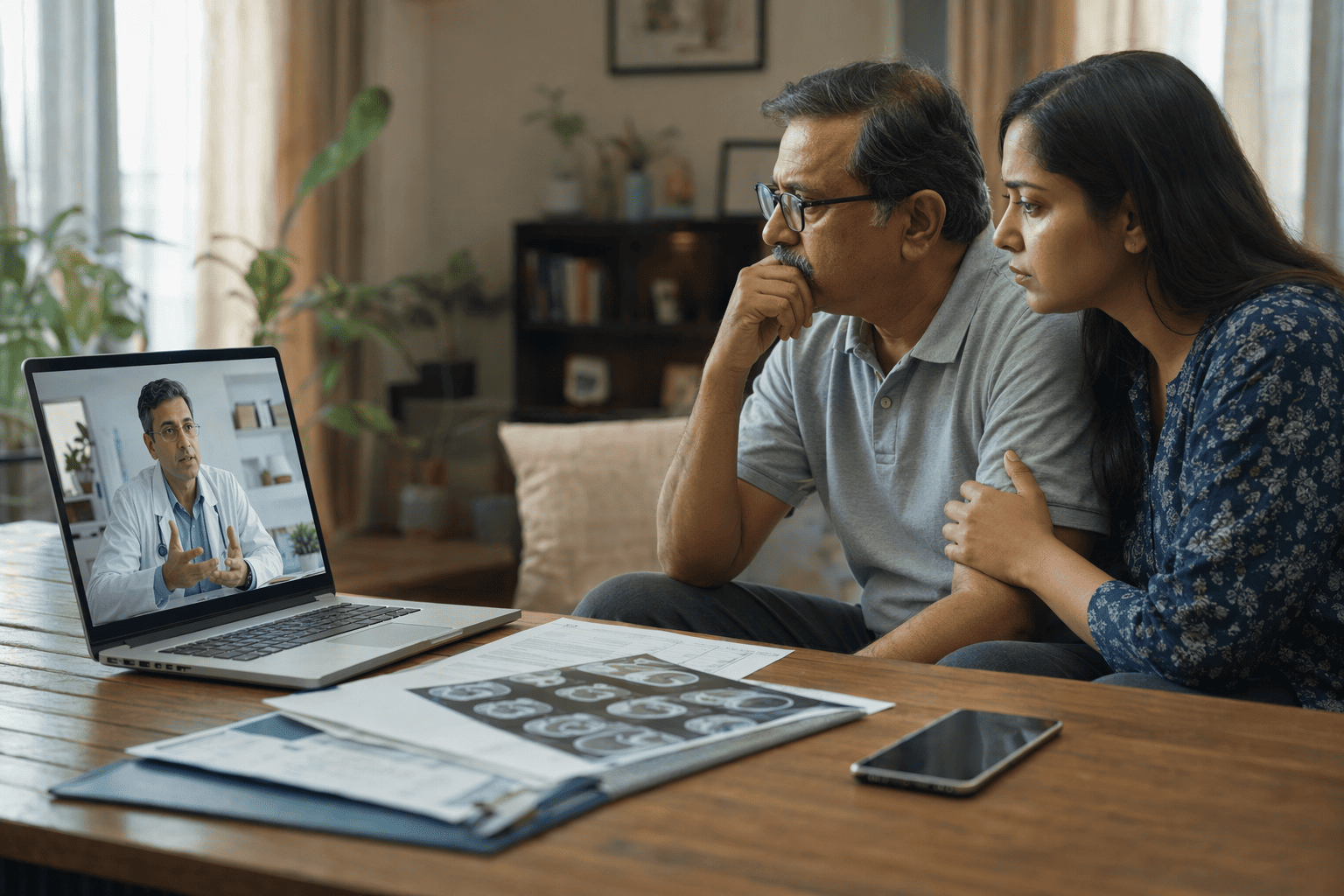
You hear the words "no more treatment options" and the room spins. Your chest tightens. You came to this appointment hoping for a plan, maybe even a trial, and instead you received a verdict that feels like an ending.
This statement lands as a physical blow because it threatens the hope you have carried through every needle stick, every scan, every sleepless night. But here is what your oncologist may not have spelled out: that phrase almost never means science has run out of answers. It means standard chemotherapy and hormone protocols have been exhausted.
A whole frontier of targeted therapies, antibody-drug conjugates, and clinical trials may still be open to you, locked behind a fresh biopsy and a biomarker map your original tumor never revealed. This article outlines exactly where and how to pursue that renewed hope right here in Faridabad and its surrounding medical corridors, starting with the hospitals that offer multidisciplinary second opinions and the names you need to call today.
When the doctor left the room, Sunita from Ballabhgarh reached for her phone. She did not call her family first. She typed "cancer second opinion Faridabad" into Google. That search, made while her hands still shook, turned into three more years of treatment the first hospital had never mentioned.
Key Takeaways
"No more options" usually means your current doctor has exhausted familiar protocols, not that every scientific avenue is closed. You can still act.
A fresh biopsy can open access to anti-HER2 therapies, immunotherapy, or targeted drugs that were irrelevant before.
Second opinions are available locally and lead to action. Artemis Hospitals in Gurgaon, Sarvodaya Cancer Institute, and Metro Cancer Institute in Faridabad all run multidisciplinary tumor boards staffed with specialized breast oncologists.
Advanced treatments have reached India in 2026. Antibody-drug conjugates like trastuzumab deruxtecan (for HER2-low disease), PARP inhibitors, and PIK3CA inhibitors are actively available, and some are recruiting through clinical trials with remote screening.
Palliative care belongs inside the fight, not beside it. Starting supportive oncology early improves your tolerance of treatment and your daily quality of life, without signaling that you are giving up.
Verdict: Is There Still Hope, and for Whom?
Yes, there is hope. The kind that comes from a pathology report, not a platitude. Up to 30% of breast cancers shift their estrogen receptor (ER), progesterone receptor (PR), or HER2 status when they metastasize. Several molecular changes can open new treatment pathways:
HER2-low conversion: A lesion once labeled HER2-negative can turn HER2-low and respond to trastuzumab deruxtecan, a drug cocktail effective enough to earn accelerated approval and now under formal study in Indian patients through a Phase 4 trial.
PD-L1 expression: For triple-negative tumors with PD-L1 expression, checkpoint immunotherapy can shift the odds.
BRCA mutations: These open the door to PARP inhibitors like olaparib.
PIK3CA mutations: Found in about 40% of HR-positive cancers, these can be targeted with alpelisib.
Hope here depends on precision diagnostics, not wishful thinking.
Not every patient responds. Performance status, organ function, and prior treatments shape what is possible. But the list of actionable biomarkers and matched therapies has grown sharply in three years. Find out if your cancer carries one of these molecular clues before accepting a therapeutic dead end. You walked into the clinic carrying a photocopy of that pathology report, dog-eared and underlined in blue pen, and the oncologist pointed to the HER2-low line and said, "Enhertu."
What 'No More Options' Really Means and What to Ask Next
When a community oncologist says there is nothing left, they are usually signaling that they have cycled through the first-line and second-line chemotherapies and endocrine agents they are comfortable prescribing. Anthracyclines, taxanes, capecitabine, letrozole, fulvestrant. They may not routinely order next-generation sequencing or re-biopsy recurrent lesions. They may not have access to Phase I trial networks or molecular tumor boards. Their statement is an honest accounting of what their own toolbox contains. Understanding this distinction is your first step toward reclaiming agency.
Before you leave that office, arm yourself with these questions. Ask in this order:
"Have we re-biopsied a metastatic site to check whether the receptor status has changed since my original diagnosis?"
"Can you order thorough genomic profiling, such as FoundationOne CDx or an equivalent NGS panel, so we know whether I harbor PIK3CA, BRCA, or NTRK alterations?"
"Are there any clinical trials you are aware of that I might qualify for, even at another center? And if you cannot recommend one, would you support me in seeking a second opinion at a high-volume academic program?"
"Where would you send your own sister in my situation?"
That single line often pierces protocol boundaries more effectively than any demand.
A fresh core biopsy is the single most important diagnostic maneuver you can make right now. Archived tissue from your mastectomy or lumpectomy represents your cancer's biology years ago. Metastatic cells evolve under treatment pressure. You need a current sample, processed with immunohistochemistry and FISH for HER2, and ideally sent for broad genomic profiling. It is the map you will show to the next specialist. You walked in thinking the road ended. Now you hold three questions, a biopsy plan, and the name of the oncologist your doctor mentioned when you asked about his sister.
How to Obtain a Second Opinion from a Breast Cancer Specialist in Faridabad
Artemis Hospitals in Gurgaon functions as the most structured entry point for Faridabad residents seeking a breast cancer second opinion. Their surgical oncology department runs a formal consultation pathway: you can initiate a case review remotely through +91-124-451 to 1111 or WhatsApp at +91 9800400498, and request a multidisciplinary tumor board (MDT) where a medical oncologist, radiation oncologist, and surgical oncologist jointly evaluate your imaging, pathology, and treatment history. This MDT model is the standard of care for recurrent disease because it catches red flags a single-specialty review rarely finds.
A half-hour drive away, Sarvodaya Cancer Institute in Faridabad offers a credentialed alternative. It holds AACI Clinical Excellence Certification and operates the region's only nuclear therapy and theranostics unit, a capability that matters if your disease burden includes bone-dominant metastases where targeted radiopharmaceuticals like Lutetium-177 PSMA could apply. The institute covers over 25 cancer types under one roof, allowing a breast oncologist to pull in a pain specialist or a nuclear medicine physician without referral delays. Metro Cancer Institute, also in Faridabad, runs its own MDT tumor board and houses a TrueBeam linear accelerator with HyperArc technology for stereotactic radiation to limited metastatic sites, a technique sometimes called oligometastatic ablation that can prolong progression-free survival in the right setting.
Both Sarvodaya and Metro deliver care squarely inside Faridabad, eliminating the toll of cross-city travel while you feel unwell. The choice between them and Artemis depends on whether you prioritize ultra-subspecialty breast expertise, which leans toward Artemis, or local convenience with strong general oncology infrastructure. None of these centers will turn away a patient simply because they were told elsewhere that options had ended. Bring your old biopsy slides, the formalin-fixed paraffin-embedded tissue block, a CD with all your imaging, and a one-page summary of every chemotherapy, hormonal agent, and radiation field you have received.
You got through the initial shock of a diagnosis, maybe a round of treatment. Now you are here, telling a new oncologist, "I was told there is nothing left to do." The doctor pulls a faded pathology slide from the stack you brought, tilts it toward the light, and says, "Let me look at this differently." That single moment is why you made the trip.
Advanced Treatments Available in India in 2026 That May Not Be Offered Locally
Your community oncologist may not have mentioned these agents because they sit outside standard reimbursement pathways or require biomarker interpretation infrastructure that smaller labs lack. They exist, they are real, and several are actively being studied in Indian patients right now. The table below maps the key classes.
Treatment Class | Example Agents | Mechanism | When It Is Relevant | Status in India, 2026 |
HER2-directed antibody-drug conjugate | Trastuzumab deruxtecan (T-DXd; Enhertu) | Chemotherapy payload linked to an anti-HER2 antibody, active even at low HER2 expression (IHC 1+ or 2+/ISH-negative) | HER2-low metastatic breast cancer; also approved in HER2-positive after prior anti-HER2 therapy | Phase 4 trial (STRIDE, NCT06429761) enrolling across seven Indian cities since January 2025; expanded access programs through manufacturer |
PARP inhibitor | Olaparib, talazoparib | Blocks DNA repair in tumors with homologous recombination deficiency (e.g., BRCA1/2 mutations) | Germline BRCA-mutated HER2-negative metastatic breast cancer | Approved and commercially available via major oncology centers; generic olaparib accessible in some Indian formularies |
PIK3CA inhibitor | Alpelisib | Inhibits the PI3K-alpha enzyme, turning off growth signaling in tumors with PIK3CA mutations | HR-positive, HER2-negative PIK3CA-mutated advanced breast cancer after endocrine therapy failure | Available through specialty pharmacies and larger hospitals, often requiring prior authorization |
Trop-2-directed antibody-drug conjugate | Sacituzumab govitecan (Trodelvy) | Anti-Trop-2 antibody with a topoisomerase inhibitor payload | Metastatic triple-negative breast cancer after two prior systemic therapies; also in HR-positive disease | Approved by DCGI in 2022; accessible in major metros; cost can be offset through manufacturer patient-assistance programs |
Immunotherapy | Pembrolizumab, atezolizumab | Anti-PD-1/PD-L1 monoclonal antibodies that release the immune brake on T cells | PD-L1-positive triple-negative breast cancer; pembrolizumab also for MSI-high or TMB-high tumors regardless of subtype | Widely available; now part of standard regimens for specific triple-negative indications |
Clinical trials | Various novel agents, combinations, bispecific antibodies | Mechanism diverse; ranges from oral SERDs to CDK4/6 inhibitor combinations beyond progression | Almost any refractory setting, provided organ function and performance status meet eligibility criteria | Search clinicaltrials.gov using filters for “breast cancer,” “India,” and “recruiting”; Navya (online) links you to Tata Memorial and National Cancer Grid expert opinions remotely |
The Role of Palliative Care Alongside Active Treatment
Palliative care is not hospice, and inserting it early in your care trajectory is one of the most evidence-backed interventions in oncology. The World Health Organization defines palliative care as an approach that improves quality of life for patients and families facing life-threatening illness, through prevention and relief of suffering, and explicitly states that it should be provided alongside disease-directed therapy. In practice, a palliative medicine specialist works in parallel with your oncologist to manage cancer-related pain, chemotherapy-induced neuropathy, nausea, profound fatigue, and the existential distress that accompanies progression. You do not stop trastuzumab deruxtecan to receive it. You add a layer of support.
Integrated supportive oncology includes practical tools that directly impact treatment tolerance:
Nutritional counseling aimed at cancer cachexia can stabilize weight and muscle mass, preserving your eligibility for the next trial.
Psychological support can address the anxiety and depression that untreated erode decision-making capacity.
Pain management through nerve blocks, methadone rotation, or palliative radiation to a weight-bearing bone lesion can keep you mobile and out of the hospital.
In Faridabad, Artemis Hospitals runs an inpatient palliative care unit that coordinates with oncologists; Sarvodaya's nuclear therapy service handles intractable metastatic bone pain; and Metro Cancer Institute can deploy the same TrueBeam system used for curative intent to deliver rapid palliative radiotherapy within 24 to 48 hours of consult. Request a palliative care referral at your next second-opinion visit, not as a final resort, but as a parallel strategy.
Cost and Care Coordination: Dr. Bharat Patodiya vs. Local Faridabad Options
Dr. Bharat Patodiya, a medical oncologist with subspecialty certifications in breast cancer from Ulm, Germany, and a diploma in lung and GI cancers from the University of Zurich, operates Pi Cancer Care in Hyderabad and coordinates remote second opinions with molecular profiling and MDT review. His online consultation fee is ₹1,050, compared to the typical ₹800 to ₹1,200 for a senior oncologist in NCR, and he explicitly coordinates PET-CT support programs at ₹5,000 and trial enrollment alongside insurance claims. The trade-off is distance versus depth: you access a clinician whose entire practice focuses on complex medical oncology and biomarker-driven care, but you lose the immediacy of a physical examination and local emergency support.
A local Faridabad pathway through Metro Cancer Institute or Artemis keeps you within an hour of home, covers radiation oncology in-house, and allows real-time multidisciplinary input without video conference lag. Your family can attend appointments. Your records travel less. However, the cost structure shifts:
Advanced molecular panels like FoundationOne CDx may be billed through the hospital's contracted lab at ₹75,000 to ₹1,20,000, whereas Dr. Patodiya's patient advocacy model may help navigate that cost through manufacturer ties (PIK3CA and BRCA testing are sometimes subsidized in Pharma-sponsored programs).
Sarvodaya's nuclear therapies are priced on a per-administration basis that can run ₹2 to ₹4 lakhs for a full course.
Insurance portability is generally the same across centers, but confirm pre-authorization before you book.
For a patient weighing these options, the call often comes down to one concrete detail: can you afford to wait two weeks for a thorough treatment blueprint from Hyderabad, or do you need an oncologist at your bedside tomorrow morning?
Practical Steps: Transferring Records and Booking a Second Opinion
Assembling and transferring records prevents a wasted consultation where the oncologist has nothing to review. Follow these ordered tasks.
Request the complete medical record: Visit the medical records department of your current hospital and ask for the discharge summaries, operation notes, chemotherapy flow sheets, and radiation treatment summary. Insist on a CD containing all CT, PET-CT, and mammogram DICOM files; a radiologist cannot compare images from printed reports alone.
Secure the tissue: Formally request the formalin-fixed paraffin-embedded (FFPE) tissue block and at least 20 unstained slides from your most recent biopsy. The lab must release them to you or directly to the second-opinion center on your signed authorization.
Write a one-page chronology: List every systemic therapy (drug name, start date, stop date, best response), every radiation course (site, dose, dates), and any surgical procedures. This saves the oncologist 20 minutes of document reconstruction.
Identify your target center and call them: For Artemis, dial +91-124-451 to 1111 and say you need a breast cancer second opinion with an MDT review. For Sarvodaya, call 0129 to 4253000. For Metro, call 0129 to 4255000. Each will give you a document checklist and appointment window.
Sort out insurance and pre-authorization: Verify whether your policy covers a second opinion consult and, if treatment is planned, whether that hospital is in-network. Some insurers require a pre-authorization letter from the referring doctor; obtain that before you arrive.
Consider a remote pre-consultation: Most large centers now offer an initial video review where you upload scans and pathology reports digitally. This can filter whether an in-person visit is worthwhile, saving you travel and avoiding ₹5,000 to ₹15,000 in preliminary testing if the case is clearly not suitable for the institution’s trials.
When Priya handed the receptionist a tidy binder at Sarvodaya, she was in the consult room within the hour. She later said, "Everyone just read it and nodded. No one asked me to repeat anything."
Conclusion
I met a woman in Gurgaon last month whose previous oncologist had told her there was nothing left to try. She sat in my clinic with a binder of reports she had never fully understood, and three unread genomic test results buried at the bottom. The phrase "no more options" had been spoken, absorbed, and allowed to become her reality. A re-biopsy, a genomic panel, and a fresh set of eyes at a multidisciplinary tumor board are the minimum next steps you can take before accepting that narrative. Pick up your phone today and book a consultation at one of the Faridabad-Gurgaon centers equipped to give you a thorough review, the woman with the binder did, and her tissue block turned up a targetable mutation that changed her treatment plan the next week.
Frequently Asked Questions
When a breast cancer patient is told there are no more treatment options, what does that typically mean and what should they ask their oncologist next?
It typically means standard chemotherapy and hormonal protocols have been exhausted, not that all medical avenues are closed. Ask directly: "Have we re-biopsied for receptor changes? Can you order thorough genomic profiling? Are there any clinical trials I might join at another center?"
How can a patient obtain a second opinion from a breast cancer specialist in Faridabad, and which hospitals or cancer centers there offer multidisciplinary tumor boards?
Contact Artemis Hospitals (+91-124-451 to 1111), Sarvodaya Cancer Institute (0129 to 4253000), or Metro Cancer Institute (0129 to 4255000) to request an MDT review. All three offer tumor boards where surgical, medical, and radiation oncologists evaluate your case together.
What advanced or experimental breast cancer treatments are available in India in 2026 that might not be offered at smaller local hospitals?
Antibody-drug conjugates such as trastuzumab deruxtecan (HER2-low), sacituzumab govitecan, PARP inhibitors for BRCA-mutated disease, PIK3CA inhibitors like alpelisib, and immunotherapy for PD-L1-positive triple-negative breast cancer are all accessible in larger Indian centers or through clinical trials.
What is the role of palliative care alongside active breast cancer treatment, and how can patients in Faridabad access integrated supportive oncology?
Palliative care runs parallel to disease-directed therapy, controlling pain, nausea, and fatigue to improve treatment tolerance. Artemis Hospitals and Sarvodaya offer integrated supportive oncology including nuclear therapy, while Metro provides rapid palliative radiotherapy through its TrueBeam system.
How does the cost and process of seeking a second opinion or advanced treatment at a major cancer center like Pi Cancer Care compare with local options in Faridabad?
Dr. Bharat Patodiya at Pi Cancer Care (Hyderabad) offers remote consultations for ₹1,050 and coordinates PET-CT support at ₹5,000, with deep biomarker expertise. Local Faridabad centers avoid travel costs and provide in-person MDT access, though genomic panels may cost ₹75,000 to ₹1,20,000.
What are the practical steps for transferring medical records and getting an appointment for a breast cancer second opinion in India?
Collect all discharge summaries, chemotherapy records, imaging CDs, and the paraffin tissue block. Write a treatment chronology. Call the center for a document checklist, verify insurance pre-authorization, and consider a remote pre-consultation to determine if an in-person visit is required.
Sources
When Your Doctor Says There Are No More Treatment Options for Breast Cancer, Here - www.drbharatpatodiya.com
Best Cancer Hospital in Faridabad - Metro Cancer Institute - metrohospitalfaridabad.com
Study Details | NCT06429761 | Phase 4 Study to Assess the Safety of Trastuzumab Deruxtecan, in Indian Patients | ClinicalTrials.gov - clinicaltrials.gov

Comments