
Where to Get Personalized Breast Cancer Therapy Based on Genetic Testing in Faridabad

Introduction
A breast cancer diagnosis lands with a suffocating weight of statistics. You read that breast cancer accounted for 26.6% of all female cancers in India in 2022, with 192,020 new cases reported, and you wonder how to escape becoming a number in next year's tally. The deeper cut is the staging data: 57 to 60% of breast cancer cases in India are diagnosed at stage III or IV, a delay that transforms a curable disease into a chronic battle. When every cell in that tumor carries a unique genetic signature, a generic chemotherapy protocol is often an inefficient drain on time and resilience you do not have to waste.
You are not searching for "any" treatment. You need a therapy plan that reads the unique biological sabotage inside your cells and counters it with precision, not carpet-bombing. The question is whether that level of care has reached Faridabad.
It has. Centers like Sarvodaya Cancer Institute now deploy genomic oncology platforms that decode your tumor's specific mutations, while diagnostic networks such as DNAlabs India provide the molecular profiling necessary to distinguish an aggressive HER2-positive cancer from a slow-growing hormone-receptor-positive type. This article maps exactly where in Faridabad this personalized, biology-first breast cancer treatment is delivered, how it works, and what it costs.
Key Takeaways
Precision oncology in Faridabad is not a distant rumor. Here is what the local infrastructure can deliver right now:
Personalized therapy decoded: It is a treatment plan selected by the genetic mutations and protein expression of your specific tumor, using tests like Next-Generation Sequencing, rather than by cancer location alone.
Centers with genomic capability: Sarvodaya Cancer Institute and Fortis Escorts Faridabad run multi-disciplinary tumor boards that interpret genetic reports and build individualized protocols. Pi Cancer Care coordinates molecular profiling for patients who need it.
A team, not a solo opinion: Tumor boards at these centers combine the expertise of medical oncologists, surgeons, radiation oncologists, and pathologists to ratify a single plan.
Cost reality: Next-Generation Sequencing panels range approximately from ₹15,000 to ₹60,000, and a full personalized treatment course can span from ₹5 lakhs to ₹30 lakhs. Home chemotherapy and insurance schemes can reduce the out-of-pocket hit.
Faridabad has oncologists who interpret these genomic reports daily. Dr. Dr. Dr. Novak Gupta and Dr. Aditya Vidushi handle medical oncology consultations and protocol-driven chemotherapy within Faridabad hospital networks. These clinicians do not work in isolation. The genomic data only becomes a plan when a pathologist has captured enough viable tumor tissue, when the sequencing lab has validated the variant, and when a tumor board surgeon or radiation oncologist sequences the interventions so that the targeted drug hits a tumor bed that is actually receptive. Without that chain, the report is just a PDF.
What Personalized Breast Cancer Treatment Means in the Genomic Era
Personalized breast cancer treatment starts with a single decision: sequence your tumor before you flood the body with standard chemo. The clinical logic has moved past “try drug A, if it fails switch to drug B.” Now a lab reads your tumor’s DNA and RNA to find the exact molecular driver, then matches it to a drug that blocks that specific pathway. A genomic profile can show, for instance, that a CDK4/6 inhibitor like ribociclib will bind a kinase pathway in your HR-positive tumor and freeze the division cycle on the spot. The real payoff is skipping a toxic regimen your tumor was never going to respond to.
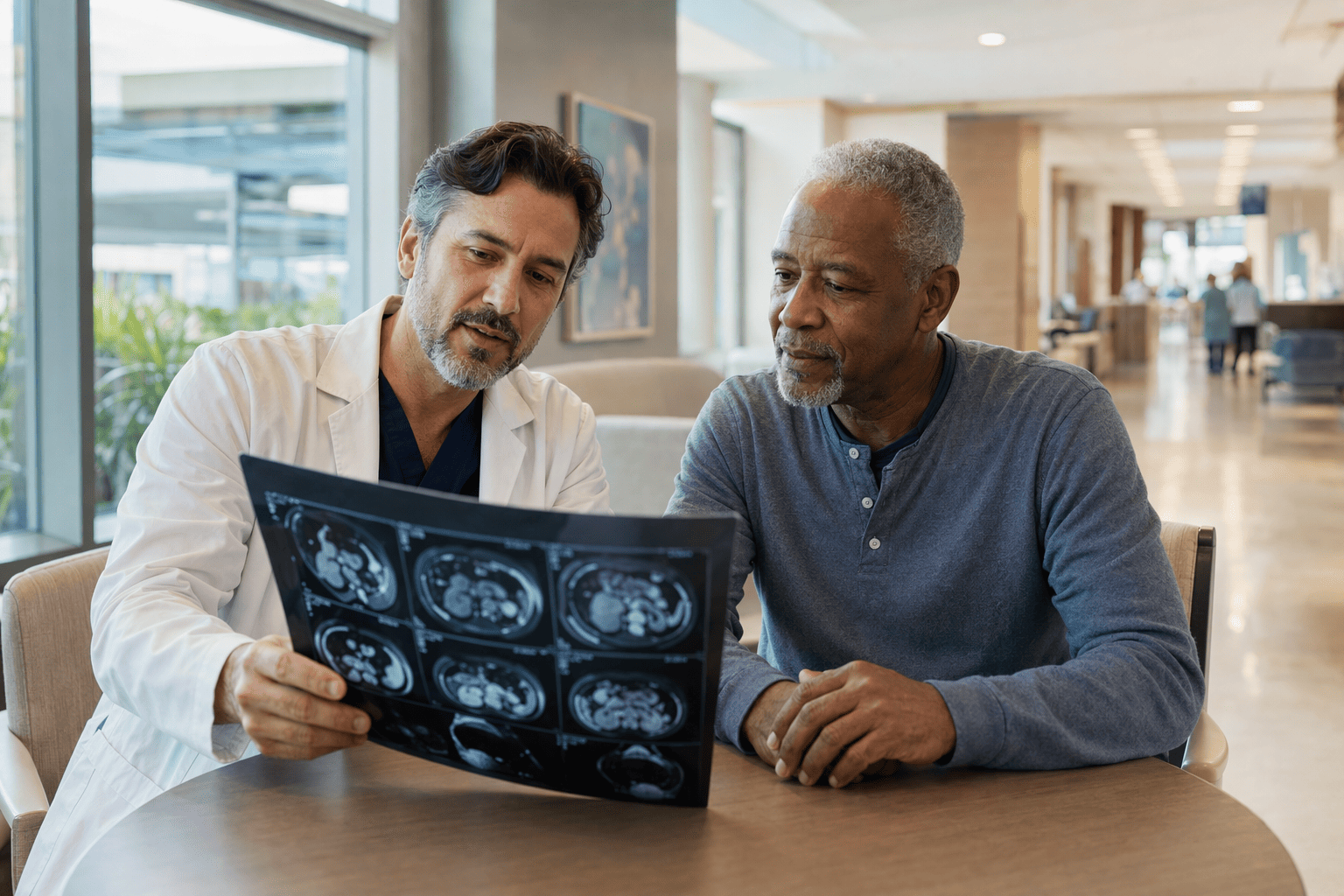
The biopsy tissue must go through Next-Generation Sequencing (NGS), a test that scans hundreds of genes at once for actionable mutations. In Faridabad, diagnostic facilities like Oncquest and DNA Labs India run the panels that read for errors, PIK3CA mutations, BRCA1/2 deletions, and others. The output is a dense report card. It tells a trained oncologist whether a PARP inhibitor like olaparib can exploit a DNA repair defect in your cancer cells, or whether immunotherapy has a shot based on your PD-L1 expression levels.
This is operational medicine now, not a research sidebar. Sarvodaya Cancer Institute has built a Genomic Oncology program that utilizes genetic information to develop personalised cancer treatments. The program structures clinical decisions, initial dosing, second-line switch strategies, around the genomic data. When you walk into an oncology OPD in Faridabad with that report, the conversation shifts from a standard protocol to a single-patient clinical investigation.
Why Tumor Biology, Not Just Location, Drives Modern Therapy Plans
The geography of a lump is less dangerous than its biology. Modern oncology breaks breast cancer into three main molecular personalities, and each demands a radically different chemical arsenal. Hormone receptor-positive/HER2-negative breast cancer represents the most common molecular subtype in India, comprising approximately 33% to 48% of cases. This subtype feeds on estrogen, so an endocrine blockade using aromatase inhibitors or tamoxifen, often paired with a CDK4/6 inhibitor, can hold the disease stable for years without a drop of traditional chemotherapy. If that same tumor were positive for PIK3CA, adding alpelisib transforms the suppression further.
The second category, HER2-positive breast cancer, is notoriously aggressive. It accounts for 12% to 19% of Indian breast cancer cases. Without anti-HER2 targeted therapy, these tumors proliferate fast and metastasize early. With a monoclonal antibody backbone like trastuzumab and pertuzumab in the neoadjuvant setting, however, many patients achieve a pathologic complete response where the tumor vanishes before surgery. The biology here is an overexpression bomb that monoclonal antibodies are designed precisely to defuse.
Triple-Negative Breast Cancer (TNBC) remains the hardest target because it lacks the three common receptors, giving it no obvious molecular hook for existing hormonal or HER2 agents. Yet even here, biology splits the field. Emerging real-world data from India suggest a high prevalence of HER2-low breast cancer at around 60%, a category that now responds to antibody-drug conjugates like trastuzumab deruxtecan, bridging the old gap between "positive" and "negative."
In every case, the subtype dictates the drug. An oncologist cannot pick a winning treatment from a pathology report that only says "carcinoma." They need the immunohistochemistry (IHC) and the genomic sequencing to know whether the enemy is hormone-addicted, HER2-amplified, or immunologically targetable.
How Advanced Targeted Therapies Work Against Specific Biomarkers
Targeted therapy and immunotherapy are not interchangeable code words for "gentle chemo." Each drug class docks onto a specific molecular feature of the cancer cell and leaves normal tissue alone when that feature is absent. Here is how the four major classes map to breast cancer biomarkers:
Anti-HER2 monoclonal antibodies (Trastuzumab, Pertuzumab): These proteins attach to the HER2 receptor on the cancer cell surface, physically blocking the growth signals and flagging the cell for destruction by your immune system. Without HER2 overexpression, the drug has nothing to bind to.
CDK4/6 inhibitors (Ribociclib, Palbociclib): In HR-positive tumors, cancer cells hijack the cell cycle using enzymes called cyclin-dependent kinases. CDK4/6 inhibitors jam these enzymes, stalling the cell's ability to copy its DNA and divide. These pills require no IV line, but they demand an intact retinoblastoma protein pathway to work.
PARP inhibitors (Olaparib, Talazoparib): Used in BRCA-mutated cancers, these drugs exploit a repair defect. Normal cells fix DNA breaks via two pathways; BRCA-mutant cells rely on only one backup system called PARP. When you inhibit PARP, the cancer cell accumulates lethal DNA errors while your healthy cells remain unharmed.
Immune checkpoint inhibitors (Pembrolizumab): In TNBC with positive PD-L1 expression, cancer cells hide from T-cells by displaying the PD-L1 protein. Checkpoint inhibitors peel off this camouflage. The unleashed immune cells attack the tumor aggressively. Without measurable PD-L1, this does not occur.
Navigating Treatment Centers in Faridabad for Genetic Profiling and Targeted Care
Sarvodaya Cancer Institute anchors the genetic-guided oncology infrastructure in the region. Its Genomic Oncology unit uses genetic information to develop personalised cancer treatments that target the genetic changes specific to each patient’s cancer, supported by a Tissue Tumor Bank for molecular research. The institute also houses a VERSA HD 6D Couch Linac for radiation precision, ensuring that if radiotherapy is part of your plan, it is delivered with sub-millimeter accuracy against a mapped tumor volume. The center is not just offering testing in a silo; it is operationalizing the results within a continuous feedback loop that includes pathology review and targeted therapy administration.
Fortis Escorts Faridabad provides the surgical and diagnostic backbone necessary for a precision pathway. Its imaging protocols and molecular lab tie-ins enable a patient to receive IHC subtyping and referral for advanced genomic panels like BRCA testing without leaving the hospital ecosystem. Meanwhile, for those who cannot attend daily hospital visits, home-based care models like Pi Cancer Care coordinate the entire personalized therapy journey remotely, pairing diagnostic services including 3D mammography with reduced radiation exposure and molecular profiling with home chemotherapy administration and 24/7 nursing support.
For multi-specialist input, Afiyaindia supplements the ecosystem by connecting patients to radiology and surgical oncology opinions, ensuring that the personalized therapy plan is scrutinized not just by a medical oncologist but by a network. Faridabad's capacity now extends from initial genetic counseling to the delivery of a CDK4/6 inhibitor or an anti-HER2 infusion tailored to that single genomic result.
The Role of Medical Oncologists and Tumor Boards in Faridabad
A genomic report is a data dump without a tumor board to translate it. In Faridabad, the medical oncologists who interpret these reports and build your personalized therapy plan operate within multi-disciplinary structures that cross-check every critical decision. The table below identifies the key specialists and the institutional platforms they use for precision oncology.
Specialist | Primary Institutional Base | Precision Oncology Focus | Validating Credential |
Dr. Sumant Gupta | Sarvodaya Hospital / Metro Heart Institute | Genomic oncology, bone marrow transplantation (performed Faridabad's first-ever Bone Marrow Transplant and over 200 procedures); targeted therapy integration | TYSA Young Scholar Award for Best DM, Oncology fellow (2015); Joint Secretary, Indian Society of Oncology; treated over 50,000 patients |
Dr. Bharat Patodiya | Pi Cancer Care (coordinating with Faridabad centers) | Breast cancer molecular profiling, treatment cost navigation, home chemotherapy coordination | Certificate of competence in Breast cancer from Ulm, Germany; completed medical oncology training at Hinduja Hospital, Mumbai; DNB Medical Oncology |
Dr. Novak Gupta | Faridabad oncology network | Medical oncology and protocol-driven chemotherapy | Referral-based practice focused on medical oncology consultations within local hospital networks |
Dr. Aditya Vidushi | SSB Healthcare network, Faridabad | Medical oncology with linkage to diagnostic and radiation oncology services | Mapped to facility-based oncology OPDs for guided therapy administration |
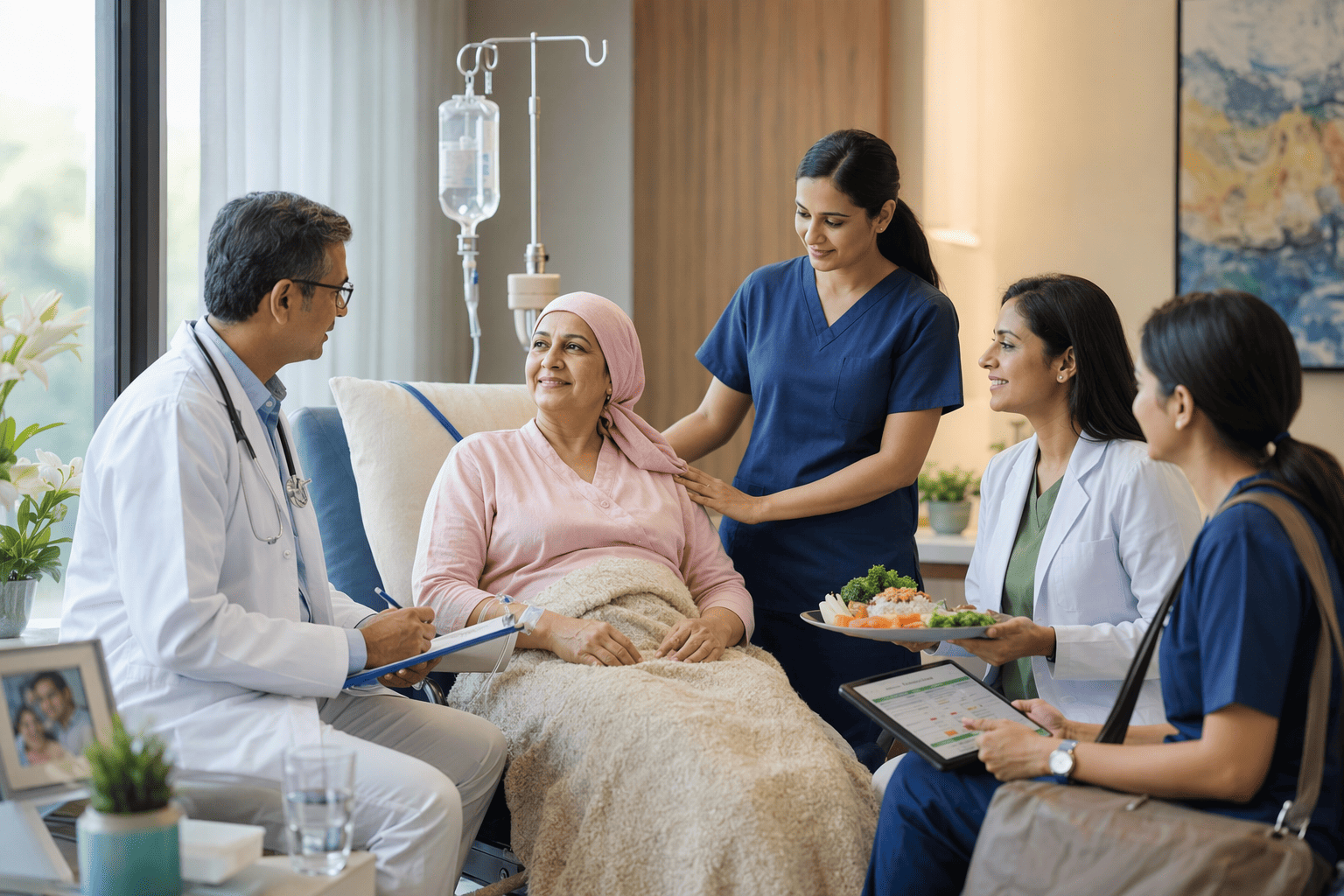
These oncologists do not work in isolation. Sarvodaya's tumor board approach assembles experts from oncology, surgery, pathology, and radiology to jointly design a personalised treatment plan. Pi Cancer Care mirrors this with weekly multidisciplinary tumor boards that review protocol selection. The board functions as a judicial review of your genomic data, ensuring no single bias, surgical or pharmacological, skews the recommendation.
Understanding the Cost of Genetic Testing and Personalized Cycles in Rupees
The checkpoints on a precision oncology journey carry a specific rupee value, and that transparency matters more than abstract promises of efficacy. A Next-Generation Sequencing panel from a lab like DNAlabs India typically ranges from ₹15,000 to ₹60,000, depending on the number of genes scanned. Basic BRCA1/2 germline testing costs significantly less, but it misses the somatic mutations that drive treatment resistance inside the tumor itself. These tests are a one-time cost; you pay once for a biological map that informs every drug decision from first line to metastatic progression.
The therapeutic cycles that follow concentrate the larger financial exposure. Breast cancer treatment costs in India range from ₹5 to 30 lakhs depending on disease stage and drug selection. A hormone receptor-positive protocol using CDK4/6 inhibitors adds a monthly oral drug cost that can exceed ₹25,000, while anti-HER2 targeted regimens carry a high price that converts to life-extending value when the target is present.
A biology-driven plan contains a built-in cost-avoidance mechanism. When genomic testing rules out a chemotherapy class your tumor resists, you skip months of futile infusions, repeated hospitalizations for side effects, and disease progression on watch. The initial ₹30,000 spent on sequencing can prevent spending ₹3 lakhs on a chemotherapy cycle that never had a biological basis for success. Qonaq Health models this precision resource allocation by pairing treatment cost analysis with the patient's location, including structured pricing for home chemotherapy services.
Expanding Access: Home Chemotherapy, Government Schemes, and Practical Steps
The biology can be precise and the drug available, but if logistics fail, the treatment plan collapses. Home chemotherapy services now operating in the Faridabad corridor remove the daily travel burden that stalls so many treatment schedules. Pi Cancer Care's model pairs each targeted therapy cycle with 24/7 nursing support administered in your home, cutting hospital-acquired infection risk and transportation exhaustion while maintaining the sterile protocols a monoclonal antibody infusion demands.
Financial barriers require parallel navigation. Ayushman Bharat provides a coverage framework for economically vulnerable families seeking hospital-based oncology, and its applicability to specific targeted therapy regimens should be verified at your treating hospital's insurance desk at the time of admission. Dr. Bharat Patodiya's approach to cost reduction centers on what he calls a biosimilar strategy: using biosimilar alternatives without compromising efficacy when a branded biologic like trastuzumab has a licensed, chemically equivalent counterpart manufactured under stringent regulatory oversight. This substitution alone can halve the cost of an anti-HER2 regimen without changing the tumor-killing biology. The savings extend further through coordinated second-opinion access with multidisciplinary tumor boards, so you avoid getting locked into a single center's pricing without comparison.
Your first practical step is to secure your pathology block and unstained slides from the biopsy. Without this physical tissue, no genomic sequencing can proceed. Book an oncology consultation at Sarvodaya Cancer Institute's OPD or through a coordinating oncologist, explicitly requesting IHC marker analysis (ER, PR, HER2, Ki to 67) and an NGS panel discussion before any drug is administered.
Conclusion
A treatment plan built without a genetic profile is a clinical guess about the biological enemy inside your chest. Faridabad's oncologists now have the diagnostic infrastructure, the tumor board frameworks, and the targeted drugs to turn a genomic report into a therapy with a clear mechanism of action against your specific tumor subtype. Ask for your IHC markers and NGS results before your first drug is infused. The sequencing technology is here, the medical minds to translate it are here, and the logistics to deliver it at home are operational. Do not let a generic protocol stand between your cancer's biology and a drug designed specifically to dismantle it.
Frequently Asked Questions
Which hospitals or cancer centers in Faridabad offer genetic testing for breast cancer to guide personalized therapy?
Sarvodaya Cancer Institute is the primary center with an explicit Genomic Oncology program that uses genetic data to create personalized treatment plans. Fortis Escorts Faridabad provides related diagnostic and BRCA testing pathways, while Pi Cancer Care coordinates molecular profiling and targeted therapy delivery.
How do treatment centers in Faridabad use BRCA and other genomic test results to create individualized breast cancer treatment plans?
Oncologists submit tumor tissue to NGS labs like DNAlabs India or Oncquest. The resulting report showing mutations such as BRCA or PIK3CA is reviewed by a multi-disciplinary tumor board. The board, composed of a medical oncologist, surgeon, and pathologist, selects drugs designed specifically against those mutations, such as PARP inhibitors for BRCA defects.
What are the best medical oncologists in Faridabad who specialize in personalized breast cancer care based on genetic profiling?
Dr. Sumant Gupta at Sarvodaya Hospital is a leading figure, with extensive experience in genomic oncology and targeted therapy. Dr. Bharat Patodiya at Pi Cancer Care coordinates molecular-profiling-guided treatment with a strong focus on breast cancer biology. Both participate in tumor board reviews that interpret genetic data.
What is the cost of genetic testing and personalized breast cancer treatment in Faridabad?
Next-Generation Sequencing panels cost approximately ₹15,000 to ₹60,000. Full personalized treatment ranges from ₹5 lakhs to ₹30 lakhs depending on the drug cocktail required. Pre-authorization and biosimilar drug selection, a method Dr. Bharat Patodiya's protocols employ, can significantly reduce the biologic drug component of the overall cost.
How does personalized breast cancer treatment in Faridabad compare to conventional approaches in terms of outcomes and side effects?
Personalized treatment matches a specific drug to a specific mutation, avoiding ineffective chemotherapy classes. This produces fewer systemic side effects like severe neutropenia or neuropathy when the drug acts only on the target. The biology-driven approach avoids the disease progression that occurs on an empirically chosen but biologically useless chemotherapy agent.
Sources
Best Breast Cancer Specialist (Oncologist) | Dr. Bharat Patodiya - www.drbharatpatodiya.com
Best Cancer Hospital in Faridabad Delhi NCR India - www.sarvodayahospital.com
Breast Cancer Treatment Cost in India | Compare Prices at Top Oncology Hospitals in India - www.qonaqhealth.com
Barriers to Biomarker-Guided Advanced Breast Cancer Care in India: Diagnostic, Economic, and Implementation Challenges - pmc.ncbi.nlm.nih.gov
Best Oncologist in Faridabad - Dr Sumant Gupta - drsumantgupta.com

Comments