
Why Your Tumor Isn't Shrinking Despite Severe Chemotherapy Side Effects and How to Find the Right Oncologist in Faridabad

Introduction
You are going through the cycles exactly as prescribed. The nausea hits within hours, turning your stomach inside out. The fatigue has hollowed you out, making a trip to the bathroom feel like a marathon. You brace for the crash after each infusion because you were told this is the price of beating cancer.
Then the scan results come back. The tumor hasn't shrunk. It might have even grown. The physical agony of the treatment is suddenly dwarfed by a terrifying question: if the side effects are this severe, why isn't the cancer dying?
The emotional whiplash of enduring brutal toxicity without a clinical payoff is one of the most isolating experiences in oncology. Patients wonder if they are simply running out of options. Side effects measure how a drug affects your healthy tissues. Tumor shrinkage measures whether the drug is working against the cancer. Those two things often run on completely separate biological tracks.
This article directly addresses that disconnect. You will understand the biology behind why a tumor resists drugs that make you so sick, learn the exact tests needed to find a new way forward, and see a clear path to an oncologist in Faridabad who can help you pivot from a failing protocol to a targeted strategy.
Key Takeaways
A tumor that stays the same size on a scan while you feel physically wrecked by treatment is a different problem than a drug simply missing its target. The side effects tell you the drug is circulating in your body. The stalled scan tells you the cancer cells have figured out how to ignore it.
Severe nausea, vomiting, or fatigue hit harder in people who are younger than 50, female, or carrying specific genetic variants that slow drug clearance. But that internal drug exposure has no connection to whether your cancer shrinks. A resistant tumor will not respond no matter how much toxicity you absorb.
Resistance is a physical event with a timeline. Some cancer cells carry mutations that make a drug useless before the first infusion. Others adapt within weeks, switching on efflux pumps that spit the chemotherapy back out or accelerating DNA repair faster than the drug can cause damage. The scan does not move because the biology has already moved past the treatment.
Biomarker testing picks up where a stalled scan leaves off. Next-generation sequencing, PD-L1 expression, and microsatellite instability (MSI) testing can flag mutations like EGFR or mismatch repair deficiency that respond to immunotherapy or targeted agents. Those drugs operate through routes the current chemo never touches.
Symptom control is a separate medical task from tumor control. Evidence-based antiemetic protocols using 5-HT3 and NK1 receptor antagonists, combined with pacing strategies like 15-to-20-minute naps and light walking, can stabilize your daily function while you line up a second opinion and a revised plan.
A second opinion in Faridabad runs on preparation. Assemble your pathology slides, imaging CDs, and a shortlist of oncologists at hospitals such as Fortis Escorts and Saroj Super Speciality Hospital who bring genomic profiling and tumor board review into their practice.
Why Your Tumor May Not Be Shrinking Despite Severe Chemotherapy Side Effects
The immediate answer you need is this: the nausea flattening you and the tumor refusing to budge are driven by two completely separate biological engines. The American Cancer Society clarifies that chemotherapy-induced nausea and vomiting (CINV) happens because the drugs irritate the areas of the brain that control nausea or the cells lining your mouth, throat, stomach, and intestines. It is a toxicity event in healthy tissues, amplified by higher doses of chemotherapy and personal risk factors.
The tumor’s stubbornness, on the other hand, is a cancer-cell defense mechanism. It tells you nothing about whether the drug is hitting its target. Debunking the myth that worse side effects equal better outcomes is the first step toward making a rational next move instead of just enduring more damage.
Your personal risk profile can make the side effects brutally unfair. The American Cancer Society notes that your risk of nausea and vomiting is elevated if you are female, younger than 50 years of age, had morning sickness during pregnancy, are very anxious, or have experienced motion sickness. If you check several of those boxes, you could be hit with disabling nausea from a drug concentration that is scientifically insufficient to kill a resistant tumor. This is the cruel arithmetic of a failed chemotherapy regimen: your body absorbs the full systemic impact while cancer cells use molecular pumps to eject the drug almost as fast as it enters them.
Continuing a failing regimen has concrete risks that go beyond feeling miserable. Chemotherapy-induced nausea and vomiting can negatively impact your quality of life, nutritional status, and adherence to the prescribed schedule, and can lead to treatment delays or dose reductions. When a tumor is not shrinking, the balance tips sharply: you are absorbing only the downside, with no disease control to justify it. At that point, the regimen crosses into what oncologists call futile chemotherapy, treatment that produces toxicity without a realistic chance of clinical benefit and that actively consumes the time window available to try something that might work.
Resistance tends to emerge on a timeline that can feel like a betrayal. The National Cancer Institute describes how resistance can develop quickly, within a matter of weeks of starting treatment, or months, or even years later. Some cancers even harbor molecular changes that make them insensitive to a particular drug before treatment ever begins, a condition called intrinsic resistance. That means your tumor may never have been vulnerable to the drugs you received, and the suffering you experienced was not a sign of a close fight. It was a mismatch that only genomic testing could have flagged at the outset.
The Biological Drivers of Chemotherapy Resistance and Treatment Failure
Drug resistance is one of the most challenging problems facing cancer researchers and patients today. Your tumor isn't a passive mass; it is a population of cells under evolutionary pressure, and chemotherapy applies a massive selective force. The cells that survive a cycle are often those carrying specific molecular armor. Understanding the main resistance pathways helps you ask the right questions when you sit down with a new oncologist in Faridabad: instead of "why didn't it work," you can ask "which resistance mechanism does my tumor show and what drug bypasses it."
Start with the most straightforward betrayal: the drug efflux pump. Healthy cells have proteins called transporters that pump out toxic agents, and cancer cells hijack this system with proteins known as ATP-binding cassette (ABC) transporters. These transporters expel some chemotherapy drugs, including doxorubicin, and some targeted therapies, like imatinib, straight out of the cancer cell before the drug can hit its target. A tumor with high ABC transporter expression essentially spits the drug back out as fast as it diffuses in, explaining why you are sick (the drug circulates systemically) but the tumor is unphased (the drug never achieves a lethal intracellular concentration). Other mechanisms pile on: DNA repair mutations allow cancer cells to fix the lethal breaks that chemotherapy causes, and genetic heterogeneity means different regions of the same tumor carry different mutations, so a drug that kills 90 percent of the mass leaves a resistant 10 percent to regrow.
The practical implication is clear. Molecular alterations that contribute to treatment resistance include mutation of the drug's molecular target, changes in the way the drug interacts with the tumor, broad cellular changes, and changes in the tumor microenvironment. A cocktail of drugs chosen without knowing the mutations present is a guess. A treatment chosen after genomic profiling that identifies a specific driver mutation, and confirms that you lack the mutations that confer resistance to a particular targeted agent, is a plan.
Decoding Your Tumor: The Essential Genomic and Biomarker Tests
When chemotherapy is clearly not working, repeating the same scan-and-pray cycle is the one strategy you cannot afford. Use these diagnostic steps to decode resistance and find a treatment that bypasses it:
Next-Generation Sequencing (NGS): Order a thorough NGS panel on a recent biopsy to identify actionable mutations across dozens or hundreds of genes, such as EGFR, KRAS, BRAF, or ALK rearrangements, that have matched oral targeted drugs already approved and available.
Immunotherapy biomarker tests: Check PD-L1 expression levels on the tumor surface and order microsatellite instability (MSI) or mismatch repair (MMR) deficiency testing; tumors that are MSI-High (MSI-H) or dMMR may respond to drugs like pembrolizumab regardless of tumor origin.
Additional targeted assays: Ask whether your tumor type warrants fluorescence in situ hybridization (FISH) for HER2 amplification or immunohistochemistry for hormone receptor status (ER/PR), as targeted agents such as trastuzumab or hormone therapy are standard for breast and gastric cancers that standard chemotherapy response would miss.
Dr. Bharat Patodiya, a medical oncologist whose practice incorporates molecular profiling and 3D mammography with reduced radiation exposure, notes in his resources that understanding the specific mutations within a tumor allows doctors to move beyond trial-and-error chemotherapy. His clinic coordinates second-opinion access with multidisciplinary tumor boards for protocol review, ensuring that genomic results are not read in isolation but integrated with pathology, radiology, and surgical input to design a plan that targets the identified mutations from the start. When you seek a new oncologist in Faridabad, the first filter is simple: does this doctor order these tests before writing the next prescription, or do they propose another round of chemo without this data.
Managing the Storm: Effective Control of Chemotherapy-Induced Nausea and Fatigue
You cannot make clear decisions about trial eligibility and second opinions when you are too nauseated to eat or too exhausted to think. Getting side effects under control is the platform that makes every subsequent step possible. The table below organizes evidence-based interventions you can discuss with your current or new oncologist immediately.
Intervention Type | Specific Agents and Actions | Practical Implementation and Evidence |
Prophylactic Antiemetic Protocol | 5-HT3 receptor antagonists (ondansetron), NK₁ receptor antagonists (aprepitant), corticosteroids (dexamethasone), and olanzapine. | Tailored to the emetogenicity of the regimen. Management involves prophylactic use before symptoms start, not chasing them after vomiting begins. |
Hydration and Diet | 8 to 10 (8-ounce) glasses of non-caffeinated liquids daily + the BRATT diet (bananas, rice, applesauce, tea, white toast) for diarrhea. | Hydration is critical: dehydration amplifies nausea and fatigue. Small, frequent bland meals reduce gut irritation and maintain nutritional status when formal eating is impossible. |
Fatigue Pacing and Exercise | Short naps of 15 to 20 minutes; light daily walking. | People who do light exercise, such as walking, may have less fatigue and handle chemotherapy treatment better. Naps kept under 20 minutes combat daytime exhaustion without destroying nighttime sleep architecture. |
Supplementary Modalities and Monitoring | Acupressure (P6 wrist point); temperature and symptom tracking. | MSKCC guidelines recommend contacting your team immediately if vomiting persists after medication or you record a fever of 100.4°F (38°C) or higher. Acupressure provides an adjunctive nausea-reduction strategy usable at home. |
Reassessing Your Case: The Power of a Tumor Board Review in Faridabad
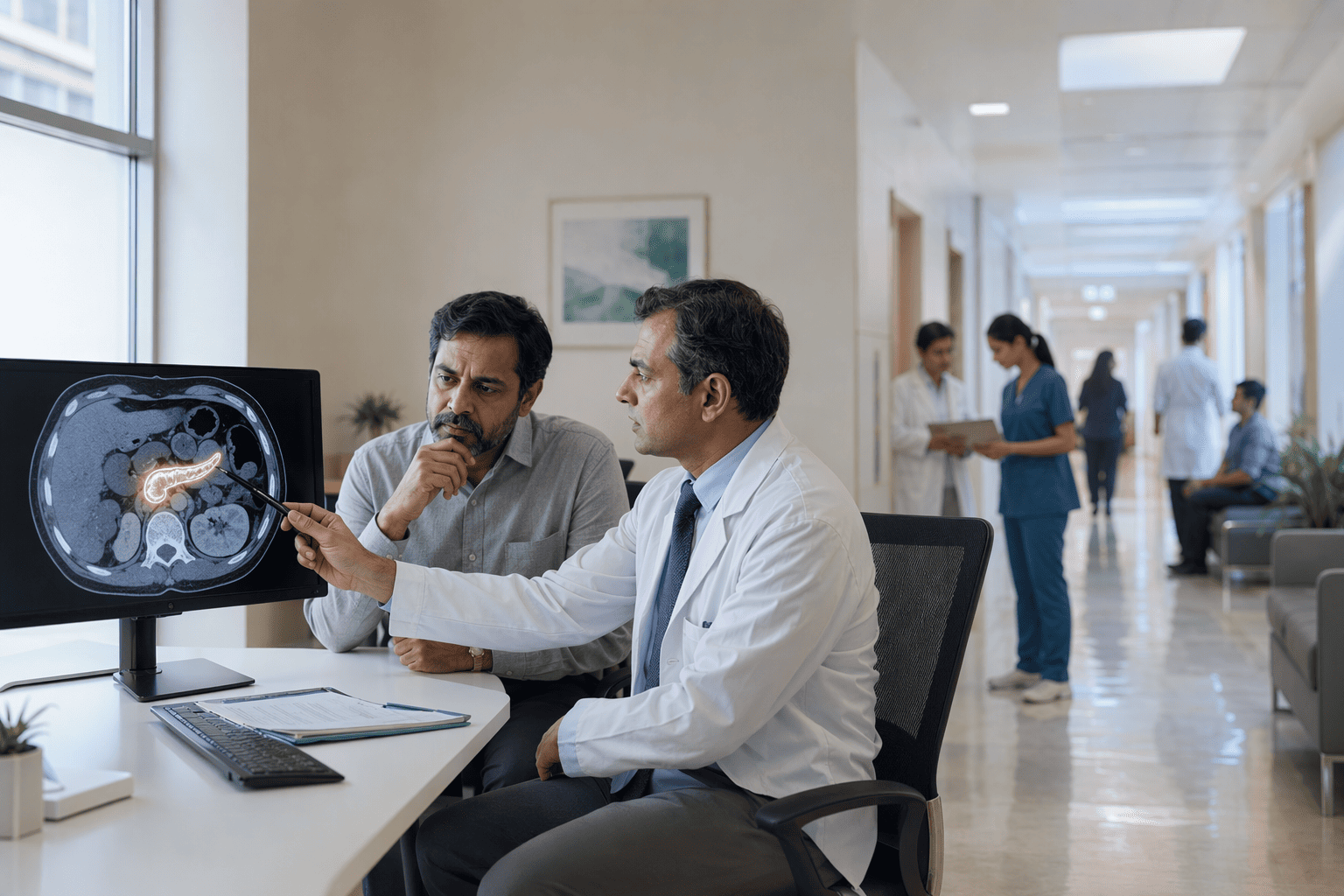
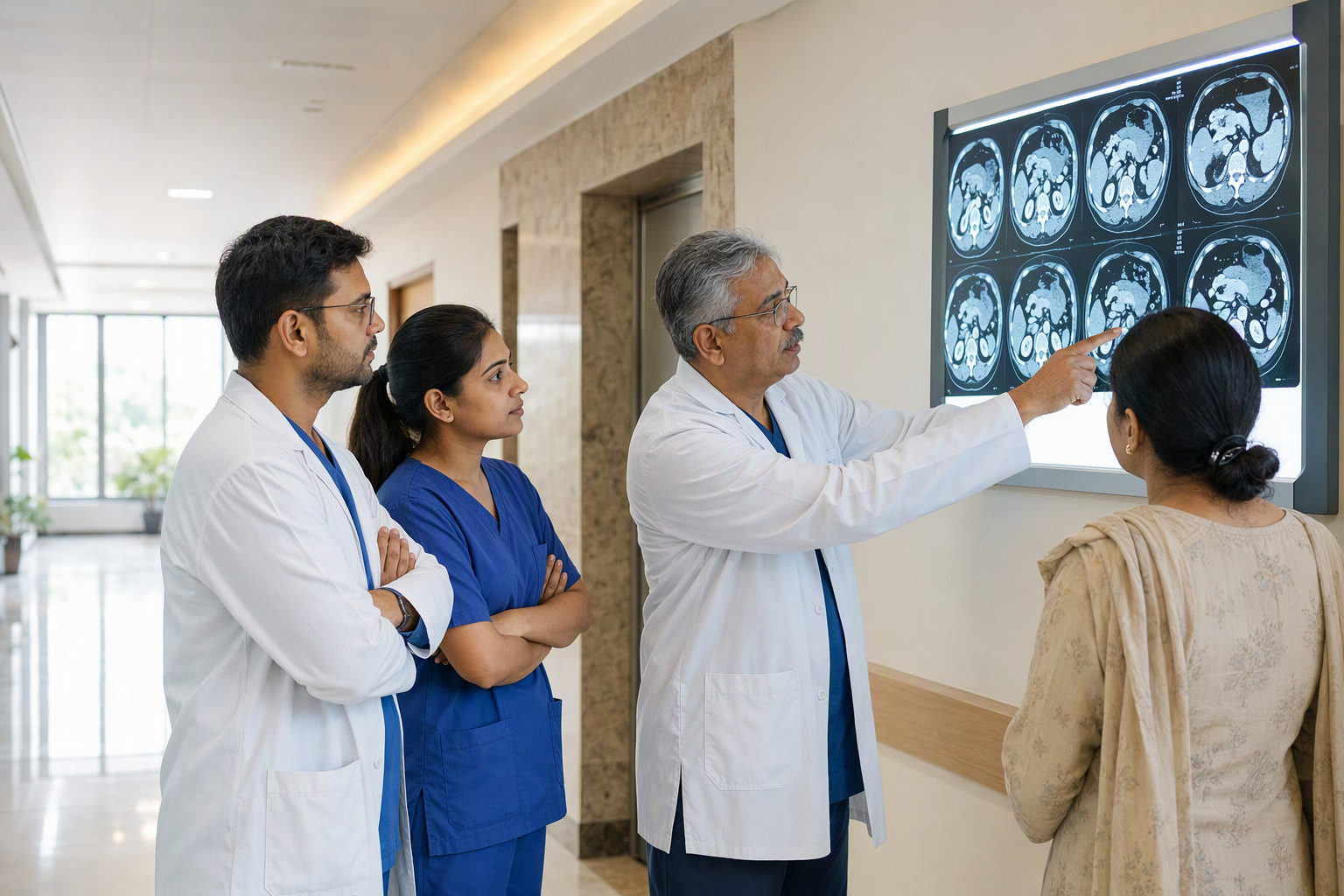
When a tumor marches through a full chemotherapy course without stopping, the problem may be an incomplete view of the pathology. This is the scenario where a multidisciplinary tumor board becomes key. A tumor board review brings together a medical oncologist, a surgical oncologist, a radiation oncologist, a pathologist, and a radiologist in one room to re-litigate every assumption: Was the original biopsy representative of the entire tumor? Could the imaging characteristics suggest a different subtype? Is there a window for local control with surgery or radiation before switching systemic therapy?
A single treating oncologist, no matter how skilled, works from within a silo of their specialty. A pathologist sitting in the same room can challenge a two-year-old diagnosis by noting that the original slide shows morphology consistent with a subtype now known to respond to a particular immunotherapy. A surgeon can flag that a slightly different biopsy site might capture the resistant clone and reveal an actionable mutation missed by the first sample.
This deliberate collision of expertise is exactly what a resistant tumor demands. Several oncology centers in Faridabad affiliated with hospitals such as Fortis Escorts and Saroj Super Speciality Hospital organize regular tumor boards as standard of care for non-responsive cases. Do not accept a corridor conversation between two doctors as a board review; confirm that your case is formally discussed across at least the three core disciplines and that a consensus note enters your medical record.
One practice framework worth understanding is the model that integrates tumor board review and genomic testing from the start. Clinics such as Pi Cancer Care, founded by Dr. Bharat Patodiya in Hyderabad, offer weekly multidisciplinary tumor boards where treatment protocols are reviewed collaboratively rather than by a single physician. While this specific center operates in Hyderabad, you can use its approach as a benchmark when evaluating Faridabad oncologists: ask directly whether the practice holds routine tumor board meetings, who participates, and whether your case will be reviewed before the next treatment decision is made.
Your Action Plan for a Second Opinion in Faridabad
Walking into a new oncologist's office without records, a shortlist, and a prepared question set wastes the consultation. Execute the following steps in order so the second opinion produces a concrete alternative regimen.
Assemble the complete physical file: Compile all original biopsy slides and formalin-fixed paraffin-embedded (FFPE) tissue blocks, every CT and PET-CT imaging study on CD or USB, the precise names and doses of each chemotherapy regimen received over time, and the full cumulative dose records. The new oncologist cannot run genomic tests without tissue and cannot interpret response without baseline imaging.
Shortlist oncologists at specific Faridabad hospitals: Target medical oncologists who practice at Fortis Escorts Hospital, Saroj Super Speciality Hospital, or Max Hospital in Faridabad and whose profiles indicate specialization in targeted therapy, immunotherapy, or the specific tumor type you are fighting. Verify that the practice can order NGS and MSI testing on-site or through a reliable reference laboratory.
Schedule consultations with the genomic profiling question up front: When booking the appointment, inform the coordinator that you are seeking a second opinion for chemotherapy-resistant disease and require a discussion of thorough biomarker testing. An oncologist who cannot deliver this discussion at the first visit is not the oncologist you need.
Prepare a focused question list: Bring three written questions to the consultation: "Based on my existing biopsy tissue, can you order NGS and PD-L1/MSI testing before proposing a new regimen?" "Is there a tumor board review available for my case before we commit to a treatment?" "Which targeted therapy or immunotherapy drugs match the mutations you commonly see in my tumor type and are these accessible in Faridabad?"
Exploring a New Frontline: Targeted Therapy, Immunotherapy, and Clinical Trials
The era in which chemotherapy was the only systemic tool is over. Three newer drug classes directly bypass the resistance mechanisms that defeated your prior treatment:
Targeted therapy: Small-molecule inhibitors or monoclonal antibodies block specific proteins that drive your cancer's growth, EGFR, ALK, HER2, BRAF, PARP, while largely sparing healthy cells, typically as oral pills with side-effect profiles differing entirely from the nausea and fatigue you just endured.
Immunotherapy: Checkpoint inhibitors such as pembrolizumab and nivolumab bind PD-1 or CTLA-4, removing the brakes cancer puts on your own T-cells and allowing your immune system to destroy tumors that escaped chemotherapy through MSI-H or high tumor mutational burden.
Antibody-drug conjugates: A chemotherapy payload linked to an antibody seeks a tumor-specific surface marker and delivers the kill agent directly inside cancer cells, bypassing the drug efflux pumps that defeated your prior treatment.
One approach researchers are pursuing is to co-administer drugs that work by different molecular mechanisms, increasing tumor cell killing while reducing the likelihood of drug resistance and minimizing overlapping toxicity, the exact logic your next oncologist should apply when reviewing your genomic report. In Faridabad, proximity to Delhi NCR also opens access to clinical trials at major academic centers testing novel agents and combinations that are not yet commercially available; your oncologist can screen your eligibility through the Clinical Trials Registry of India and the major hospital trial portfolios.
Conclusion
Severe nausea and deep fatigue in a patient whose tumor is not shrinking is not a sign to dig in and endure more of the same protocol. It is a powerful signal to stop, re-evaluate, and pivot to a biology-driven strategy. The same tissue block that confirmed your diagnosis can now deliver the genomic information that points to an immunotherapy or targeted agent your current regimen cannot access.
Oncologists at Fortis Escorts, Saroj Super Speciality Hospital, and Max Hospital in Faridabad can initiate this testing and, if the case demands it, bring your imaging and pathology to a full multidisciplinary tumor board review. Schedule the second opinion this week. Walk into that consultation with your biopsy slides in hand, your chemotherapy records summarized, and the question that changes everything: "What does my tumor's genomic profile say we should use next?"
Frequently Asked Questions
Why is chemotherapy causing severe nausea and fatigue but not shrinking the tumor?
Nausea and fatigue are caused by the drug’s toxic effect on healthy tissues like the gut lining and bone marrow, while tumor shrinkage depends on cancer cells being genetically vulnerable to the drug. A resistant tumor activates efflux pumps or DNA repair mechanisms that neutralize the chemo, so you feel the systemic toxicity without any therapeutic benefit.
What factors determine whether a tumor responds to chemotherapy, and what alternative explanations should be considered?
Tumor response is determined by the cancer’s specific genetic mutations, the tumor microenvironment, and the presence or absence of drug resistance mechanisms like ABC transporters. Imaging may also show pseudoprogression in some immunotherapies, or a different pathology than initially diagnosed, which is why a multidisciplinary tumor board review of original biopsy slides is critical for non-responsive cases.
Are there specific biomarkers or genomic tests that can predict chemotherapy response or resistance?
Yes. Three key tests decode resistance and guide the switch from chemotherapy to more effective agents:
Next-Generation Sequencing (NGS): Identifies driver mutations like EGFR, KRAS, and BRAF that have matched targeted drugs.
Microsatellite instability (MSI) testing: Reveals tumors that respond to immunotherapy.
PD-L1 expression levels: Predict checkpoint inhibitor benefit.
These tests detect intrinsic resistance and guide the switch from standard chemotherapy to targeted agents or immunotherapy that bypass the identified resistance mechanism.
How can I find the best medical oncologist in Faridabad for a second opinion on treatment-resistant cancer?
Follow these steps when seeking a new oncologist:
Shortlist oncologists at Fortis Escorts Hospital, Saroj Super Speciality Hospital, or Max Hospital in Faridabad who specialize in targeted therapy and immunotherapy.
Confirm the practice orders NGS and MSI testing and holds regular multidisciplinary tumor board reviews.
Bring all biopsy slides, imaging CDs, and chemotherapy records, and ask directly about genomic profiling during the first consultation.
What supportive care and anti-nausea strategies can help manage severe chemotherapy side effects at home or in a local clinic?
Prophylactic antiemetics including 5-HT3 receptor antagonists (ondansetron), NK₁ receptor antagonists (aprepitant), and olanzapine form the medical backbone. At home, drink 8 to 10 glasses of non-caffeinated liquids daily, take short 15-to-20-minute naps, follow the BRATT diet (bananas, rice, applesauce, tea, toast) for diarrhea, and use acupressure at the P6 wrist point.
What newer treatment options, clinical trials, or targeted therapies exist for tumors that do not respond to first-line chemotherapy?
Targeted therapy (kinase inhibitors like osimertinib for EGFR or PARP inhibitors for BRCA mutations), immunotherapy (checkpoint inhibitors like pembrolizumab for MSI-H tumors), and antibody-drug conjugates all overcome chemotherapy resistance by either targeting specific mutations or engaging the immune system. Clinical trials available through Delhi NCR academic centers offer access to novel combinations not yet commercially available in the region.
Sources
Cancer Treatment info | Best Oncologist | Dr. Bharat Patodiya - www.drbharatpatodiya.com
Expert Consensus on Effective Management of Chemotherapy-Induced Nausea and Vomiting: An Indian Perspective - pmc.ncbi.nlm.nih.gov
Why Do Cancer Treatments Stop Working? - NCI - www.cancer.gov
Managing Your Chemotherapy Side Effects | Memorial Sloan Kettering Cancer Center - www.mskcc.org
Nausea and Vomiting Caused by Cancer Treatment | American Cancer Society - www.cancer.org
Comments