
Combined Chemo-Immunotherapy in Faridabad: Oncologists, Outcomes, and Access Now

Introduction
The biopsy report is in your hands, and the diagnosis has just shifted the ground beneath your family's feet. Your mind is already racing past the first shock, landing on a single, urgent question: where, right here in Faridabad, can you find the most advanced treatment that gives this fight its best possible start? You have heard whispers of immunotherapy, a modern approach that turns the immune system into a weapon, but you need to know if any oncologist here actually pairs it with conventional chemotherapy. The waiting is the hardest part. This article cuts through that wait.
Faridabad has named, credentialed oncologists who design combined chemo-immunotherapy protocols. Dr. Novak Gupta and Dr. Siddharth Shanker Sood at Fortis Escorts Hospital run them. Metro Cancer Institute fields its own multi-specialty team that integrates immunotherapy into treatment plans from day one. You can map your first steps to their consultation rooms from here.
Combining the two is the biggest change in oncology practice in a decade. The TMC-I regimen, studied in advanced head and neck cancer, pairs a metronomic oral chemotherapy backbone with an ultra-low-dose checkpoint inhibitor. ASCO flagged it as potentially practice-changing in September 2026 because it delivered survival gains while cutting side-effect rates and drug costs roughly in half. That matters in Faridabad, where top oncologists are adopting exactly these protocols.
What that means for your family is a treatment window that can start sooner and hit harder, with a toxicity profile that keeps hospital stays shorter. Dr. Gupta's team discussed that new standard at a Fortis tumour board just last month. He told one patient something that stuck: 'We aren't choosing between two weapons anymore; we're aiming both at once, and the data says that's when they work best.'
Start with the oncologists who publish their combined-protocol experience. Fortis Escorts Hospital lists Dr. Gupta and Dr. Sood under its oncology department with active immuno-oncology privileges. Metro Cancer Institute and Asian Hospital also house medical oncologists who manage concurrent regimens. Second-opinion services, including remote immunotherapy consultations, can confirm the plan without delaying the first cycle.
Key Takeaways
The practical facts that determine your next move are precise and actionable. Scan these points first to orient your search, then read the full detail behind each one in the sections below.
Combined treatment exists in Faridabad now: Oncologists at Fortis Escorts Hospital, Sarvodaya Hospital, Metro Cancer Institute, and Asian Institute of Medical Sciences actively deliver chemo-immunotherapy protocols for eligible patients.
Eligibility runs through a single gate: Your tumor must clear a biomarker test first, PD-L1 expression, MSI-high status, or high TMB are the molecular keys that unlock this combined approach.
Two named specialists anchor your search: Dr. Siddharth Shanker Sood at Fortis Escorts Hospital brings a UK Fellowship in BMT and CAR-T Cell Therapy to solid and blood cancers, while Dr. Novak Gupta carries over 11 years of precision oncology expertise.
The cost reality demands a direct question: Combined regimens in private centers are an escalating financial commitment, especially where newer drugs like immunotherapy and targeted therapy are often the largest single expense, particularly when they continue long after chemotherapy ends. Policy sub-limits, waiting periods, and specific drug exclusions vary sharply, so request a written cost estimate and an insurance pre-authorization letter from the hospital’s billing desk at your first visit.
Your biomarker scan and a targeted question set your path: Arrive at the first consultation with your biopsy slides and a sharp question: "Based on my PD-L1, MSI, and TMB profile, am I a candidate for adding an immune checkpoint inhibitor to my chemotherapy backbone?"
What Combined Chemo-Immunotherapy Means and Why It’s a Game-Changer
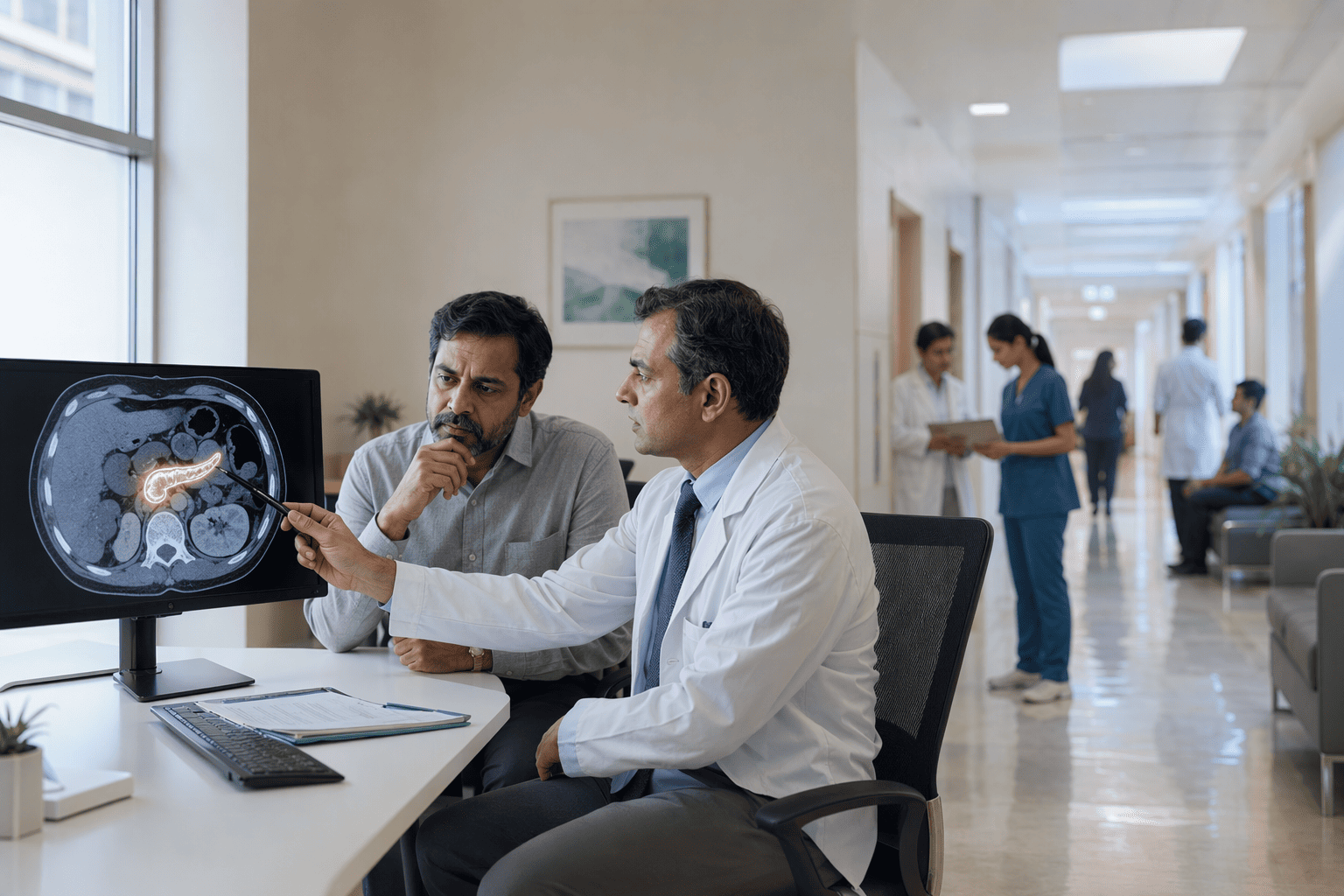
Dr. Novak watched his patient’s latest scan come up on the screen. Six months earlier, the man had exhausted every standard chemotherapy protocol, and the tumors were still growing. This scan showed something different. The lesions were shrinking, and some had vanished entirely. What changed? His oncologist had sequenced a short chemotherapy pulse to expose the cancer’s hidden fingerprints, then followed immediately with an immunotherapy agent that taught his T-cells to hunt down every cell carrying those prints. That one-two sequence is what combined chemo-immunotherapy actually does.
Chemotherapy alone tries to outrun the cancer by poisoning fast-dividing cells. It often works for a while, but the immune system takes collateral damage in the process. Immunotherapy alone can produce dramatic results, but only if the immune system can already see the enemy clearly. When you sequence them correctly, chemotherapy creates the debris field that lets immunotherapy lock onto its targets with precision that neither therapy can achieve on its own. The table below isolates how each component functions and why the pairing matters.
Mechanism | Chemotherapy Alone | Combined Chemo-Immunotherapy |
Primary objective | Inflict lethal damage on rapidly dividing cells, both cancerous and healthy, to shrink the tumor bulk. | Debris the tumor to expose cancer-specific antigens, then disengage the immune brakes that cancer has hijacked. |
Immune system interaction | Often causes collateral immunosuppression as a side effect of myelosuppression. | Chemotherapy releases antigen debris while immunotherapy target proteins such as PD-1, PD-L1, and CTLA-4 remove the molecular blockade, teaching T-cells to recognize and hunt residual cancer cells. |
Durability of response | Response tends to last for the duration of chemotherapy cycles, with recurrence risk tied to microscopic residual disease. | Can produce durable, immune-mediated surveillance that continues after chemotherapy stops, aiming to lower long-term recurrence rates for cancers that exhibit the right biomarker sensitivity. |
Primary qualifying gate | Histological diagnosis and clinical staging. | Histological diagnosis plus mandatory molecular testing showing a “hot” tumor microenvironment, typically PD-L1 expression, microsatellite instability (MSI-high), or elevated tumor mutational burden (TMB). |
Most cancers learn to hide from the immune system by exploiting checkpoint proteins like PD-L1. They wave a molecular “friend” flag that tells T-cells to stand down. Immunotherapy drugs, particularly checkpoint inhibitors that block PD-1, PD-L1, and CTLA-4, rip that flag down. But the T-cells still need to know what the enemy looks like. That is where the chemotherapy step comes in. When cytotoxic agents rupture tumor cells, they spill unique mutated proteins, neoantigens, into the bloodstream. The immune system sees those neoantigens as foreign, and with the checkpoint blockade removed, it builds a memory against them.
A concrete illustration came out of ASCO’s 2026 annual meeting. Investigators presented data on the TMC-I regimen, a metronomic, ultra-low-dose chemotherapy backbone paired with an immunotherapy agent, for advanced head and neck squamous cell carcinoma. The rationale was blunt: standard-dose chemotherapy in this population causes severe mucositis and weight loss that often forces treatment interruption. By dropping the chemotherapy dose low enough to minimize toxicity while keeping it high enough to achieve that antigen-spill effect, the combination showed a statistically significant survival benefit over best supportive care. The survival curves separated early and stayed apart, which is the pattern you hope to see when immune memory takes over after the chemotherapy stops.
The biomarker filter is where most treatment discussions get stuck. Patients and families hear “immunotherapy success story” and assume it applies universally. It does not. The patients who benefit most are those whose tumors carry high PD-L1 expression, microsatellite instability (MSI-H), or a high tumor mutational burden (TMB). These features indicate a “hot” tumor microenvironment that is already attracting some immune attention but is being held in check. A tumor that is immunologically “cold”, no T-cell infiltration, no checkpoint signal, rarely responds to this approach regardless of how elegantly the chemotherapy is timed. Before any combined strategy is planned, the molecular pathology report is the document that determines eligibility.
What catches families off-guard is the cost structure. Standard chemotherapy pricing in India is the figure most households plan around. Add an immunotherapy agent across multiple cycles, and the cumulative treatment expenditure can shift by several lakh rupees, depending on the specific drug and whether it is an innovator molecule or a biosimilar. The logistics matter too: some immunotherapy infusions require three-weekly hospital visits, while certain chemotherapy backbones can be self-administered orally at home. The TMC-I data specifically noted that the ultra-low-dose chemotherapy component reduced hospital infrastructure dependence, which makes the regimen more practical for patients who live far from a thorough cancer center. Dr. Novak drove this point home with his patient: the scan result that changed everything came after a course of treatment that cost less than the all-standard-dose alternative and involved fewer inpatient days. The man told him, “I spent two extra weekends at home with my grandchildren because of this.” That detail, time at home, not just time on a survival curve, is what he asked his colleagues to track next.
Oncologists and Centers in Faridabad Delivering These Protocols
The specific names you are searching for have concrete experience profiles that go beyond a generic oncology listing. Dr. Novak Gupta registers over 11 years of expertise as a Senior Medical Oncologist, and his stated practice centers on the triad you need: immunotherapy, precision cancer care, and standard chemotherapy, delivered as a unified clinical strategy rather than as disconnected options. When you see that breadth in one physician, the combined protocol conversation becomes more straightforward.
At Fortis Escorts Hospital, your access point is Dr. Siddharth Shanker Sood, whose credentials match the demands of combined chemo-immunotherapy in a way that general oncology training cannot replicate. He carries a UK Fellowship in BMT and CAR-T Cell Therapy, advanced, immune-directed training that directly applies to checkpoint inhibitor use, alongside over a decade of practice with both hematological and solid tumors. Fortis Cancer Institute, Faridabad operates as a state-of-the-art Oncology day-care centre led by experienced and renowned oncologists, meaning you are not navigating a crowded general ward but a facility built for the delivery rhythm of modern biological and chemotherapeutic cycles.
The center-level infrastructure beyond these two doctors also gives you a concrete navigation map. Sarvodaya Hospital in Faridabad offers immunotherapy as one of its key cancer treatments alongside chemotherapy, and Metro Cancer Institute at Metro Hospital, Faridabad integrates immunotherapy into a thorough cancer-care programme with a multidisciplinary oncology team that reviews candidates through a collaborative tumor board, not a single-clinician gate.
How the Synergy Works: The Mechanism Behind Better Outcomes
The word 'synergy' gets thrown around carelessly in oncology waiting rooms, but here it has a precise molecular choreography. Your first dose of platinum-based chemotherapy does not just poison the cancer cells you can see on the scan; it triggers a form of immunogenic cell death that spills tumor-specific antigens into the surrounding tissue, essentially splashing neon targets onto cancer that previously hid in plain sight from your immune system.
This is where the checkpoint inhibitor, delivered alongside or sequenced closely after, shifts from being a passive helper to the treatment’s most lethal element. Cancers cloak themselves from T-cell attack by overexpressing checkpoint proteins like PD-L1, effectively sending a 'do not kill' signal every time an immune cell approaches. Immune checkpoint inhibitors are designed to physically block these signals. Once the brake is released, the antigen-loaded immune cells that chemotherapy just primed can now recognize and swarm the residual tumor burden, including cells outside the primary mass that a surgeon’s margin could never reach.
The difference in durability, then, is not a matter of adding a 10% boost to the same effect. Chemotherapy produces tumor regression that persists as long as you flood the body with toxins. A successful checkpoint-blockade response often produces a trained, adaptive cellular memory that patrols for recurrence long after the last infusion bag is empty.
In advanced head and neck cancers, for instance, the TMC-I regimen, a combination of oral chemotherapy and ultra-low-dose immunotherapy, is being investigated explicitly to widen access while preserving this survival benefit. This combination is designed to deliver the immune-priming effect of chemotherapy without the financial and toxic load that keeps many Indian patients from completing the full protocol.
Cancers Most Commonly Treated with Chemo-Immunotherapy in India
The therapy fits a short, specific list. In India, the combined approach of checkpoint inhibitors plus platinum-based chemotherapy has regulatory approval and established clinical use for a defined set of solid tumors. Your oncologist screens for these cancers first when evaluating a combined protocol:
Lung cancer, strong checkpoint inhibitor response when paired with platinum chemotherapy
Kidney cancer, established combination data in advanced clear-cell cases
Melanoma, immune-rich histology with proven synergy
Bladder cancer, checkpoint inhibition boosts chemo durability
Cervical cancer, PD-L1-driven combination benefit
Head and neck squamous cell carcinoma, TMC-I regimen under investigation for wider access
Stomach cancer, HER2 and PD-L1 scores gate the protocol eligibility
If your cancer type is not on that list, the conversation shifts from guideline-directed care to experimental territory.
Where you walk in matters as much as the diagnosis. At Metro Cancer Institute in Faridabad, immunotherapy decisions depend on cancer type, disease stage, biomarker results, and overall health. That gate is deliberate. Doctors are not dispensing pembrolizumab alongside carboplatin as a blanket upgrade for every solid tumor case. They reserve it for the cancer phenotypes where the combination carries the strongest signal in Indian clinical practice. Dr. Shalini, an oncologist at a Delhi NCR center, put it plainly to a stage IV stomach cancer patient earlier this year: "Your HER2 and PD-L1 scores are the only things between you and this protocol. We test first, we combine second." Those test results cleared the way. Six cycles later, her scans showed a partial response that a chemo-only plan had not achieved.
Verifying an Oncologist’s Expertise and the Role of Biomarker Testing
Dr. Riya Sood earned her UK Fellowship in BMT and CAR-T Cell Therapy at Fortis before treating her first immunotherapy patient in Faridabad. The year of transplant-oncology training taught her that grade 3 pneumonitis and colitis are not chemotherapy side effects, they demand a different playbook, and they can escalate within hours. A medical degree and an oncology department sign tell you nothing about whether a clinician has that playbook. Your verification triage should check two credentials:
Fellowship training: Ask whether this oncologist holds Fellowship training specifically in immune-related or transplantation oncology, this signals hands-on irAE management competency.
Professional affiliations: Confirm active memberships in organizations like ASCO or ESMO, where immunotherapy toxicity protocols are continuously debated and updated, a passive prescriber knows the drug name, but an ASCO-registered principal investigator or regular attendee knows the management nuance that keeps you out of the ICU.
A passive prescriber knows the drug name. An ASCO-registered principal investigator or regular attendee knows the management nuance that keeps you out of the ICU.
The biomarker test is the other lock on the treatment room door. Before a single immunotherapy infusion is ordered, three results must come back: PD-L1 expression score (often expressed as a Tumor Proportion Score or Combined Positive Score), microsatellite instability status, and tumor mutational burden. These are the hardest evidence that your specific cancer, not the cancer class you belong to, has the molecular architecture to respond to checkpoint inhibition. Demand these results in explicit numeric terms, not in an oncologist's summarized reassurance. When Dr. Sood reviewed a recent case for a second-opinion consult, she opened the file to find a pembrolizumab prescription with no PD-L1 score attached. The referring oncologist had ordered the infusion on the basis of disease stage alone. She called the lab that afternoon.
Your Journey: From First Consultation to a Personalized Plan
You will not leave the first consultation with a treatment plan. You will leave with orders for a series of molecular interrogations, and the pace of these next steps matters. This is the patient journey for combined chemo-immunotherapy at any of the major Faridabad centers, use it as your checklist.
Collect all existing imaging and histology: Arrive at the first consultation with your biopsy slides, radiology discs, and a detailed surgical pathology report. The diagnosis of cancer does not offer time to wait, so do not spend the first 20 minutes recounting a history your oncologist should read in the file.
Complete the mandatory biomarker panel: Your oncologist will order a PD-L1 immunohistochemistry stain, an MSI-PCR or MMR immunohistochemistry test, and possibly a broader TMB assay. These results usually return within 7 to 10 days, and no combined regimen is ordered without them.
Undergo a multidisciplinary review: Metro Cancer Institute follows a multidisciplinary cancer-management approach, with specialists reviewing cases to determine the most appropriate treatment strategy. Expect your medical oncologist, a radiation oncologist, and a surgical oncologist to jointly weigh whether chemo-immunotherapy is the first-line decision or a later element in a multimodal sequence.
Finalize the regimen and obtain a written plan: The personalized plan comes back as a written cycle-by-cycle schedule listing each drug, its dosage, its sequence, and a pre-medication protocol. Read it once for the medical logic and a second time for the cost accounting.
The Real Cost of Combined Treatment in Faridabad and Insurance Coverage
The financial architecture of a combined chemo-immunotherapy plan works against the Indian patient in a specific way, and the sooner you name it, the better your cash-flow planning will be. Chemotherapy drugs are costly but largely finite, with predictable cycle counts that insurance actuaries accept. Immunotherapy and targeted agents are the expensive outlier because they frequently persist as maintenance therapy for many months after chemotherapy ends. Newer medicines such as immunotherapy and targeted therapy are often the largest single expense, especially when continued for a long time after chemotherapy ends. That sentence is not medical advice; it is a budget alarm.
The insurance variable adds a layer that no oncologist can resolve for you in the consultation room, so handle it yourself at the hospital's billing desk. Many health insurance policies cover hospital treatment, chemotherapy day care, and radiotherapy, but limits, sub-limits, waiting periods, and exclusions for certain medicines vary by policy. Ask for a 'pre-authorization eligibility estimate' for your proposed immunotherapy agent by name, pembrolizumab, nivolumab, atezolizumab, against your specific policy's formulary list before you consent to the first cycle. If your coverage falls short, check whether the hospital billing desk can route your file through government schemes such as Ayushman Bharat, which cover listed cancer treatments at empanelled hospitals for eligible families, though the empanelment list will restrict which drugs become accessible.
No single cost figure fits here, the treatment plan, the cancer type, and the hospital's negotiated drug pricing all drive the final sum. The consistent flashpoint is the durability of the immunotherapy bill. Those maintenance cycles add up month after month and that is where most families run out of runway.
Managing Side Effects and Treatment Delivery Settings in the NCR
Your side-effect counseling has to separate the expected from the alarming, because chemotherapy and immunotherapy provoke the body through entirely different pathways. Dr. Novak, a medical oncologist at a Faridabad cancer centre, puts a simple card in every immunotherapy patient's discharge file: three symptoms (watery diarrhea more than four times a day, a dry cough that doesn't go away, crushing fatigue with a headache) and one phone number to call if any of them appear. That card is the practical consequence of the distinctions in the table below.
Aspect | Chemotherapy Toxicity Profile | Immunotherapy Toxicity Profile |
Mechanism of adverse event | Direct cytotoxicity to rapidly dividing cells causes myelosuppression, mucositis, alopecia, and nausea. | Autoimmune-mediated inflammation driven by overactive T-cells attacking healthy organs, manifesting as irAEs. |
Typical onset | Days to weeks after infusion, predictable within the cycle schedule. | Can appear any time, weeks to months after the first infusion, often with a deceptive slow onset. |
High-risk events to flag immediately | Febrile neutropenia (fever with a low white count). | Grade 2+ diarrhea (risk of colitis), dry cough with shortness of breath (pneumonitis), or severe fatigue with headache (hypophysitis). |
Delivery model in Faridabad | Administered in day-care chemotherapy suites at Fortis Cancer Institute, Metro Cancer Institute, and Asian Institute, often with a few-hour same-day discharge. | Also administered in day-care settings, but you will need a close follow-up protocol, your health care provider will need to follow you closely while you are having immunotherapy, and an immediate phone line to the on-call oncologist if irAEs emerge. |
Chemotherapy toxicity follows a schedule you can plan around. Myelosuppression, mucositis, and nausea hit days to weeks after the infusion because the drugs damage any cell that divides quickly. The one danger sign you never ignore is febrile neutropenia: a fever when the white count is low. That single finding changes the next step from observation to emergency antibiotics, so the day-care units at Fortis Cancer Institute and Metro Cancer Institute train every patient to check their temperature before they call the help desk.
Immunotherapy breaks that predictable rhythm. The immune system can turn on healthy tissue weeks or months after the first infusion, and the onset is often deceptively slow. The three events that warrant an immediate call are diarrhea that crosses into grade 2 territory, a dry cough with breathlessness, and severe fatigue paired with a headache. Faridabad centres deliver immunotherapy in the same day-care suites, but the discharge process is different: a close follow-up protocol and a direct line to the on-call oncologist, because an irAE caught on day four is a manageable problem, while the same irAE caught on day fourteen is a hospital admission.
Dr. Novak pulled that card back out last week when a patient on maintenance immunotherapy called about two days of loose stools. The nurse ran the diarrhea grading checklist over the phone, confirmed it was still grade 1, and scheduled a next-morning review instead of sending him to the emergency department. The card did what it was designed to do: keep the patient out of hospital for something that wasn't yet an emergency, and get him in front of a doctor fast because it could become one.
Conclusion
Combined chemo-immunotherapy is a treatment reality in Faridabad right now, delivered by named oncologists like Dr. Siddharth Shanker Sood at Fortis under a tight biomarker-governed eligibility framework. Dr. Novak Gupta, who started this article sorting biopsy slides at her kitchen table, put it plainly last week: "The molecular profile answers the question before the oncologist does." Your next move is to schedule a first consultation with your biopsy slides, your PD-L1 and MSI results in hand, and a direct question about whether your specific cancer qualifies for what is now the most durable immune-directed standard alongside chemotherapy.
Frequently Asked Questions
Which oncologists or cancer centers in Faridabad offer combined immunotherapy and chemotherapy protocols?
Your options for a combined chemo-immunotherapy plan in Faridabad include:
Dr. Siddharth Shanker Sood at Fortis Escorts Hospital, where protocols are supported by his UK Fellowship in BMT and CAR-T Cell Therapy
Dr. Novak Gupta at Asian Institute of Medical Sciences, whose over 11 years of expertise includes immunotherapy and chemotherapy as core combined offerings
Sarvodaya Hospital, which delivers both modalities within its medical oncology department
Metro Cancer Institute, which integrates immunotherapy and chemotherapy through a multidisciplinary team
How does combining immunotherapy with traditional chemotherapy improve cancer treatment outcomes?
The combined chemo-immunotherapy mechanism works in three sequential steps:
Chemotherapy debulks the tumor and releases cancer-specific antigens into the body, effectively painting a target on residual cells
Immune checkpoint inhibitors then block the PD-1/PD-L1 and CTLA-4 proteins that cancer uses to hide from T-cells consuming the tagged cells
The result is durable, adaptive immune surveillance that can outlast the toxic effects of chemotherapy
What types of cancers are most commonly treated with chemo-immunotherapy combinations in India?
The combination is most evidence-based for lung cancer, kidney cancer, melanoma, bladder cancer, cervical cancer, head and neck squamous cell carcinoma, and stomach cancer. These cancers demonstrate strong responses to checkpoint inhibitors paired with platinum-based chemotherapy, which is why Indian oncologists screen candidates with mandatory PD-L1, MSI, and TMB tests before proceeding.
How can patients in Faridabad verify an oncologist's experience with immunotherapy?
Ask specifically for Fellowship training in BMT, cellular therapy, or medical oncology from a high-volume immune-therapy center. Check for active memberships in ASCO or ESMO, which track immunotherapy protocol competency. Verify whether they have managed immune-related adverse events like pneumonitis and colitis, which require a distinct clinical skillset from standard chemotherapy side-effect management.
What is the typical cost of combined immunotherapy and chemotherapy in Faridabad, and does insurance cover it?
No single cost figure applies because the plan, cancer type, and hospital's drug pricing drive the total. Immunotherapy agents are usually the largest sustained expense, often persisting long after chemotherapy stops. Many insurance policies cover chemotherapy day-care and hospital care but impose sub-limits, waiting periods, or exclusions for specific immunotherapy drugs, so you must request a written pre-authorization estimate for your agent by name and check if Ayushman Bharat applies at your empanelled hospital.
What should a patient ask during a first consultation about adding immunotherapy to their chemo plan?
Ask two direct questions: 'Based on my PD-L1, MSI, and TMB biomarker profile, am I a candidate for immunotherapy added to my chemotherapy plan?' and 'What are the expected immune-related adverse events and how do they differ in onset and management from the chemotherapy side effects you are describing?' The oncologist should answer with specific biomarker scores and a clear irAE monitoring protocol.
Sources
Best Oncologist - Fortis Escorts Hospital, Faridabad | Fortis Healthcare - www.fortishealthcare.com
Best Medical Oncologist Doctors in Faridabad - Sarvodaya Hospital - www.sarvodayahospital.com
Best Cancer Hospital in Faridabad - Metro Cancer Institute - metrohospitalfaridabad.com
Best Cancer Specialists in Faridabad | Asian Hospital - www.aimsindia.com
TMC-I Regimen May Expand Treatment Access in Advanced Head and Neck Cancer - The ASCO Post - ascopost.com
Cost of Combined Cancer Treatment in India | CION - www.cioncancerclinics.com
Comments