
How to Find Mouth Cancer Specialists With Support


Mouth cancer treatment requires more than surgical and medical expertise, it demands psychological support integrated into every phase of care. Many centers claim multidisciplinary teams yet offer only crisis-driven counseling.
Key Takeaways
Integrated psycho-oncology embeds mental health specialists in tumor boards from diagnosis, not after crisis emerges
Verify whether patient navigators proactively schedule counseling or wait for patient requests
Tumor boards should include psycho-oncologists who influence treatment sequencing, not just document distress
Red flags include external referral lists, crisis-only counseling models, and ad-hoc family education programs
Confirm counselors hold oncology-specific credentials and spiritual care staff document assessments in medical records
Integrated psycho-oncology means psychological specialists are embedded directly into your cancer care team, participating in treatment planning and tumor boards from diagnosis forward,not simply available by referral after distress emerges. In mouth cancer care, this distinction matters: anxiety and depression are among the most common challenges patients face, and integrated support improves treatment adherence and quality of life when delivered proactively rather than reactively.
What Integrated Psycho-Oncology Means
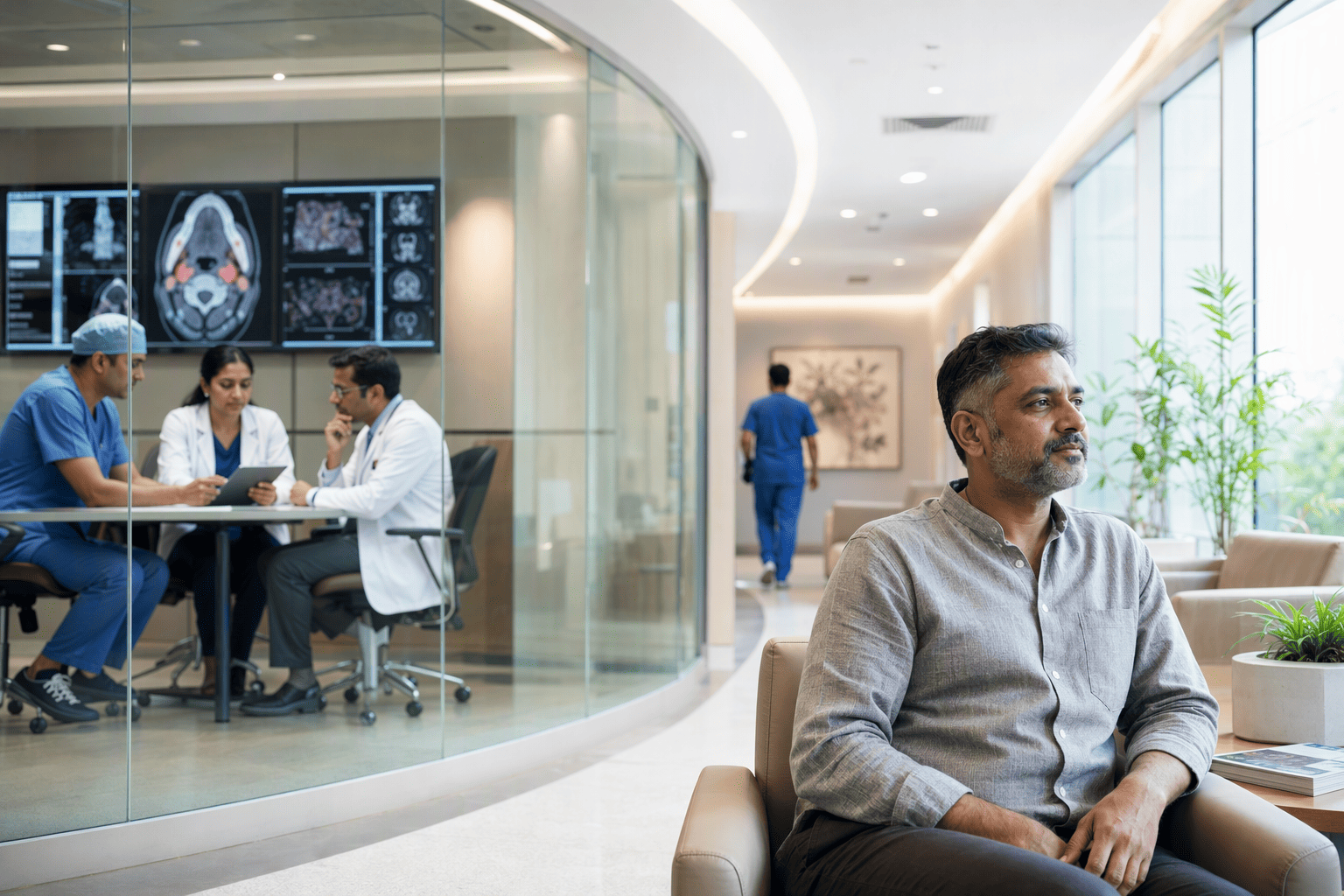
True integration places a psycho-oncologist or licensed mental health specialist inside the clinical team structure. This professional attends multidisciplinary tumor boards, reviews diagnostic and treatment plans alongside medical oncologists, and connects with patients at scheduled intervals throughout the treatment timeline, not only when crisis or referral prompts intervention. The model contrasts sharply with directories that list 'counseling available' but offer no scheduled touchpoints or cross-disciplinary communication.
Core Team Composition in True Multidisciplinary Care
Centers practicing integrated psycho-oncology assemble a core team that includes a medical oncologist, psycho-oncologist or dedicated mental health specialist, patient navigator, and nutritional counselor working collaboratively from the first consultation. Centers like Dr.Bharat Patodiya hold weekly tumor board meetings where medical oncologists, surgical specialists, radiation experts, pathologists, and support staff collaborate on every case, and their compassionate care model includes dedicated patient navigators, psycho-oncology support, nutritional counseling, and spiritual care services. This structure ensures psychological considerations shape treatment decisions rather than follow them.
Why Referral-Based Models Fall Short
Referral-only structures delay intervention until distress is visible, fragment care continuity by requiring patients to initiate contact with external providers, and lack the treatment-planning integration that allows psychological support to inform medical decisions. When mental health professionals operate outside tumor boards and scheduled touchpoints, opportunities to address anticipatory anxiety, treatment-related depression, and adherence barriers are missed until symptoms escalate.
Understanding these structural elements helps you recognize why psychological support must be more than an optional add-on during mouth cancer care.
Why Psychological Support Matters During Mouth Cancer Treatment
Mouth cancer treatment involves navigating complex decisions across surgery, radiotherapy, chemotherapy, and targeted therapies, each carrying distinct side effects and recovery timelines. Integrated psychological support helps patients adhere to treatment protocols, manage anticipatory anxiety, and cope with the functional and cosmetic changes that follow head-neck surgery. Randomized trials show that patients receiving psycho-oncology interventions during radiation therapy report lower anxiety and depression scores than those relying on standard care alone, underscoring the clinical value of embedding mental health services within your care team.
Impact on Treatment Adherence and Outcomes
Psychological distress correlates with missed appointments, incomplete chemotherapy cycles, and delayed post-operative follow-up. Early psycho-oncology screening identifies patients at risk for non-adherence, allowing care teams to intervene with cognitive-behavioral techniques, medication support, or caregiver coaching. When treatment decisions involve multiple modalities, including surgery, radiotherapy, and chemoradiotherapy, structured psychological support helps patients weigh options, understand side-effect trade-offs, and maintain treatment continuity through challenging cycles.
Body Image and Speech Distress After Surgery
Head-neck cancer surgery frequently alters facial appearance, speech intelligibility, and swallowing function, triggering social withdrawal and identity distress. The three most common psychological challenges patients report post-surgery are:
Facial appearance changes, visible scarring, asymmetry, or prosthetic use
Speech and swallowing difficulties, reduced communication confidence and dietary restrictions
Social withdrawal, avoidance of public eating, reduced participation in family activities
Specialized psycho-oncology programs address these concerns through body-image therapy, communication skill rebuilding, and peer support groups, helping patients reintegrate socially and emotionally.
Family Caregiver Psychological Burden
Caregivers manage complex wound care, nutritional supplementation, and transportation logistics while witnessing progressive functional decline. Family education programs teach caregivers symptom-management skills, self-care strategies, and when to escalate concerns to the clinical team. Thorough psycho-oncology models include caregiver counseling sessions, reducing burnout and improving the patient's home recovery environment. Explore the latest mouth cancer treatment options to understand how multidisciplinary tumor boards integrate psychological support into treatment planning from diagnosis through survivorship.
Armed with this context, you can now evaluate treatment centers using targeted questions that reveal whether support is embedded or superficial.
Key Questions to Ask When Evaluating Mouth Cancer Centers
Use these six questions to verify whether a center integrates psychological support into treatment planning, not just as an afterthought.
Questions About Tumor Board Composition
Do psycho-oncology specialists participate in weekly tumor board meetings? Multidisciplinary teams should include mental health professionals during treatment planning, not just for post-decision referrals.
Are they present during initial treatment planning, or only called for crisis response? True integration means psychological input shapes the treatment protocol from day one.
Questions About Patient Navigator Coordination
Does the patient navigator coordinate mental health appointments alongside medical logistics? Centers like Dr.Bharat Patodiya assign dedicated patient navigators who coordinate psycho-oncology support appointments alongside treatment logistics.
What is the frequency of check-ins, weekly, monthly, or only when you request help? Thorough programs maintain regular contact throughout active treatment and survivorship.
Questions About Counseling Accessibility
Are counseling sessions available on a weekly basis, or only on-demand when you escalate a concern? Scheduled sessions prevent crises rather than react to them.
Are counselors dedicated staff members with oncology training, or external referrals you must coordinate yourself? In-house psycho-oncology teams understand cancer-specific stressors and integrate seamlessly with your care team.
Beyond asking the right questions, scrutinize the composition and function of the tumor board itself, the forum where integrated care either happens or fails.
What to Look for in a Multidisciplinary Tumor Board
Core Disciplines in an Effective Tumor Board
A multidisciplinary team typically includes a medical oncologist, surgical specialist, radiation expert, and pathologist who review cases together to discuss the best possible treatment. Beyond these core clinicians, thorough tumor boards integrate support roles: psycho-oncologists who assess emotional readiness and treatment tolerance, patient navigators who coordinate appointments across disciplines, and nutritional counselors who manage side-effect-driven diet changes. For example, Dr.Bharat Patodiya holds weekly tumor board meetings with medical oncologists, surgical specialists, radiation experts, pathologists, and support staff. When evaluating a center, ask whether the psycho-oncologist attends the same meeting where treatment decisions are finalized, not a separate briefing session after the plan is set.
How Psycho-Oncology Input Shapes Treatment Plans
Psychological factors directly influence treatment sequencing: managing pre-surgery anxiety can improve surgical outcomes by reducing stress-driven inflammatory markers; coordinating speech therapy timing with radiation schedules ensures the patient has swallowing support before mucositis peaks. In integrated models, the psycho-oncologist flags barriers, uncontrolled depression, caregiver burnout, or cognitive impairment, that might derail adherence, prompting your care team to adjust dose schedules or add supportive care interventions before treatment begins.
Red Flags: Tumor Boards Without Psychological Representation
Warning signs include no psycho-oncologist listed in the board roster, psychological notes added post-meeting rather than discussed during case review, and external referral mentioned only for crisis. If the center treats psychological support as crisis-only intervention rather than continuous care-planning input, you lose the opportunity to preemptively address barriers to treatment adherence and quality of life.
Even when centers describe their teams favorably, certain warning signs reveal whether psychological support operates in parallel with, or separate from, medical treatment.
Red Flags: Signs of Limited Psychological Support Integration
Centers promoting multidisciplinary teams often list oncology disciplines but overlook psycho-oncology integration. When psychological support operates as an add-on rather than a core service, specific warning signs emerge during your evaluation.
External Referral Networks Instead of Dedicated Staff
A center that provides referral lists to external counselors rather than employing psycho-oncology staff signals fragmentation. Outsourced psychological care creates continuity gaps: your external therapist cannot attend tumor boards, does not review your medical records alongside your care team, and lacks input into treatment planning decisions. Integrated psychosocial support means staff who communicate directly with your oncologist, review treatment side effects in real time, and coordinate supportive care adjustments when emotional distress complicates recovery.
Ad-Hoc Family Education Versus Standardized Programs
Ask whether caregiver education sessions are scheduled automatically at diagnosis or only provided when families request them. Centers offering ad-hoc education treat family support as reactive rather than key. Integrated programs schedule family education as a standard component alongside treatment planning, ensuring caregivers understand treatment timelines, side-effect management, and emotional coping strategies from the start. If the answer is 'families can request a session,' psychological support is not embedded in your care pathway.
No Spiritual Care Integration With Clinical Teams
Spiritual care staff who operate separately from oncology teams, with no communication channel or care-plan documentation, indicate siloed support. Integration means spiritual care providers attend multidisciplinary tumor boards or at minimum document spiritual-distress assessments in the same system your oncologist reviews. Verify whether the center's team meetings include spiritual care representatives and whether their notes are accessible to your treating physicians.
Marketing language can obscure reality, so independent verification methods help confirm whether a center's psycho-oncology claims match operational practice.
How to Verify a Center's Psycho-Oncology Services
Before committing to a treatment center for mouth cancer, patients should independently verify the depth and quality of psychological support, not rely on marketing claims alone. Use the following checklist to evaluate whether a center integrates psycho-oncology into multidisciplinary tumor boards and care planning.
Request anonymized tumor board meeting minutes showing psychological input on patient cases
Ask for sample care plans documenting counseling frequency and navigator coordination
Verify that psycho-oncology staff hold oncology-specific credentials (board-certified psycho-oncologists, licensed clinical social workers with APOS training)
Review patient testimonials that mention specific support touchpoints, family education programs, nutritional counseling integration, spiritual care services, rather than generic 'caring staff' phrases
Requesting Documentation of Tumor Board Participation
Reputable centers should provide anonymized examples of how psychological assessments shape treatment decisions. Look for documentation that psychological support is discussed alongside medical oncology, surgical oncology, and radiation therapy in formal tumor board reviews, not added as an afterthought. Dr.Bharat Patodiya, for instance, includes psycho-oncology support in its multidisciplinary model; ask your candidate center to demonstrate similar integration with meeting records or care-plan excerpts.
Checking Psycho-Oncology Staff Credentials
Verify that counselors are licensed clinical psychologists or social workers with oncology-specific training, not general mental health counselors reassigned to oncology. Ask whether staff are board-certified by organizations such as the American Psychosocial Oncology Society (APOS) or hold equivalent credentials. Centers that list 'psychological support' without naming staff qualifications may offer minimal or ad hoc counseling rather than structured psycho-oncology care.
Reviewing Patient Testimonials for Psychological Support Mentions
Search testimonials for specifics: frequency of counseling sessions, coordination between navigators and oncologists, family education workshops, or spiritual care touchpoints. Generic praise ('the staff was caring') does not confirm systematic psychological support. Look for language describing patient navigation, nutritional counseling, and family education programs, markers of integrated supportive care rather than reactive crisis counseling.
Accessing Psychological Support at Pi Cancer Care
Pi Cancer Care demonstrates integrated psycho-oncology through a navigator-led model that coordinates mental health services alongside medical treatment, offering a concrete example of the principles discussed earlier.
Dedicated Patient Navigators and Psycho-Oncology Staff
Dr.Bharat Patodiya includes dedicated patient navigators, psycho-oncology support, nutritional counseling, and spiritual care services in its compassionate care model. Navigators schedule counseling sessions alongside treatment appointments, ensuring psychological support is integrated rather than optional. The compassionate care model includes patient navigation, psychological support, nutritional counseling, and family education programs designed to address the complete spectrum of patient needs throughout the cancer journey.
Weekly Tumor Board Integration
Dr.Bharat Patodiya holds weekly tumor board meetings with medical oncologists, surgical specialists, radiation experts, pathologists, and support staff. Psychological specialists participate in these boards, contributing input that may influence treatment sequencing or supportive care planning decisions.
Nutritional Counseling and Spiritual Care as Part of Holistic Support
Beyond psychological services, Dr.Bharat Patodiya coordinates nutritional counseling and spiritual care within its clinical oncology teams, reflecting a holistic model that addresses physical, emotional, and existential dimensions of care. For more on the center's thorough service approach, see advanced mouth cancer treatment in Hyderabad.
Conclusion
Centers with dedicated psycho-oncology staff, like Dr.Bharat Patodiya, Tata Memorial, and specialized head-neck cancer hospitals, offer continuous psychological support throughout treatment, while general oncology centers may provide referral-based counseling that fragments care continuity. Weekly tumor board participation by psychological specialists enables proactive mental health intervention and treatment-plan adjustments, whereas crisis-only counseling models react to distress after it disrupts treatment adherence.
As survivorship care models evolve, more cancer centers are recognizing that integrated psycho-oncology improves not just patient quality of life but also treatment completion rates, making psychological support verification a standard part of center evaluation rather than an optional add-on.
Schedule a consultation at Dr.Bharat Patodiya to discuss your treatment options and experience the integrated psycho-oncology model, including dedicated patient navigators, weekly tumor board coordination, and family education programs.
Frequently Asked Questions
What is the difference between integrated psycho-oncology and referral-based counseling?
Integrated psycho-oncology embeds psychological specialists in weekly tumor boards and treatment planning from diagnosis, participating actively in care decisions. Referral-based counseling provides access to mental health services only when patients request help or reach crisis points, creating fragmented care rather than proactive support throughout treatment.
How often should counseling sessions be available during mouth cancer treatment?
Integrated programs typically offer weekly or bi-weekly counseling during active treatment phases, surgery, radiation, or chemotherapy, with frequency adjusted based on patient distress levels. On-demand-only models wait for patients to request help, whereas proactive scheduling addresses anxiety before it disrupts treatment adherence.
What questions should I ask to verify a center's patient navigator coordinates psychological support?
Ask three key questions: Does the navigator schedule counseling appointments proactively or only when I request them? Does the navigator attend tumor board meetings to coordinate care? How frequently will the navigator check in during treatment? These verify whether navigation integrates psychological support into treatment sequencing.
Are family education programs standard in integrated psycho-oncology care?
Standardized family education programs scheduled automatically at diagnosis, not ad-hoc sessions requested by families, are hallmarks of integrated care. These programs cover caregiver stress management, treatment side-effect recognition, and communication strategies, treating family support as key rather than reactive.
What credentials should psycho-oncology staff have?
Staff should be licensed clinical psychologists or social workers with oncology-specific training, ideally board-certified by the American Psychosocial Oncology Society (APOS) or equivalent. General mental health counselors reassigned to oncology may lack expertise in head-neck cancer body-image distress and speech-function anxiety.
How can I tell if spiritual care services are truly integrated with my oncology team?
Integration means spiritual care staff attend tumor boards or document spiritual-distress assessments in the same medical record your oncologist reviews. Ask whether your oncologist receives updates on spiritual care discussions, siloed services with no communication channel indicate fragmentation, not integration.
Does psychological support during mouth cancer treatment improve outcomes?
Integrated psycho-oncology improves treatment adherence and reduces anxiety and depression scores, enhancing quality of life during therapy. While support does not directly extend survival rates, it helps patients complete chemotherapy cycles and attend follow-up appointments, which are critical for long-term outcomes.


Comments