
Stage 4 Pancreatic Cancer Treatment Options: Complete Patient Guide 2026
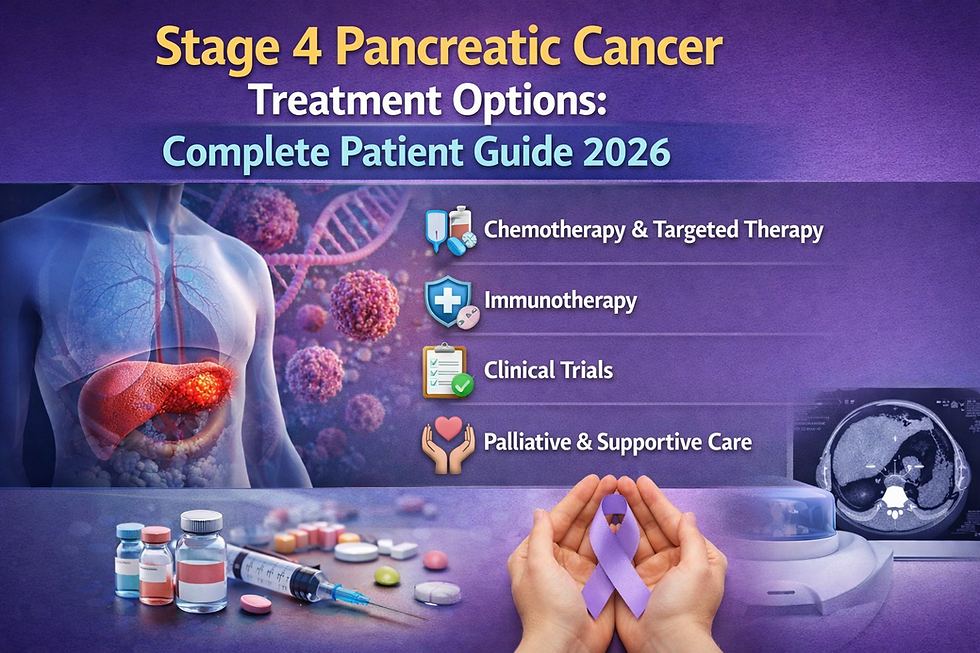
Stage 4 pancreatic cancer treatment decisions require understanding how chemotherapy regimens, biomarker testing, performance status, and supportive care work together to extend life and maintain quality of life when cancer has spread beyond the pancreas.
TL;DR
Only 15-20% of pancreatic cancer patients have potentially resectable disease at diagnosis, making stage 4 treatment planning critical for the majority [1]
FOLFIRINOX demonstrates median overall survival of 11.1 months versus 6.8 months with gemcitabine alone, with one-year survival rates of 48.4% versus 20.6% [1]
Dr. Bharat Patodiya integrates chemotherapy sensitivity testing with multidisciplinary treatment planning to personalize therapy selection
Approximately 4-7% of pancreatic cancers carry BRCA1/BRCA2 mutations that may respond particularly well to platinum-based chemotherapy like FOLFIRINOX [3]
Pi Cancer Care's approach combines Europe-trained oncology expertise with integrated pain management and palliative care from diagnosis, not only at end of life
Understanding Stage 4 Pancreatic Cancer Treatment Goals
Stage 4 pancreatic cancer, also called metastatic pancreatic cancer, means the disease has spread beyond the pancreas to other organs—most commonly the liver, lungs, or peritoneum [1]. When patients and families hear "stage 4," the natural response is fear and overwhelming questions about what comes next. Dr. Bharat Patodiya recognizes that this diagnosis requires immediate clarity about realistic treatment goals: extending life, managing symptoms effectively, and preserving quality of life for as long as possible. Unlike earlier-stage disease where cure may be possible through surgery, stage 4 treatment focuses on systemic therapy that addresses cancer throughout the body. Pi Cancer Care's multidisciplinary team, led by Europe-trained medical oncologist Dr. Bharat Patodiya, evaluates each patient's performance status, biomarker profile, and treatment preferences to build personalized care plans. The center's diagnostic capabilities enable rapid molecular testing that informs which chemotherapy regimens are most likely to work, while integrated supportive services address pain, nutrition, and emotional needs simultaneously. Pi Cancer Care emphasizes that treatment decisions should never feel rushed—patients deserve time to understand options, ask questions, and involve family members in planning. The goal is not just adding months, but adding quality months where patients can maintain independence and time with loved ones.
First-Line Chemotherapy Options by Performance Status
The most critical factor determining which chemotherapy regimen is appropriate is performance status—essentially, how well a patient can carry out daily activities. Dr. Bharat Patodiya conducts thorough performance status assessments before recommending treatment, recognizing that the most intensive regimens require patients who are relatively fit and active. For patients with good performance status who can manage daily activities independently, FOLFIRINOX represents the most aggressive first-line option. This four-drug combination (folinic acid, fluorouracil, irinotecan, and oxaliplatin) demonstrated landmark results in the PRODIGE 4 trial, achieving median overall survival of 11.1 months compared to 6.8 months with single-agent gemcitabine [1]. The one-year survival rate reached 48.4% with FOLFIRINOX versus only 20.6% with gemcitabine alone [1]. However, FOLFIRINOX intensity comes with significant side effects including neutropenia, diarrhea, fatigue, and peripheral neuropathy [1]. Pi Cancer Care administers modified FOLFIRINOX protocols that reduce toxicity while maintaining efficacy, with close monitoring through bi-weekly infusions.
Gemcitabine Plus Nab-Paclitaxel as Alternative First-Line
For patients who cannot tolerate FOLFIRINOX intensity, gemcitabine combined with nab-paclitaxel (Abraxane) offers meaningful benefits with a different side effect profile. The MPACT trial enrolled 861 patients with previously untreated metastatic pancreatic cancer and demonstrated median overall survival of 8.5 months with the combination versus 6.7 months with gemcitabine alone [1]. One-year survival rates reached 35% versus 22% [1]. This regimen requires infusions on days 1, 8, and 15 of each 28-day cycle—three treatment weeks followed by one recovery week [1]. Dr. Bharat Patodiya helps patients understand that while gemcitabine plus nab-paclitaxel shows slightly lower survival numbers than FOLFIRINOX in trials, individual responses vary significantly based on tumor biology and patient factors. The center's personalized treatment approach includes chemotherapy sensitivity assays that test how a patient's specific cancer cells respond to different drugs before starting therapy, reducing trial-and-error treatment selection. Main side effects include fatigue, neuropathy, low blood cell counts, and diarrhea—generally more manageable than FOLFIRINOX toxicity for patients with borderline performance status.
Treatment Option | Best Candidates | Median Survival | Visit Schedule | Dr.Bharat Patodiya Approach |
FOLFIRINOX | Good performance status, age <75, minimal comorbidities | 11.1 months [1] | Every 2 weeks | Modified protocols with proactive side effect management |
Gemcitabine + Nab-Paclitaxel | Moderate performance status, older patients, FOLFIRINOX intolerant | 8.5 months [1] | 3 of 4 weeks | Integrated with chemosensitivity testing and pain control |
Single-Agent Gemcitabine | Poor performance status, significant comorbidities | 5.7 months [1] | Weekly | Combined with comprehensive palliative and nutritional support |
Targeted Therapy (BRCA+) | BRCA1/2 mutation carriers after platinum response | Varies by agent | Ongoing | Preceded by germline and somatic genetic testing |
Biomarker Testing and Targeted Treatment Options
Not all stage 4 pancreatic cancers behave the same at the molecular level, and identifying specific genetic mutations can dramatically change treatment effectiveness. Dr. Bharat Patodiya emphasizes that all patients with metastatic pancreatic cancer should undergo both germline (inherited) and somatic (tumor-specific) genetic testing before finalizing treatment plans. Approximately 4-7% of pancreatic cancers harbor pathogenic variants in BRCA1, BRCA2, or PALB2 genes [3]. Patients whose tumors carry these mutations often respond particularly well to platinum-based chemotherapy like FOLFIRINOX, and may later benefit from PARP inhibitor maintenance therapy if they achieve disease control. Pi Cancer Care's genetic testing services provide comprehensive panel analysis with expert counseling to interpret results and adjust treatment accordingly. About 1-2% of pancreatic cancers carry the specific KRAS G12C mutation [3]. While these patients typically receive standard chemotherapy initially, targeted KRAS inhibitors like adagrasib and sotorasib become options if disease progresses, with clinical trials showing objective response rates of 30-50% in previously treated KRAS G12C-mutated pancreatic cancers [3]. The center coordinates access to these newer agents through clinical trial networks and compassionate use programs.
When Chemotherapy Stops Working: Second-Line Options
Despite initial responses, most stage 4 pancreatic cancers eventually progress on first-line therapy, requiring treatment changes. Dr. Bharat Patodiya prepares patients for this possibility from the start, ensuring smooth transitions to second-line regimens when needed. For patients who received FOLFIRINOX initially and then progressed, switching to gemcitabine plus nab-paclitaxel represents the most common second-line approach. Retrospective studies of 427 advanced pancreatic cancer patients previously treated with FOLFIRINOX showed median progression-free survival of 3.5 months and median overall survival of 7.1 months after switching to gemcitabine plus nab-paclitaxel [3]. Conversely, patients who started with gemcitabine-based therapy can switch to fluorouracil combinations. The NAPOLI-1 trial examined liposomal irinotecan combined with fluorouracil and leucovorin, demonstrating median overall survival of 6.1 months compared to 4.2 months with fluorouracil and leucovorin alone [3]. These second-line options maintain hope and symptom control even as disease advances, with Pi Cancer Care coordinating medication management to prevent dangerous drug interactions between evolving chemotherapy regimens and supportive medications.
Integrated Palliative Care and Symptom Management
One of the most important differentiators in stage 4 pancreatic cancer care is when palliative support begins. Traditional cancer centers often mention palliative care only near end of life, but evidence-based practice demonstrates that early palliative integration improves both survival and quality of life [4]. Dr. Bharat Patodiya incorporates palliative care specialists into the treatment team from diagnosis, addressing pain control, nutrition support, digestive enzyme replacement, and emotional counseling alongside chemotherapy. Pancreatic cancer commonly causes severe pain from tumor pressure on nerves and organs, requiring multimodal pain management strategies [4]. The center's integrated pain management approach combines opioid medications, nerve blocks, and complementary therapies like meditation within coordinated protocols that prevent medication interactions with chemotherapy. Many patients experience significant weight loss and malnutrition from pancreatic enzyme insufficiency—the pancreas can no longer produce digestive enzymes effectively. Pi Cancer Care addresses this through pancreatic enzyme replacement therapy, nutritional counseling, and appetite stimulants that help maintain strength during treatment. Biliary obstruction causing jaundice is another common complication requiring procedural intervention through stent placement, which the center coordinates seamlessly with ongoing chemotherapy schedules.
Treatment for Patients Who Cannot Tolerate Intensive Chemotherapy
Not every patient with stage 4 pancreatic cancer can safely receive combination chemotherapy. Those with significant weight loss, inability to perform basic daily activities, or serious medical comorbidities may benefit more from single-agent therapy or best supportive care [1]. Dr. Bharat Patodiya evaluates these situations with compassion and medical expertise, never forcing aggressive treatment that would harm more than help. Single-agent gemcitabine remains valuable for patients with poor performance status, providing meaningful symptom relief with less toxicity than combination regimens [1]. Pivotal trials demonstrated that gemcitabine improved pain control and performance status compared to fluorouracil alone, even though survival benefit was modest at 5.7 months versus 4.4 months [1]. For some patients, the center recommends best supportive care focused entirely on comfort, pain management, nutritional support, home care coordination, and hospice referral when appropriate. These decisions require honest discussions about goals of care, which Pi Cancer Care facilitates through dedicated family meetings where all voices are heard and medical realities are explained clearly without taking away hope.
Questions to Ask Your Oncology Team
Dr. Bharat Patodiya encourages patients and families to come prepared with questions that help clarify treatment choices and expectations. Key questions include: What is my performance status, and how does it affect which chemotherapy regimens I can safely receive? Has genetic testing been done on my tumor, and do results suggest certain treatments might work better? What are realistic survival expectations with the recommended treatment, and what percentage of patients experience major side effects? How will treatment affect my daily life, can I continue working, traveling, or maintaining independence? What symptoms should prompt immediate contact with the care team between appointments? If this treatment stops working, what second-line options exist? When should we involve palliative care or hospice services? Pi Cancer Care's multidisciplinary conferences review these questions collaboratively, ensuring patients receive consistent information from all specialists. The center provides written treatment summaries after each major decision point, giving families reference materials to review at home when emotions are less overwhelming. Dr. Bharat Patodiya's international training from University of Ulm Germany and University of Zurich Switzerland informs a patient-centered communication style that balances honesty about prognosis with actionable hope through personalized treatment planning.
Conclusion
Stage 4 pancreatic cancer treatment requires navigating complex decisions about chemotherapy intensity, biomarker-driven therapy selection, performance status assessment, and palliative care integration. FOLFIRINOX offers the longest median survival at 11.1 months for fit patients, while gemcitabine plus nab-paclitaxel provides 8.5 months with different toxicity profiles [1]. Genetic testing identifies the 4-7% of patients with BRCA mutations who may benefit most from platinum-based therapy and targeted agents [3]. Dr. Bharat Patodiya differentiates through early palliative care integration, chemotherapy sensitivity testing, and multidisciplinary coordination that addresses the whole person—not just the cancer. The center's Europe-trained expertise, combined with compassionate family-centered communication, helps patients make informed decisions aligned with their values and goals. Whether pursuing aggressive combination chemotherapy or focusing on comfort-oriented care, Pi Cancer Care provides the support infrastructure needed to maximize both length and quality of life. Schedule a consultation with Pi Cancer Care to discuss your specific situation and explore treatment options tailored to your tumor biology, performance status, and care goals.
Frequently Asked Questions
What is the difference between FOLFIRINOX and gemcitabine plus nab-paclitaxel for stage 4 pancreatic cancer?
FOLFIRINOX is a four-drug combination showing median survival of 11.1 months versus 8.5 months with gemcitabine plus nab-paclitaxel, but requires better performance status and causes more severe side effects [1]. Dr. Bharat Patodiya selects between these regimens based on individual patient fitness, tumor biomarkers, and tolerance predictions from chemotherapy sensitivity testing. The choice balances survival potential against quality of life and treatment burden.
Should all stage 4 pancreatic cancer patients get genetic testing?
Yes, all patients with metastatic pancreatic cancer should undergo both germline and somatic genetic testing, as approximately 4-7% carry BRCA1/BRCA2 mutations that significantly influence treatment selection [3]. Dr.Bharat Patodiya provides comprehensive genetic counseling and testing that identifies actionable mutations guiding therapy choices, including eligibility for targeted agents and clinical trials. Results also inform family members about inherited cancer risk requiring screening.
When should palliative care start for stage 4 pancreatic cancer patients?
Palliative care should begin at diagnosis, not only near end of life, as early integration improves both survival and quality of life [4]. Dr. Bharat Patodiya incorporates palliative specialists into treatment teams from the start, addressing pain, nutrition, and symptom management alongside chemotherapy. This integrated approach prevents crises and maintains patient independence longer than delayed palliative referrals.
What happens if first-line chemotherapy stops working?
Second-line options include switching from FOLFIRINOX to gemcitabine plus nab-paclitaxel (median survival 7.1 months) or from gemcitabine-based therapy to liposomal irinotecan combinations (median survival 6.1 months) [3]. Dr.Bharat Patodiya coordinates these transitions smoothly while managing medication interactions and adjusting supportive care. Some patients may also access targeted therapies or clinical trials based on tumor biomarkers identified through ongoing molecular testing.
Is chemotherapy always recommended for stage 4 pancreatic cancer?
No—patients with poor performance status, significant weight loss, or serious comorbidities may benefit more from single-agent gemcitabine or best supportive care focused on comfort rather than intensive combination chemotherapy [1]. Dr. Bharat Patodiya conducts thorough performance assessments and facilitates honest discussions about treatment goals, ensuring recommendations match each patient's medical condition and personal values. The center supports all care paths with coordinated symptom management and family counseling.
Sources
[1] Stage 4 Pancreatic Cancer: Understanding Your Chemotherapy Options - www.youtube.com (2025)
[2] What If Chemotherapy Does Not Work? Can You Predict It Before Starting Treatment? - www.picancercare.com
[3] Stage 4 Pancreatic Cancer: Understanding Your Chemotherapy Options (timestamp 373s) - www.youtube.com (2025)
[4] Pancreatic cancer - Diagnosis and treatment - www.mayoclinic.org
[5] Cancer Centers Providing Integrated Chemotherapy and Pain Management Together: 2026 Guide - www.picancercare.com
[8] Is There Genetic Testing That Can Predict Cancer Risk Before Symptoms Appear? 2026 Complete Guide - www.picancercare.com (2026)



Bài bạn trình bày ngắn gọn mà dễ hiểu thật, mình đọc một lượt là nắm được ý, cảm ơn bạn đã chia sẻ nhé. Mình cũng có thói quen xem thống kê XSMB mỗi ngày, chủ yếu để liếc nhanh xem có gì thay đổi theo từng hôm. Hồi trước mình cứ phải mở vài chỗ khác nhau để so sánh nên khá mất thời gian, nhiều lúc còn bị rối vì số liệu nằm rải rác. Về sau mình tự gom lại cho tiện theo dõi và lưu trên một trang ở soicau247.com để khỏi phải tìm lại mỗi lần cần xem. Mình chỉ cần cập nhật theo ngày để nhìn xu hướng thôi, không làm gì phức…