
Why Your Chemotherapy Is Causing Severe Nausea and Fatigue But Not Shrinking the Tumor, and Which Oncologist in Faridabad Can Help

Introduction
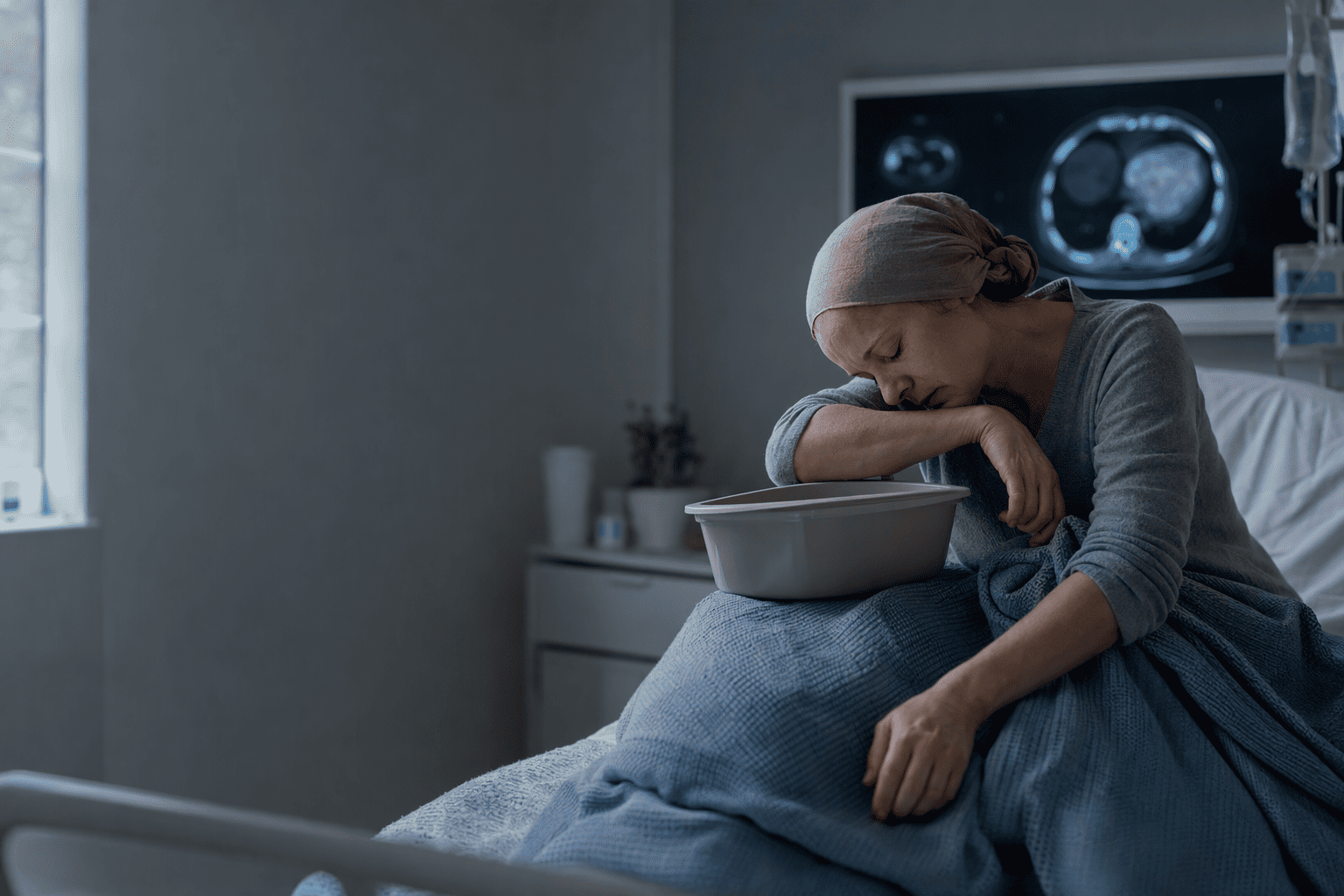
You drag yourself through another cycle, barely able to keep water down, the bone-deep exhaustion pinning you to the bed for days. Then the scan comes back: no change, or worse, the tumor has grown. The nausea and fatigue told you the drugs were working, so how is the cancer still there?
This disconnect is not your body failing treatment. It is a brutal but biologically predictable signal that your cancer has pre-existing resistance mechanisms. Therapy resistance causes over 90% of cancer deaths, making this a systemic problem in oncology, not a rare anomaly.
Understanding why the side effects and the tumor response have decoupled is the first step toward a strategy that actually targets your disease. This article breaks down the biology of that disconnect, the tests that can identify effective drugs, and the specific Faridabad oncologists qualified to guide a second-line plan.
Key Takeaways
Chemotherapy attacks every rapidly dividing cell in your body, not just the cancer. That is why your gut lining and bone marrow take such a hit, producing severe nausea and crushing fatigue. Meanwhile, a tumor that does not shrink signals a biologically separate issue: resistant cancer cell clones that were present from the start survive and repopulate. Here is what that means for you, and the most immediate steps you can take.
Chemotherapy side effects indicate cell damage, not cancer kill: Nausea and fatigue arise from injury to the gut lining and bone marrow. A non-shrinking tumor means resistant cell populations were present from the start.
Resistance is a predictable biological phenomenon: Therapy resistance drives over 90% of cancer deaths. Your situation is medically common.
Precision diagnostics can redirect your treatment: Thorough genomic profiling and immunotherapy marker testing can identify drugs matched to your tumor's specific genetic vulnerabilities.
Modern antiemetic protocols can break severe nausea: Combinations of NK1 receptor antagonists, 5-HT3 inhibitors, and dexamethasone can significantly control nausea even when the current chemo isn't controlling the tumor.
Expert second opinions are available in Faridabad: Dr. Sumant Gupta at Metro Hospital and Dr. Aditya Vidushi at the Asian Institute of Medical Sciences bring specialized expertise in bone marrow transplant survivorship, precision oncology, and clinical trials.
Why Chemotherapy Causes Severe Nausea and Fatigue Without Tumor Shrinkage
You feel horrible because chemotherapy is indiscriminate. It does not hunt cancer cells; it kills every cell in your body that divides rapidly, whether malignant or perfectly healthy.
The lining of your gastrointestinal tract replaces itself every few days. Your bone marrow churns out billions of new blood cells daily. Hair follicles are in a constant growth cycle.
Chemotherapy drugs, designed to poison the machinery of cell division, hit all of these sites hard. This is why nausea, vomiting, fatigue, and hair loss are such common side effects. The gut lining damage triggers serotonin and substance P release, directly activating the brain’s vomiting center.
The bone marrow suppression crashes your red blood cell and white blood cell counts, leaving you profoundly fatigued and vulnerable to infection. These effects happen because the drug is in your system damaging dividing cells, period.
The tumor’s response is an entirely separate event. A non-shrinking tumor on a scan means the cancer cell population is not sensitive to the specific drug combination you are receiving.
What likely happened is this: your tumor was never a uniform mass. From the start, it contained a variety of cells with different molecular changes. Some of those cells carried intrinsic resistance mutations that made them impervious to your chemotherapy regimen.
The drug killed the sensitive cells, and you felt the side effects from that widespread cellular damage, but the resistant clones survived and continued to grow. In some cases, resistance develops within weeks of starting treatment. The drug was never entirely inactive in your body; it simply could not eliminate the defining feature of your cancer.
The Biology of Resistant Cancer: Why Tumors Survive First-Line Treatment
Cancer cells make copying mistakes every time they divide. Each mistake is a roll of the dice.
Inside a single tumor, you have a genetically diverse population, a phenomenon called tumor heterogeneity. Some of those cells already carry mutations that make a chemotherapy drug useless before the first infusion begins. The pre-existing arsenal includes drug efflux pumps, tiny protein machines on the cell surface that actively push chemotherapy agents out of the cell before they can do damage. Other cells hyperactivate DNA repair pathways that fix the lethal breaks chemotherapy intended to create, as if the attack never happened.
A more fundamental layer exists: cancer stem cells. These are a small subpopulation capable of unlimited self-renewal and differentiation. They divide slowly, which makes them naturally resistant to many chemotherapies that preferentially kill rapidly dividing cells. When the first-line drugs wipe out the bulk of the fast-growing cells, these stem cells survive and regenerate the entire tumor, often with a more aggressive profile.
This is selection in action. The treatment kills everything it can, leaving behind a hardened population that dominates the next growth phase. The process explains why a scan can show initial stability, or even a partial response, followed by progression.
The sensitive clones die, producing a temporary reduction or plateau. The resistant clones expand into the vacated territory.
You experience the full toxicity of the drugs because your healthy dividing cells, gut lining and bone marrow, are just as susceptible as the sensitive cancer cells. But the core of the tumor, its most lethal component, is biologically armored against the attack.
How Your Oncologist Determines If Chemotherapy Is Working
Your scan report uses a standardized language to measure response, and understanding it gives you the power to ask precise, informed questions during your appointments. The system is called RECIST, or Response Evaluation Criteria in Solid Tumors, and it classifies what is happening inside your body into four categories.
Complete response: The disappearance of all target lesions on imaging. Any pathological lymph nodes have reduced to a normal size. This is the ideal outcome but is rare in many solid tumors treated with first-line chemotherapy.
Partial response: A decrease of at least 30% in the sum of the diameters of target lesions, taking the baseline scan as reference. This is a significant reduction and confirms the regimen is having an objective anti-tumor effect.
Progressive disease: An increase of at least 20% in the sum of the diameters of target lesions, or the appearance of one or more new lesions. This is the formal definition of treatment failure on the current regimen.
Stable disease: Neither sufficient shrinkage to qualify for partial response nor sufficient increase to qualify for progressive disease. This is a valid and often desirable outcome. It means the treatment is holding the tumor in check, preventing growth without necessarily shrinking it. Stable disease can extend life significantly and should not be interpreted as a failure.
Next-Step Pathways in India When First-Line Chemotherapy Fails
First-line failure is not a dead end. It is a clinical signal to switch to a biologically informed, precision-guided strategy, and India's oncology infrastructure increasingly supports these pathways.
Your next step must be a tissue retest or a liquid biopsy for thorough genomic profiling. The goal is to find a driver mutation, EGFR, ALK, ROS1, or BRAF, against which an oral targeted therapy already exists. The same testing panel should determine your tumor's MSI status and tumor mutational burden.
If your cancer is MSI-H or has a high TMB, immunotherapy with checkpoint inhibitors like pembrolizumab becomes a response-durable option. If these biomarkers are absent, the path shifts to a second-line chemotherapy regimen that uses a different drug class your cancer has never encountered.
Dr. Bharat Patodiya's oncology center, for instance, offers chemotherapy sensitivity testing as part of its workup, though testing alone is not a guarantee of cure. Clinical trial participation, coordinated with major research sites in the NCR and beyond, can also save ₹5 to 25 lakhs in treatment costs while providing access to next-generation agents not yet commercially available.
Precision Tests That Identify Which Drugs Will Work for Your Cancer
These are the diagnostic tools that move you from hopeful guessing to informed selection. The table below compares the key precision oncology tests available in India.
Test | What It Detects | How It Is Performed | Therapeutic Implication |
Comprehensive Genomic Profiling (CGP/NGS) | Somatic mutations, copy number alterations, and gene fusions across hundreds of genes. Driver mutations identified include EGFR, ALK, and BRAF. | Performed on a tumor biopsy tissue block or through a liquid biopsy collecting circulating tumor DNA from a blood draw. | Matches identified actionable mutations to approved targeted therapies. A negative result rules out targeted therapy and redirects focus to chemotherapy or immunotherapy. |
Immunohistochemistry (IHC) for PD-L1 | The level of PD-L1 protein expression on the surface of tumor and immune cells, reported as a Combined Positive Score or Tumor Proportion Score. | Staining of biopsied tumor tissue on a pathology slide. | Determines whether the tumor is more likely to respond to PD-1/PD-L1 checkpoint inhibitors. High expression is a strong immunotherapy selection signal. |
PCR for MSI Status | Microsatellite instability caused by defective DNA mismatch repair, which creates hundreds of mutations that the immune system can recognize. | PCR amplification of specific microsatellite markers from tumor DNA, compared to the patient's normal DNA. | Identifies MSI-H tumors independently of the tissue of origin, conferring eligibility for pembrolizumab across multiple advanced solid tumor types based on biomarker status alone. |
Liquid Biopsy | Circulating tumor DNA, circulating tumor cells, and other tumor-derived material in the bloodstream providing a dynamic snapshot of the currently dominant resistant clone. | A simple peripheral blood draw, avoiding an invasive tissue re-biopsy. | Offers a less invasive monitoring option when tissue biopsy is technically difficult or dangerous, and can detect resistance mutations that have emerged since the original tissue diagnosis was made. |
Advanced Supportive Care for Chemo-Induced Nausea and Fatigue
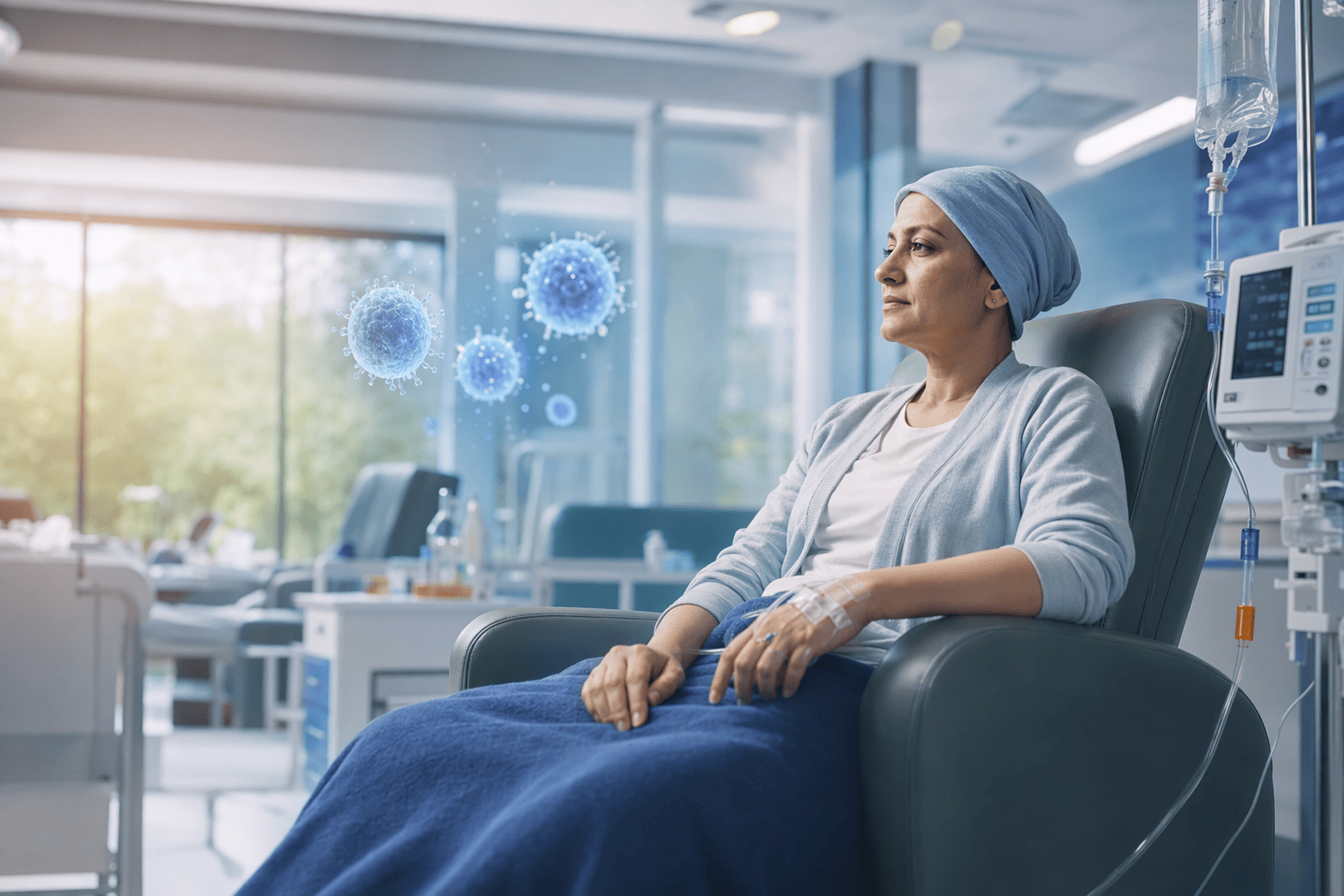
Your suffering is real, but the intensity of nausea you are experiencing does not have to be an inseparable part of treatment. Modern antiemetic protocols, combined with deliberate fatigue management, can break the cycle of misery even while you work through a transition in your cancer therapy.
Triple-drug antiemetic blockade: The most effective prevention of chemotherapy-induced nausea uses an NK1 receptor antagonist like aprepitant, a 5-HT3 inhibitor like palonosetron or ondansetron, and the corticosteroid dexamethasone. This triple combination blocks the three major molecular pathways that converge on the vomiting center, and it should be given before chemotherapy and continued on a fixed schedule for days after. The common anti-vomiting drug combination is aprepitant, dexamethasone, and palonosetron.
Breakthrough vomiting management: For refractory vomiting that breaks through the preventive protocol, patients may require IV saline infusions and injectable antiemetics administered at a daycare chemo suite or hospital facility. The page from Dr. Bharat Patodiya's practice notes inadequate control of nausea and vomiting should prompt contact with the oncology centre that administered the chemotherapy.
Scheduled energy conservation, not passive rest: Fatigue from bone marrow suppression does not improve with pure inactivity. Deliberately schedule short periods of light activity, a five-minute walk indoors, followed by protected rest. Separate these from sleep, and pace them over the day to prevent the deconditioning spiral that deepens exhaustion.
Address contributory factors aggressively: Chemotherapy-induced anemia can be treated with growth factor support; a drop in white blood cells prompting fever, defined as a single temperature above 38.3°C or 38.0°C for more than 1 hour, demands immediate antibiotics. Treatable insomnia, uncontrolled pain, and poor nutrition all drive fatigue that compounds the direct chemotherapy effect and must be managed concurrently.
Finding the Right Medical Oncologist in Faridabad for a Second Opinion
Seeking a second opinion when your tumor has not responded is a standard part of oncology practice endorsed by treatment guidelines. The two Faridabad oncologists below specialize in managing treatment-resistant and complex cases, and preparing your materials correctly will make the consultation immediately productive.
Dr. Sumant Gupta, Director of Metro Cancer Institute at Metro Hospital Faridabad, is one of the most qualified touchpoints in the region for an opinion on chemotherapy-refractory disease. He is credited with performing the first-ever bone marrow transplant in Faridabad, a technical milestone that signals deep experience in managing the intense regimens and post-treatment complications characteristic of high-risk oncology. He has authored over 20 national and international research papers and brings training from AIIMS and the Cancer Institute (WIA) in Chennai. Metro Cancer Institute provides chemotherapy through its medical oncology department, including dedicated day-care facilities.
Dr. Aditya Vidushi, Senior Consultant at the Asian Institute of Medical Sciences Faridabad, brings a different specialization: immunotherapy, precision oncology, and direct clinical trials experience. He has served as a co-investigator in multiple oncology clinical trials, meaning he works daily with the emerging targeted agents and immunotherapies that frequently form the rational next step after chemotherapy failure. For a patient whose tumor has demonstrated resistance, an oncologist embedded in trial infrastructure can open access to agents not yet widely available. Before your second-opinion appointment, obtain your formal pathology report, the glass slides and paraffin tissue block from your original biopsy, the CD of all CT and PET-CT scans, and a detailed treatment summary listing every chemotherapy drug, dose, and cycle number.
Treatment Package Costs and Planning for Second-Line Cancer Care
The financial dimension of changing treatment strategy is real, and approaching it with a structured understanding of price components and coverage pathways prevents a sense of chaotic expense.
Genomic profiling tests in the private sector form the first discrete cost, typically running ₹30,000 to ₹80,000 depending on the breadth of the NGS panel. A second-line targeted therapy cycle can range from ₹50,000 to ₹1.5 lakhs per month, while immunotherapy agents like pembrolizumab can push monthly costs beyond ₹1 lakh per cycle. Against this, Dr. Bharat Patodiya's practice offers transparent treatment packages starting at ₹2.5 to 8 lakhs with thorough support services, and a second-opinion service priced at ₹2,000 to 5,000.
For eligible families, Ayushman Bharat PM-JAY provides up to ₹5 lakh coverage at empanelled hospitals across Haryana. The financial counselors at major Faridabad cancer centers verify government scheme eligibility and coordinate charitable aid applications. Clinical trial participation can save ₹5 to 25 lakhs in treatment costs if an open protocol matches your tumor's biomarker profile.
Conclusion
The nausea and fatigue you endured did not fail you; the drugs simply hit everything except the cancer's armored core. That core can now be characterized genomically and targeted with precision therapies, immunotherapies, or rationally selected alternate chemotherapy backbones.
Dr. Sumant Gupta and Dr. Aditya Vidushi in Faridabad are accessible, highly qualified entry points for that second opinion.
Resistance happens. It is a specific biological event with a specific genomic signature. That signature is the map for your next treatment. Persist, assemble your tissue and records, and engage the expanding precision oncology infrastructure in India.
The next line of therapy, selected for your cancer's specific biology, starts with the conversation you schedule this week.
Frequently Asked Questions
Why is chemotherapy causing severe side effects like nausea and fatigue but not shrinking my tumor?
Chemotherapy damages all rapidly dividing cells, including the gut lining and bone marrow, causing nausea and fatigue as separate consequences. The tumor does not shrink because it contains pre-existing resistant cancer cell clones that the drug cannot kill. The side effects confirm the drug is active in your body, but the tumor’s genetic makeup makes it impervious.
What options do I have when first-line chemotherapy fails in India?
The standard pathway includes thorough genomic profiling of the tumor to find a driver mutation for targeted therapy, testing for MSI-H or high tumor mutational burden to qualify for immunotherapy, switching to a second-line chemotherapy agent of a different class, or enrolling in a clinical trial for next-generation agents.
How can I find the best medical oncologist in Faridabad for a second opinion on persistent cancer?
Look for an oncologist with specific expertise in your need: Dr. Sumant Gupta at Metro Hospital brings bone marrow transplant and complex chemotherapy experience, while Dr. Aditya Vidushi at the Asian Institute specializes in precision oncology, immunotherapy, and clinical trials. Prepare your tissue blocks, scan CDs, and detailed treatment records before the appointment.
Can specific tests determine which drugs will work for my cancer type?
Yes. Thorough genomic profiling using next-generation sequencing identifies actionable driver mutations matched to targeted therapies. Immunohistochemistry for PD-L1 and PCR for MSI status determine eligibility for checkpoint immunotherapy. A liquid biopsy can detect these markers through a blood draw when a tissue re-biopsy is difficult.
What supportive care helps manage severe chemo-induced nausea and fatigue?
A triple-drug antiemetic protocol combining an NK1 antagonist like aprepitant, a 5-HT3 inhibitor like palonosetron, and dexamethasone can prevent nausea. For fatigue, schedule deliberate short walks and protected rest periods rather than passive inactivity, correct contributory anemia or malnutrition, and aggressively treat any fevers above 38.3°C immediately.
Is there always a next treatment when chemotherapy stops working on a tumor?
In most situations, yes. While cure is not always possible in advanced disease, tumor progression on chemotherapy redirects the plan toward a biologically informed treatment, targeted therapy, immunotherapy, or a new chemotherapy class, designed to slow growth, shrink resistant clones, and manage symptoms, shifting from a curative to a chronic disease control model.
Sources
Cancer Treatment info | Best Oncologist | Dr. Bharat Patodiya - www.drbharatpatodiya.com
Coping With Chemo | NIH News in Health - newsinhealth.nih.gov
Why Do Cancer Treatments Stop Working? - NCI - www.cancer.gov
Dr. Sumant Gupta - Best Oncologist in Faridabad - metrohospitalfaridabad.com
Comments